
You know that moment when you’re told to “incorporate more STEM and technology,” but no one actually shows you how to do it? You sit there thinking about your schedule, your supplies, and your students, and it quickly turns into one more thing on your plate instead of something exciting to try. Maybe you’ve spent hours searching for ideas, saving activities you never end up using, or wondering what STEM should actually look like in your classroom. If that sounds familiar, you are absolutely not alone. That is exactly why STEM teacher professional development matters so much!
The Right Kind of STEM Professional Development Program
But where should you start? Finding the right STEM teacher professional development program can be hard to find, and sometimes challenging or difficult to implement. You may be able to piece together some ideas, but unless you have a clear picture of what to do, what to use, and how to keep things focused in the classroom, you may be wondering if it was all really worth it. Let’s walk through what a good program should have and how it should support you when you are ready to put what you’ve learned into action.
What Effective STEM Teacher Professional Development Looks Like
One of the biggest frustrations we face with STEM teacher professional development is that it often sounds great in theory, but does not translate easily into the classroom. You might walk away from a training feeling inspired, but when you sit down to actually plan STEM lessons, you’ll still have many unanswered questions. You start wondering what materials you need, how long the lesson should take, and how to manage a room full of students doing different things at the same time. Without those details, even the best ideas can feel overwhelming instead of helpful. That gap between learning about STEM and actually teaching it is where many of us stumble.

When you are working with limited supplies, multiple grade levels, or tight time blocks, you need more than general ideas. You need something that shows you exactly how to make it work in your specific situation. Realistic expectations for what your classroom will look and sound like need to be shared. You also need to know how to troubleshoot when things do not go perfectly the first time, because they won’t. This is especially important if you are still building confidence in classroom management and lesson structure. The right kind of professional development helps you feel prepared for all of that, not just the fun parts.
The Most Important Parts of STEM Teacher Professional Development
Professional development that makes a difference is the kind that walks you through the process step by step. It does not assume you already know how to run a STEM lesson, manage materials, or structure student groups. It shows you exactly what to do from the moment you introduce the activity to the moment your students reflect. That level of clarity is what helps you move from feeling unsure to feeling confident enough to try.

It also expands your understanding of what STEM can look like in your classroom. STEM is not just building with random materials and hoping it works out. It can include coding activities, movie-making projects, digital creations, robotics, and even unplugged challenges that require no technology at all. When you see that range, it becomes easier to plan for different days, different student needs, and different energy levels. Having a variety of activities keeps your classroom fresh while still building consistent routines.
Another important piece is flexibility. Every classroom is different, and effective STEM teacher professional development respects that. It shows you how to adapt activities based on your schedule, your supplies, and your students. Instead of feeling like you have to follow a script perfectly, you start to see how to make each activity your own. That is when STEM becomes sustainable, rather than something you try once and then abandon.
Professional Development That Makes STEM Feel Doable
One of the biggest concerns I hear from teachers is whether STEM will actually work in their classroom. You might be sitting and thinking about your limited materials, your packed schedule, or your wide range of student needs. Those concerns are completely valid. They are exactly why having a flexible approach is so important. STEM should not feel like something extra you have to force into your day.

With the right structure, STEM can fit naturally into what you are already doing. You can use materials you already have, incorporate digital tools when available, or even use unplugged activities that require no technology at all. The key is understanding how to adjust each activity to match your situation.
Over time, you will start to see your students become more independent and confident during these activities. They will begin to take ownership of their learning, try new ideas, and work through challenges with less support. That shift makes your job easier. It also creates a classroom environment where creativity and problem-solving thrive.
A Real Solution for STEM Teacher Professional Development
This is exactly where having a resource like my Miss Tech Queen’s Tool Box course will make such a difference for you. Instead of spending hours searching for ideas or trying to figure everything out on your own, you have a clear system laid out for you. The Tool Box is a STEM teacher professional development course that helps you bring STEM, technology, and hands-on projects into your classrooms in a way that actually works. I built it on real classroom experience, so it addresses the challenges you actually face every day.
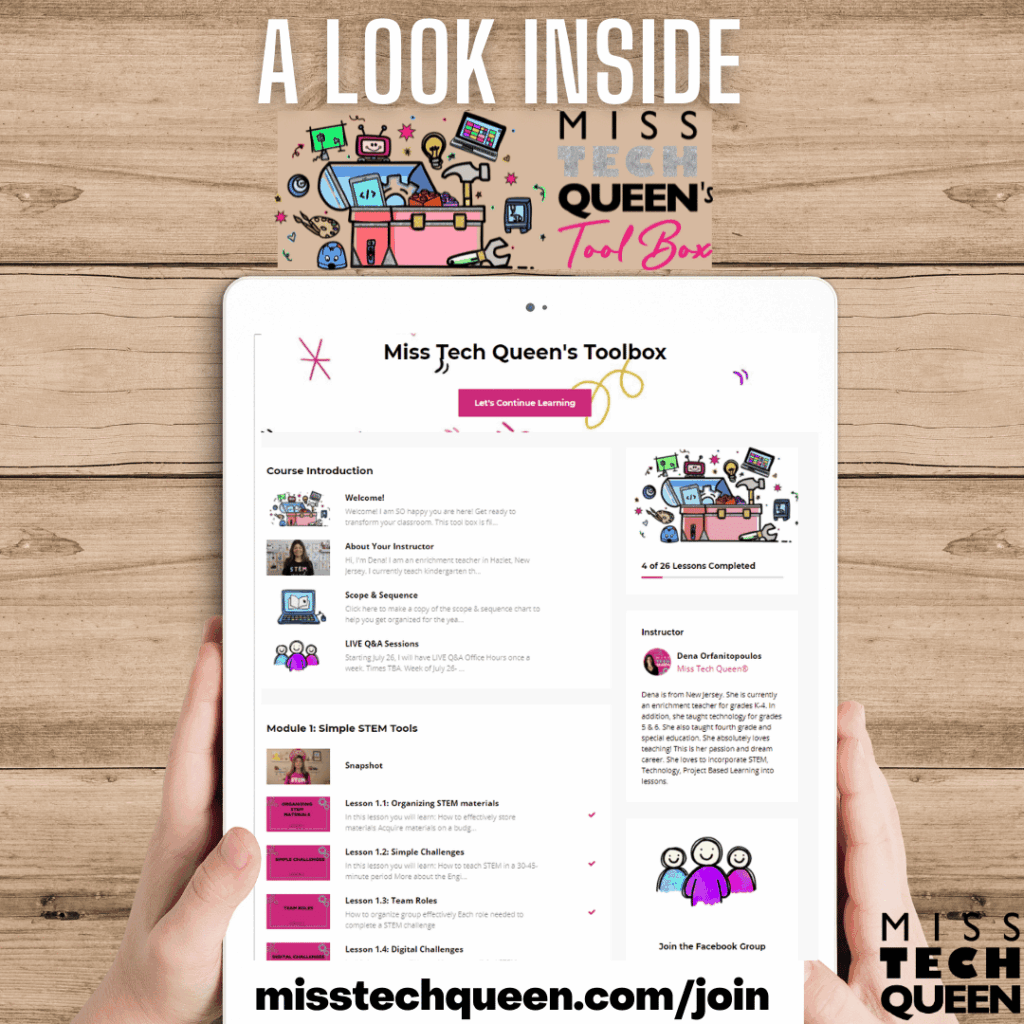
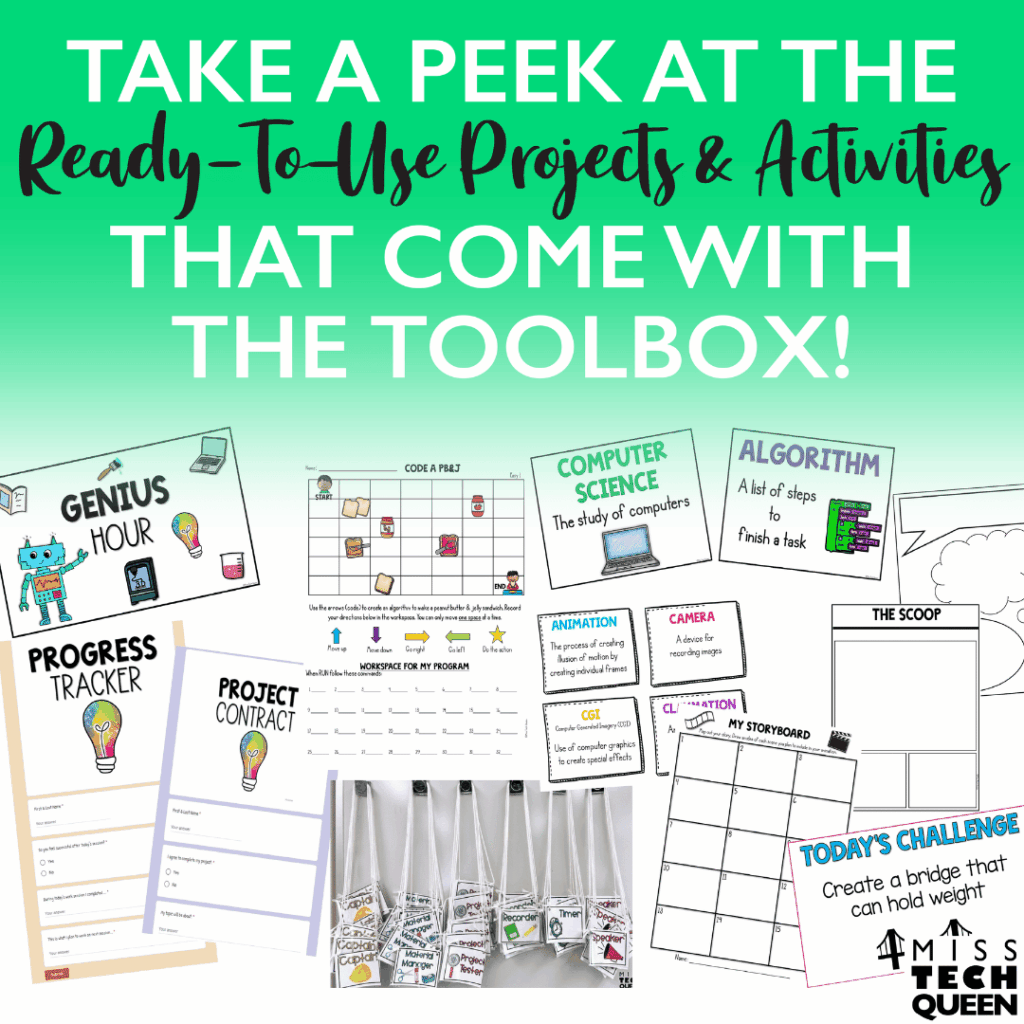
Inside the course, everything is broken down into modules that focus on different areas like simple STEM challenges, movie-making, coding, and digital projects. Each module includes training videos, teaching tips, and ready-to-use resources so you can immediately apply what you are learning. You will learn how to organize your materials, create manageable challenges, and group your students so that everyone stays engaged. You will also see how to expand beyond building challenges to areas like stop motion animation and green screen projects.
What makes this especially helpful is that it answers the questions you are constantly asking. What do I do if I do not have enough supplies? How do I introduce coding if I have never taught it before? How can I incorporate technology without feeling overwhelmed? These are the kinds of questions that are addressed throughout the course. Instead of guessing, you have clear guidance that helps you move forward with confidence.
Built-In Support That Makes a Difference
One of the most valuable parts of my STEM teacher professional development course is the support that comes with it. Along with the training videos and resources, you also get access to a tutorial library filled with step-by-step guidance. This means that even if you try something new and feel unsure, you can go back and watch exactly how it is done. That kind of support makes it much easier to take risks and try new ideas in your classroom.
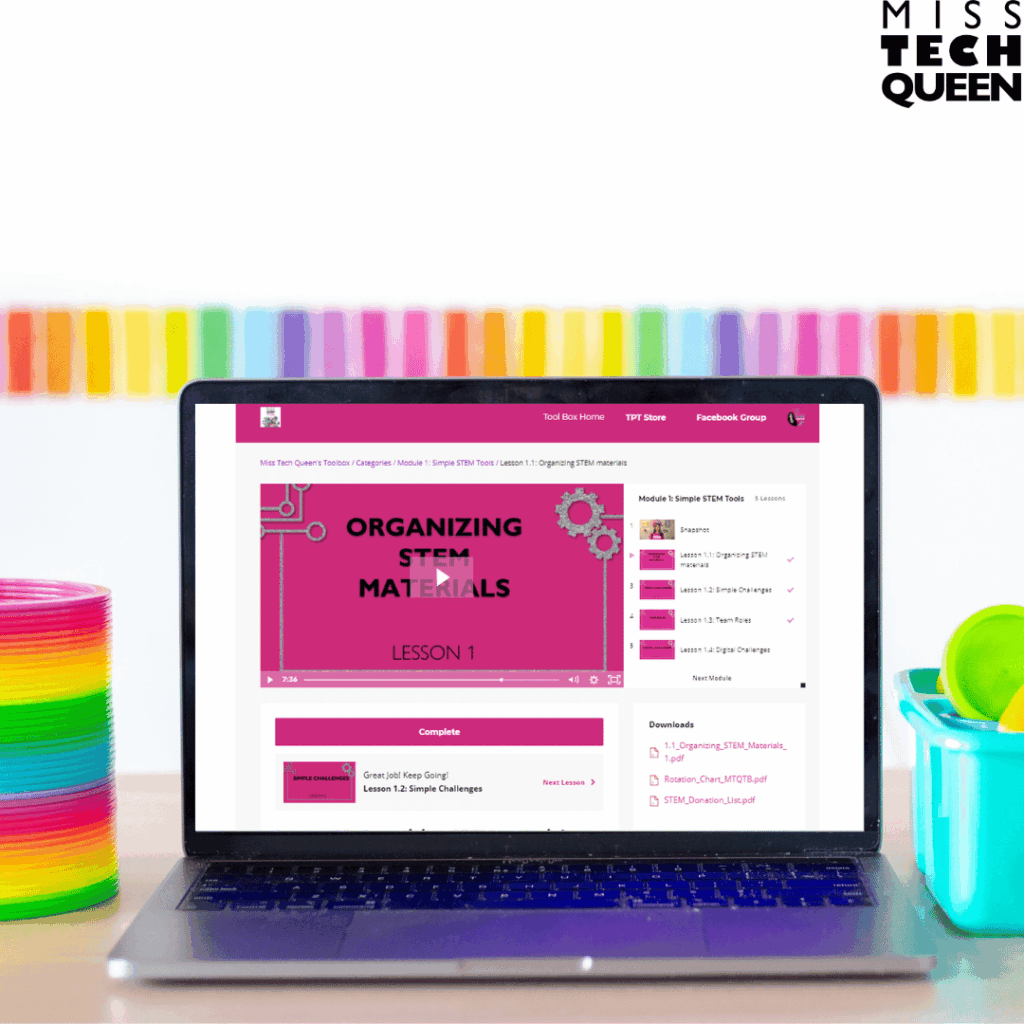
You also become part of a community of teachers who are working through the same process. Being able to ask questions, share ideas, and learn from others makes a huge difference, especially if you are the only one in your school focusing on STEM. You also receive tools like a course workbook, classroom decor, and even a scope and sequence to help you plan your year. These extras are incredibly helpful when it comes to saving time and staying organized.
All of these pieces work together to support you beyond just the initial learning. You are not left on your own to figure things out after watching a few videos. Instead, you have ongoing support that helps you continue to grow and improve your STEM instruction over time.
Making STEM Possible in Your Classroom
STEM teacher professional development should make STEM feel possible in your classroom, not overwhelming or out of reach. When you have clear steps, practical strategies, and ongoing support, it becomes much easier to turn ideas into actual classroom experiences. Instead of questioning what to do next, you start to feel confident in your ability to teach meaningful STEM lessons. That confidence carries into every activity you try and every new idea you explore. Over time, STEM becomes something you look forward to teaching just as much as your students look forward to experiencing it.
Ready to Feel More Confident Teaching STEM?
If you have been wanting to bring more STEM into your classroom but have not had the time or support to figure it out, this is a great place to start. My Tool Box course gives you the structure, resources, and guidance you need to move from feeling unsure to feeling confident in your teaching. It is designed to meet you where you are and help you build your skills step by step. If you’re tired of piecing together your STEM instruction, take a closer look at the Tool Box course!
Save for Later
If you are planning to bring more STEM into your classroom this year, save this post to your STEM Pinterest board, so you have a clear starting point when you are ready to begin.