
Finding fun seasonal activities that still offer meaningful learning opportunities can be a challenge, especially when your lesson-planning list is already a mile long! You want to celebrate special days like Johnny Appleseed Day, but you also want your students to do more than complete another coloring sheet or craft. That’s where fall STEM activities can make a difference!
With a few simple materials, you can turn an apple-themed lesson into a hands-on experience that gets your students building, problem-solving, and thinking like engineers. The best part is that you don’t need an elaborate lesson or hours of preparation to make it happen. Let’s look at two apple STEM challenges that bring a little fall fun into your classroom while keeping the learning front and center.
Using Fall STEM Activities to Celebrate Johnny Appleseed Day
Johnny Appleseed Day is a wonderful opportunity to introduce your students to John Chapman, better known as Johnny Appleseed. As you share his story, your students can learn about his travels, the apple nurseries he planted, and his role in spreading apple trees across parts of America. It’s also a natural starting point for conversations about how apple trees grow, what plants need to survive, and why trees are important to our environment.

Before jumping into a STEM challenge, spend a few minutes exploring what your students already know about apples. Ask them where apples come from and what an apple tree needs to grow. You might even bring in a real apple for your students to observe. Have them describe its shape, examine the stem, and consider why apples grow on branches instead of directly on the trunk. These observations can help your students begin thinking about the structures they’ll eventually build.
From there, you can introduce the idea that engineers solve problems by designing structures that meet specific goals. Just as a real apple tree needs branches strong enough to support its fruit, a structure they create needs to support the weight placed on it. This connection gives your students a reason to think carefully about their designs instead of simply assembling materials.
Introduce Your STEM Challenges with a Read Aloud
One of my favorite ways to introduce a STEM challenge is with a picture book. A good read aloud gives your students something familiar to connect with before they begin building. For Johnny Appleseed Day, you could start with a story about him or choose an apple-themed book.
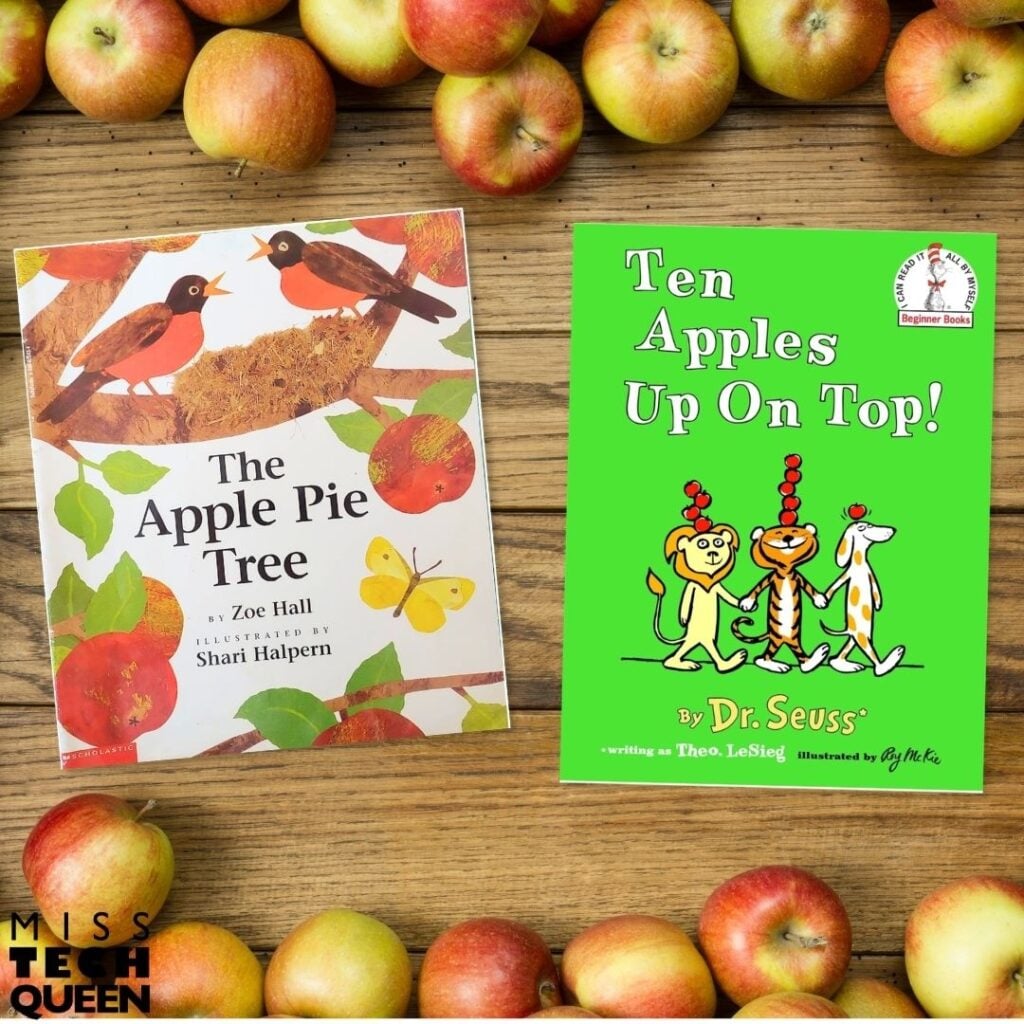
Ten Apples Up on Top! by Dr. Seuss is a fun choice when introducing balance and stacking. As you read, encourage your students to notice how the characters balance apples as the stacks grow taller. Ask your students questions like, “What do you think makes balancing the apples difficult?” or “What could the characters do to keep their apples from falling?” These questions help your students start thinking about balance and stability before they touch their building supplies.
You can also use The Apple Pie Tree by Zoe Hall to introduce the idea of supporting weight. As the story follows an apple tree through the seasons, your students can see how its branches eventually fill with apples. Encourage them to look closely at how the branches extend from the trunk and support the growing fruit. Ask them, “What might happen if too many apples grew on one small branch?” Once your students have shared their predictions, explain that they’ll become engineers and design their own apple trees using everyday classroom materials.
Challenge #1: Build an Apple Tree
After learning about Johnny Appleseed and the importance of apple trees, it’s time to put those engineering skills to work! My Apple Tree STEM Challenge invites your students to design and build their own apple trees. The goal is to create a tree that can balance as many apples as possible.
To get started, gather cardboard tubes, craft sticks, and red, green, or yellow pom-poms to represent apples. Give your students a cardboard tube to serve as their tree trunk. Encourage them to experiment with different branch arrangements. They can place craft sticks across the top of their tubes or explore other ways to support their apples. Before building, have your students sketch a simple design and consider where their branches should go.
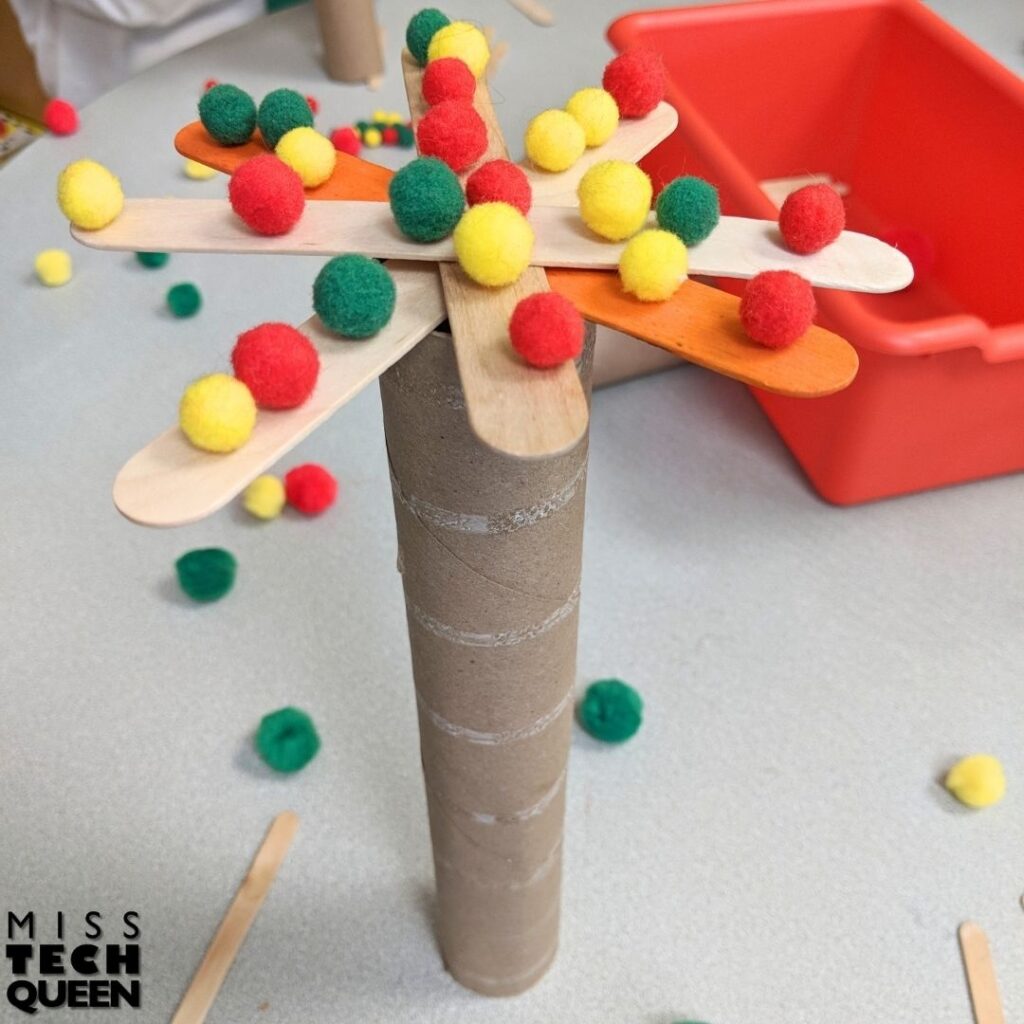
As your students begin adding apples, encourage them to notice how weight affects their trees. What happens when several apples are placed on one side? Does spreading the apples across different branches make a difference? Your students may discover that a design that looks sturdy without apples becomes unstable once you add weight. These observations provide a natural opportunity to discuss balance, support, and the importance of making thoughtful design choices.
Inside my Apple Tree STEM Challenge, I also include task cards, an engineering design process poster, student response sheets, and an editable Google Slides presentation. The included math response sheets also have students measure their trees, count their materials, and record how many apples they balanced.
Challenge #2: Apple Tree Stack
Once your students have explored how tree branches support apples, you can introduce a different engineering problem. Instead of spreading apples across branches, what happens when your students must balance apples on top of a tall structure? My Apple Stack STEM Balance Challenge lets your students investigate that question while building towers.
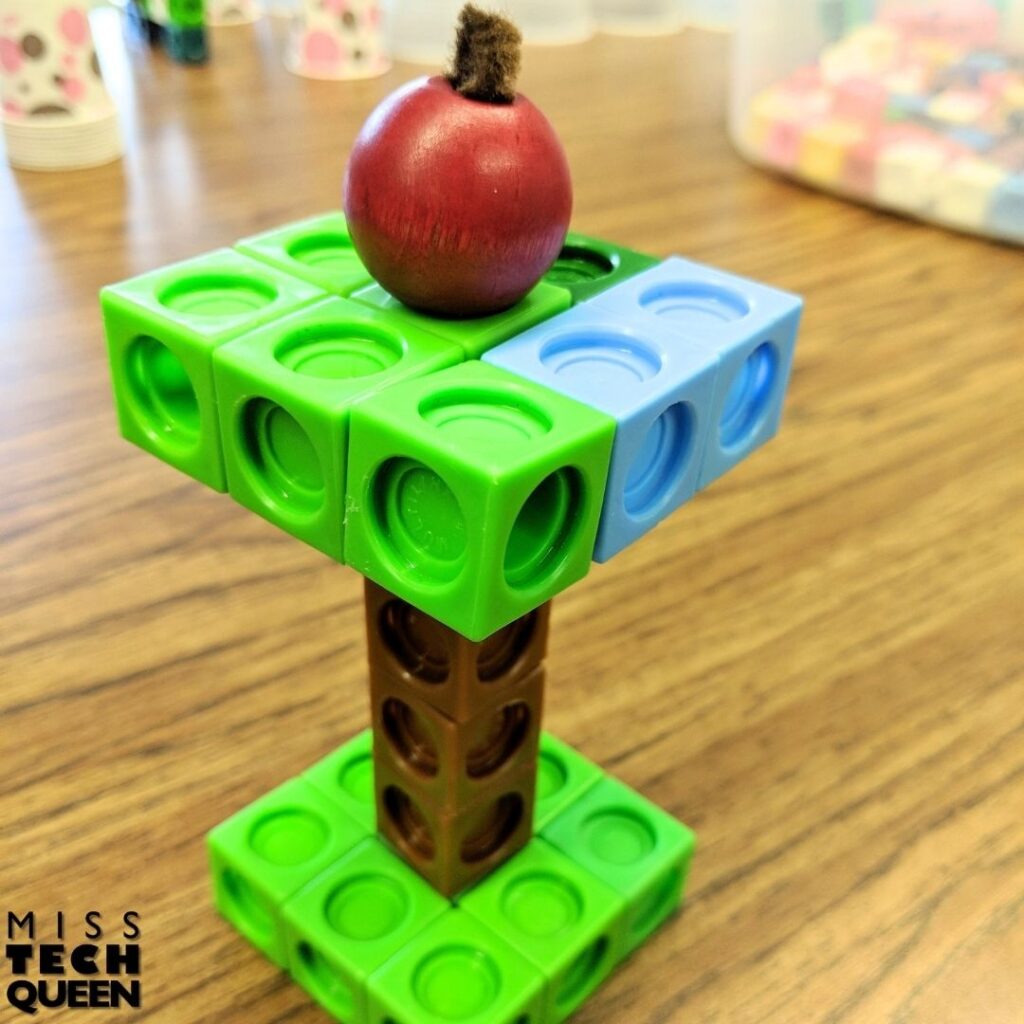
For this activity, you can use plastic cups, linking cubes, LEGO bricks, or other classroom building materials. You’ll also need small plastic apples, although pom-poms or beads can work as budget-friendly alternatives. Challenge your students to build a tall tower that can balance an apple on top. You can also challenge them to see how many apples their towers can support. Before they begin, show them two possible tower shapes: one with a wide base and another with a narrow base. Ask which design they predict will be more stable and why.
As your students build, help them recognize the relationship between height and stability. A tall, narrow tower may look impressive, but it can be difficult to balance an apple on top. Encourage your students to compare their tower’s base to its height and consider how material placement affects stability. You can also introduce symmetry by asking your students to see whether both sides of their structures have similar shapes and arrangements.
Adding Math to Your STEM Activities
One of the best things about incorporating STEM into your seasonal lessons is how easily you can connect different subjects. Your students are already counting materials, comparing structures, and making decisions as they build. With a little planning, you can turn those experiences into impactful math practice without making the activity feel like another worksheet.

Both of my Apple STEM challenges include math response sheets that you can use to extend the activities. Some of the word problems have blank spaces for numbers. This allows you to adjust the difficulty to fit your students’ math skills. This also makes it easier to incorporate the same seasonal challenge across different grade levels.
For your younger students, focus on counting and comparing quantities. Have your students count how many apples their structures can support or how many materials they used. You might ask them, “How many more apples did your second design hold?” or “How many craft sticks did you use altogether?” These questions give your students chances to practice addition, subtraction, and comparing numbers using something they’ve created themselves.
For your older students, introduce measurement and data collection. Have your students measure their structures in inches or centimeters and record their results. You could create a class chart comparing tower heights or the number of apples different designs supported. Ask your students to look for patterns in the data. Did the tallest tower support the most apples? Did wider structures perform differently from narrower ones? These conversations help your students connect math thinking to real engineering decisions.
How to Make Fall STEM Activities Work for Your Classroom
You don’t need to devote an entire afternoon to STEM to make these activities worthwhile. You can use both challenges during your dedicated STEM lesson, as part of a fall-themed learning day, or in classroom centers. The key is deciding how much time you have and what you want your students to learn.

If you’re planning a whole-class lesson, introduce the challenges together and give your students time to build. Plan for approximately 20 to 25 minutes of building time, followed by time to complete a response sheet. If you’re working with limited class time, consider using one challenge on Johnny Appleseed Day and saving the other for another fall lesson. This gives your students two different times to explore engineering without trying to fit everything into one class period.
For centers, organize the building materials into containers and give students a task card explaining their challenge. You can laminate the response sheets and use dry-erase markers to reuse them. The included Google Slides presentations are another helpful option for introducing the activities and guiding your students through the lessons. With materials prepared ahead of time, you can spend more time supporting your students and less time explaining directions to each group.
Make Fall STEM a Memorable Part of the Year
Johnny Appleseed Day doesn’t have to be limited to reading a story or learning a few facts about apple trees. It’s an opportunity to let your students explore, create, and discover how science and engineering connect to the world around them.
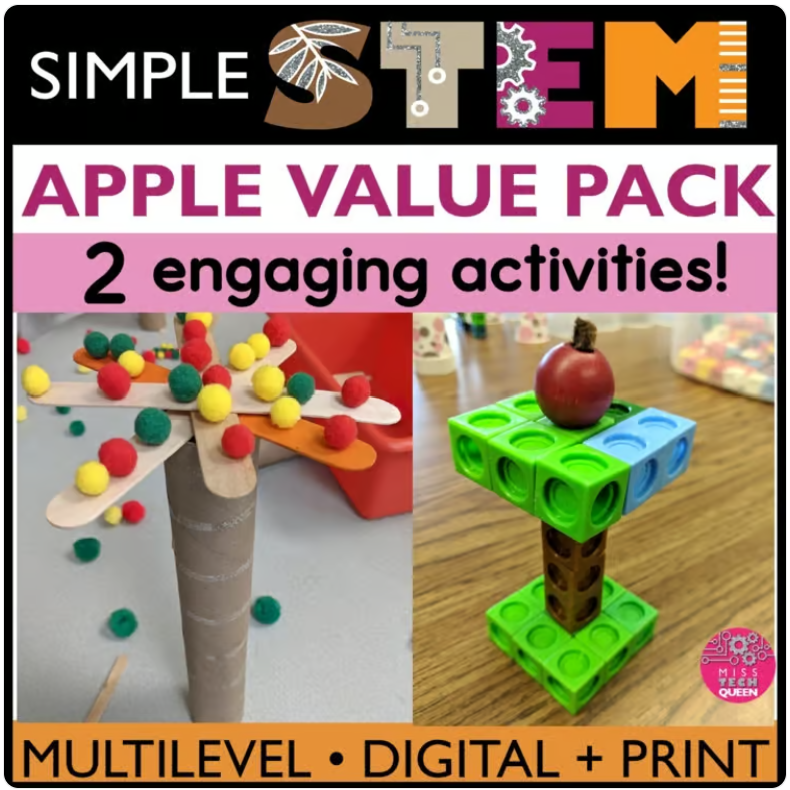
With a few materials, you can turn an ordinary fall lesson into an experience that encourages creativity, problem-solving, and math thinking. That’s what makes these fall STEM challenges such a fun addition to your seasonal lessons. To celebrate this day, you can bring both challenges into your classroom by grabbing my Apple STEM Bundle!
Find More Seasonal STEM Challenges for Your Classroom
Between fall celebrations, winter holidays, spring activities, and special days throughout the year, there’s always another opportunity to connect hands-on learning with something your students are excited about. Of course, finding and preparing a new STEM challenge for every occasion can quickly become another task on your already busy schedule.
If you want even more fall fun, check out this post of Fall STEM Activities your students will love. If you’re looking for ways to make STEM planning easier throughout the year, explore my STEM for a Year Club. You’ll find STEM activities that help you bring hands-on learning into your classroom all year long.
You can also visit my TPT store to explore individual STEM challenges and themed activities for different seasons, holidays, and special days. Whether you’re planning for a specific celebration or looking for new ideas to keep your students engaged, there are plenty of ways to make STEM a regular part of your classroom!
Save These Fall STEM Activities for Later
Save this post to your favorite Pinterest board so you can easily find these fall STEM activities when you’re ready to bring apple-themed engineering into your classroom. You’ll have two hands-on challenges to inspire your students all season long!