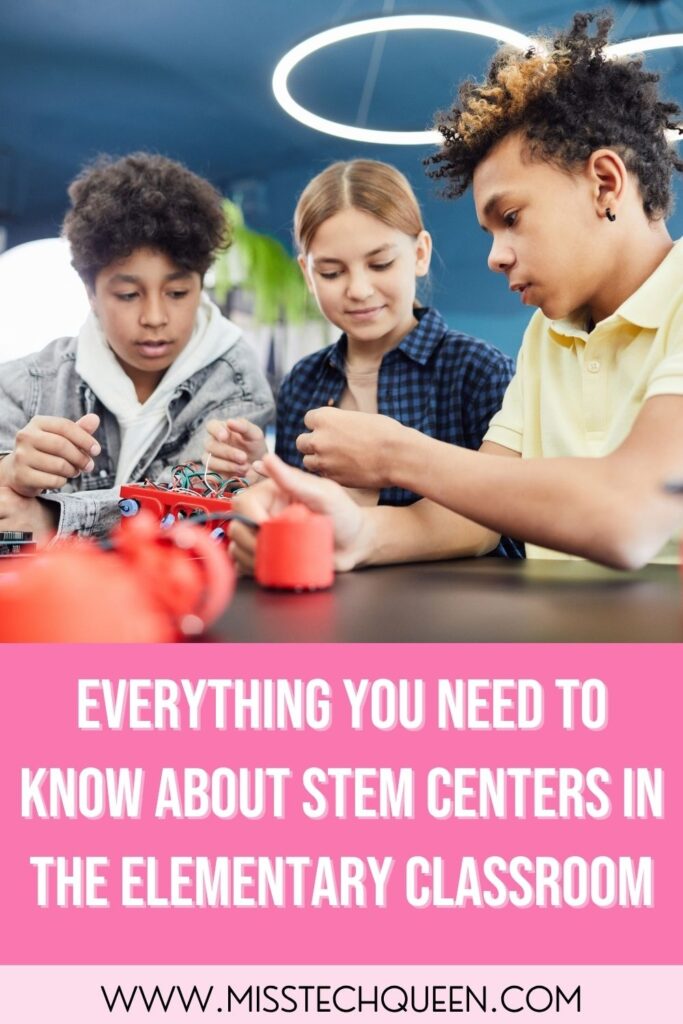

Think back to when you were a student and your teacher announced it was time for centers. There was something exciting about moving to a different spot, getting your hands on materials, and working with your friends. Now that you are the teacher, you know there was a whole lot of planning and preparing happening behind that fun. STEM centers can bring that same excitement to your students, without leaving you running between groups answering questions. With the right setup, your students can build important skills while learning to work independently.

Why STEM Centers Work in the Elementary Classroom
STEM centers give our students time to build, create, code, and problem solve in smaller groups. They also make hands-on activities much easier when you have limited supplies. You do not need 24 robots or enough building bricks for everyone at once.
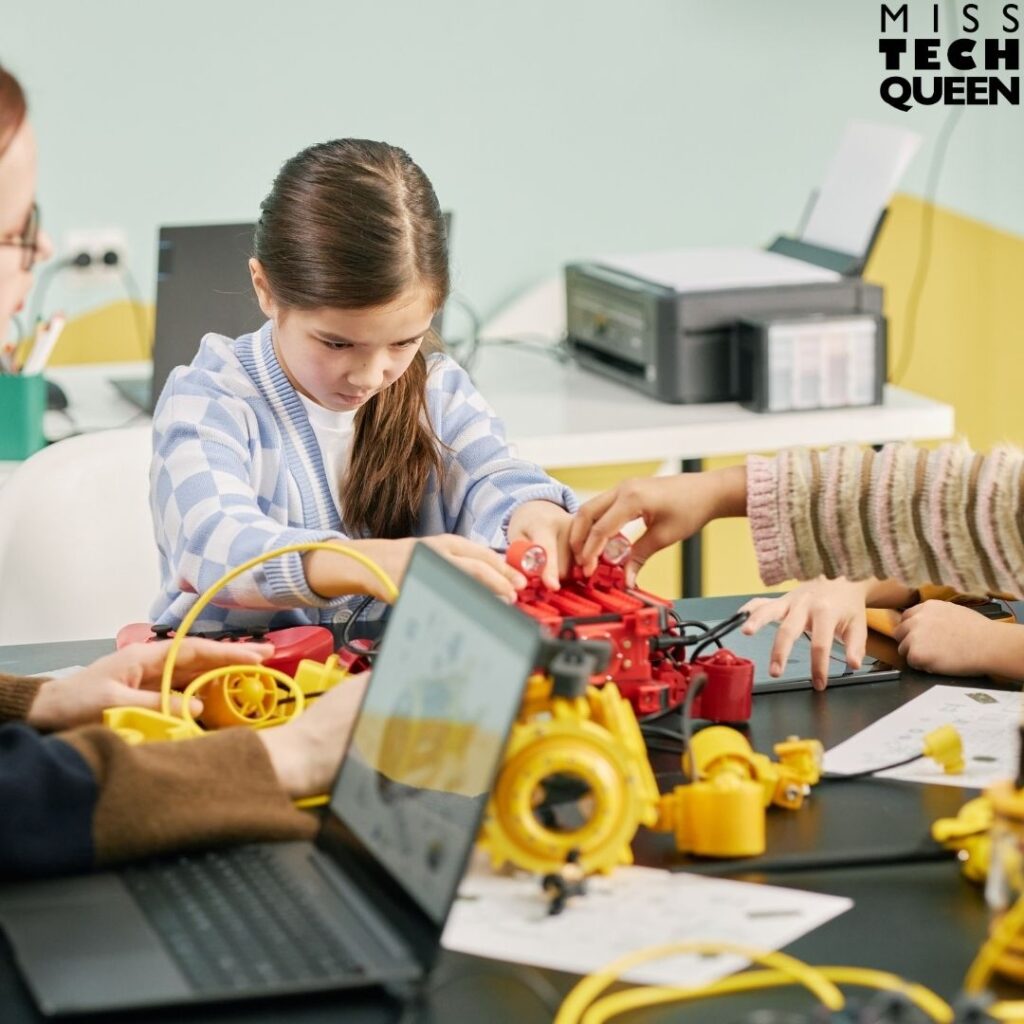
Centers also give you flexibility with how you use your classroom time. One group can build while another codes or works through a math challenge. Meanwhile, you can circulate, ask questions, or spend extra time with your students who need support.
The independence piece is one of my favorite parts of using STEM centers. During centers, our students learn to follow directions, make decisions, and work through problems before immediately asking us for help. It takes some teaching upfront, but those routines are absolutely worth the time.
Set Up and Organize Your STEM Centers for Independence
When you first start STEM Centers, keep things simple. You do not need six perfectly organized centers ready on your first day. Start with two or three. Then, let your students learn the routines, and build from there.

I always recommend keeping everything your students need as close to the center as possible. A labeled bin can hold task cards, response sheets, pencils, dry-erase markers, and smaller supplies. Larger materials, such as building bricks, can stay in containers beside the center.
Think about cleanup while you organize, too. Your students can be responsible for returning the items to their rightful places. They just need to be shown and given time to practice. It’s important that they know where every item belongs before they begin working. Smaller containers and picture labels can make this much easier, especially with your younger students.
Before opening your STEM centers, pause and look at each one from the point of view of your students. Can they find the directions, materials, and response sheets without asking you? If the answer is yes, you are already setting them up for more independent center time.
Choose STEM Center Rotations or Free Choice
Now comes a question many of us have about STEM centers. Do you assign your students to centers, or let them choose? Both can work, and you can even use a little of each.

Rotations are helpful when you want all your students to experience specific activities. They are also a lifesaver when you have four robots and a classroom full of students. I suggest creating small groups of about 3 – 4 students. Then, assign each group a starting center. You’ll want to decide on a set amount of time before having them rotate. Consider the type of activities your students will be engaging in. I usually choose about 15 – 20 minutes, but sometimes it comes down to trial and error to see what works best for your room.
Free choice works well once your students understand your routines. I would not introduce five new centers and immediately tell everyone to pick one. You want to teach your students how each center works first, then gradually give them more freedom.
You can also combine the two approaches. Your students might complete one assigned center before choosing their next activity. Just set limits for each center unless you want to discover how quickly everyone can fit around one robot!
Teach STEM Center Expectations Before Expecting Independence
Before you start rotations, model exactly what your students should do at each STEM center. Show them where to find directions, how to gather materials, and what finished work looks like. Then give them a chance to practice those routines.
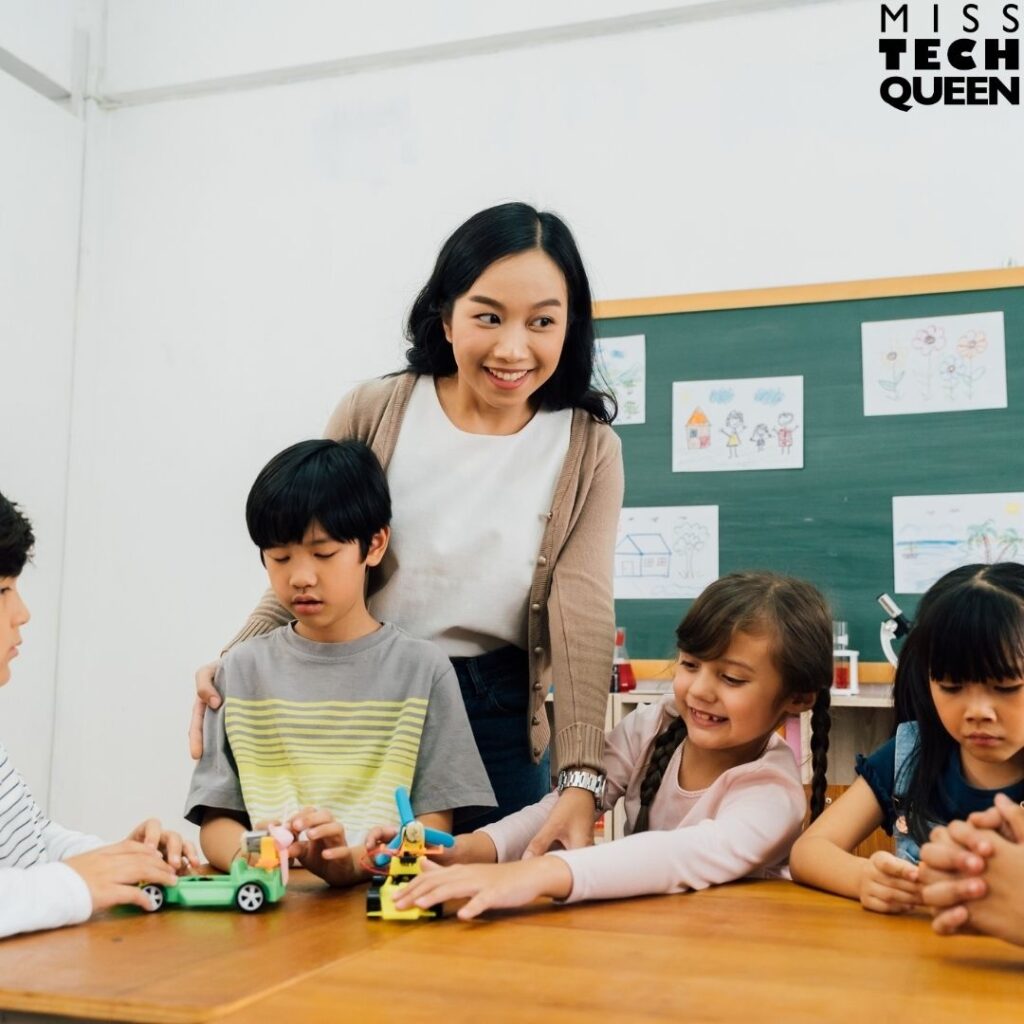
You will also want a plan for the inevitable, “I don’t know what to do!” To help when this arises, model what you want your students to try before asking you. They might reread the task card, look at the directions, or ask someone working beside them.
Be clear about materials and finished creations, too. Can your students get extra supplies? Do builds stay together, get photographed, or come apart before the next rotation? Decide those things before one of your students creates a LEGO masterpiece they refuse to dismantle.
Cleanup should be part of STEM center time. Give your students a warning a few minutes before they rotate. They can finish their response, return supplies, and leave the center ready for the next group.
Try Building STEM Centers
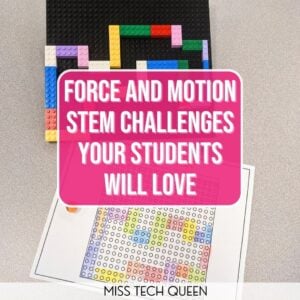
Building activities are a great place to start because our students can follow a challenge without needing one correct final answer. Once they understand your building routine, you can keep the same center and simply change the challenges. That makes these kinds of STEM centers easy to use throughout the year.
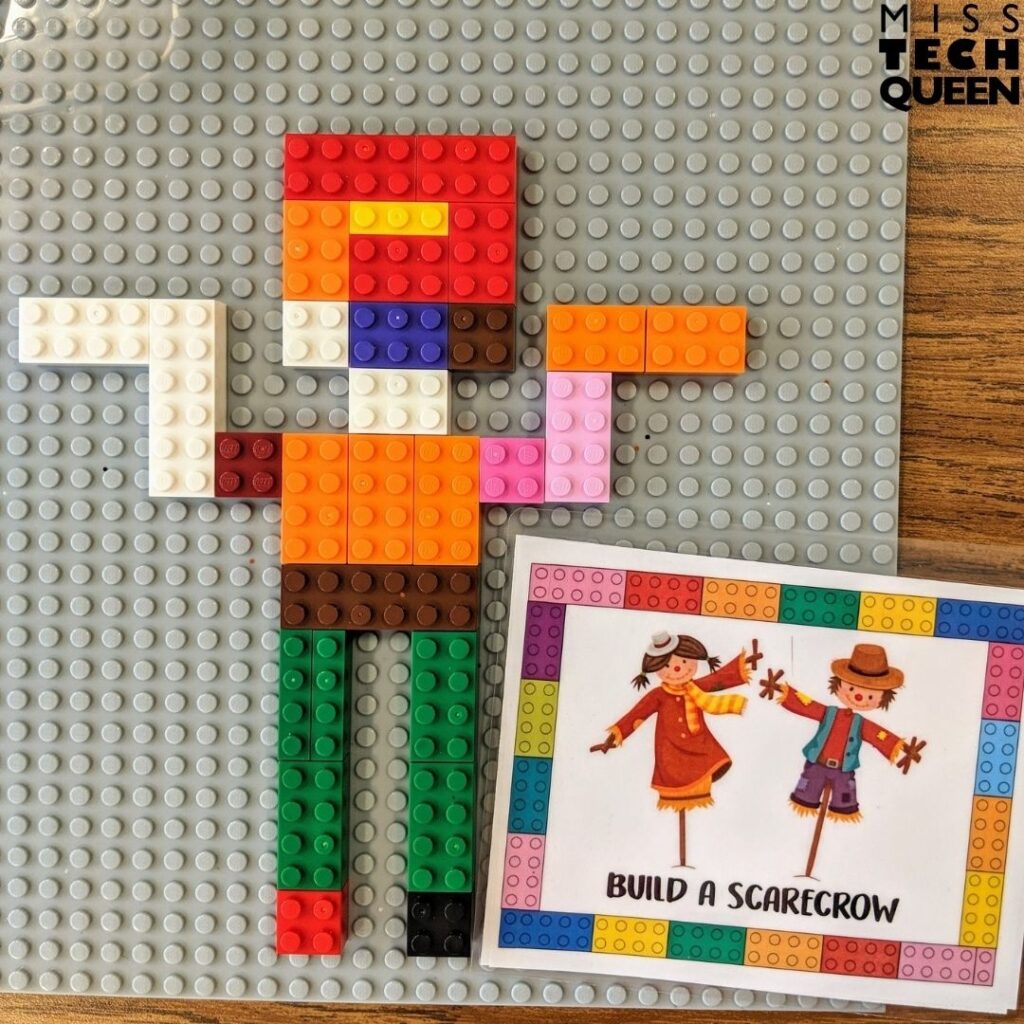
My Building Task Cards bundle includes seasonal or themed prompts that your students can complete using building bricks. Your students might build a pumpkin, scarecrow, apple orchard, truck, or haunted house. Each prompt gives your students a goal while leaving the final design completely up to them.
I also include a design process poster and several types of response sheets you can use with your students. There’s an option for your students to simply draw their creation or add writing about their design. Other options offer chances to practice measurement, equations, symmetry, or the engineering design process.
To turn the Spark Cards into a STEM center, place the cards beside your building materials and selected response sheets. Your younger students can even build directly on a laminated building mat, matching the pieces to the image. Once they know the routine, your students can choose a challenge, build, reflect, and clean up independently.
Creative STEM/STEAM Challenges
Creative STEAM challenges give you another option when you want fewer materials. With my Finish the Doodle bundle, your students can transform ordinary items into something completely different. They might turn a pencil into a sword, a notebook into a flying backpack, or a backpack into a jetpack.
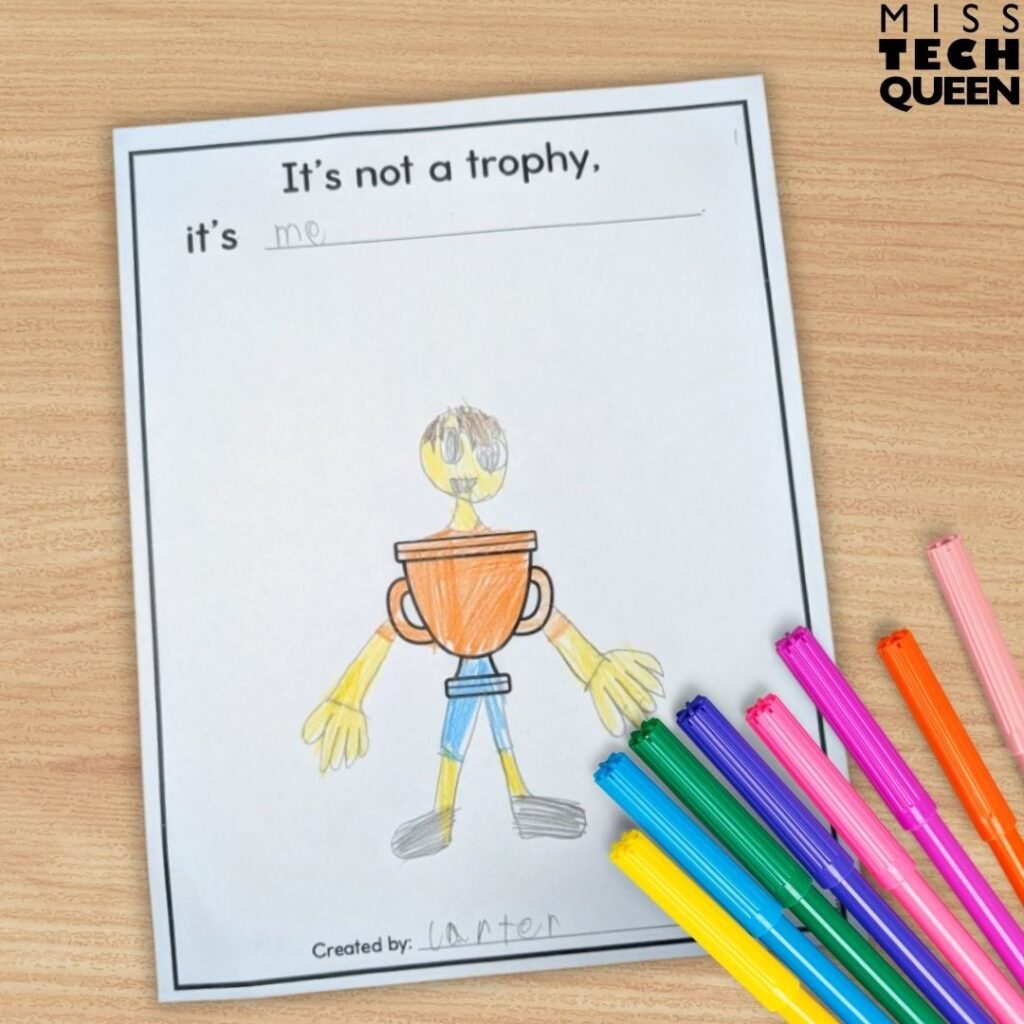
In these activities, I provide you with task cards, response sheets at different levels, a design process poster, digital options, and certificates. Your students can draw their new creation and then go further by writing about what they created. You choose the response option that works best for your students.
If you are using this activity in your STEM centers, I recommend setting out a task card, drawing supplies, and the selected response sheet. You can give your students about 20 minutes to complete the challenge and response. Once they feel confident in how to do this activity, you can use similar creative challenges without reteaching the entire center routine.
Add Coding and Robotics to Your STEM Centers
Coding is another activity that fits well into your STEM centers. Plus, you do not always need technology. Unplugged coding gives your students practice with algorithms and sequencing without needing a device. It can also prepare your students for working with classroom robots later.
Unplugged Coding Bundle
My Unplugged Coding bundle has your students creating algorithms using directional coding. They must collect the items as they travel through their maze and complete the steps needed to make their item. Items are based on the maze theme, so your students could be building a PB & J sandwich, jack-o’-lantern, taco, sandcastle, and more! Your students will record each direction in their workspace and then check whether their algorithm works.
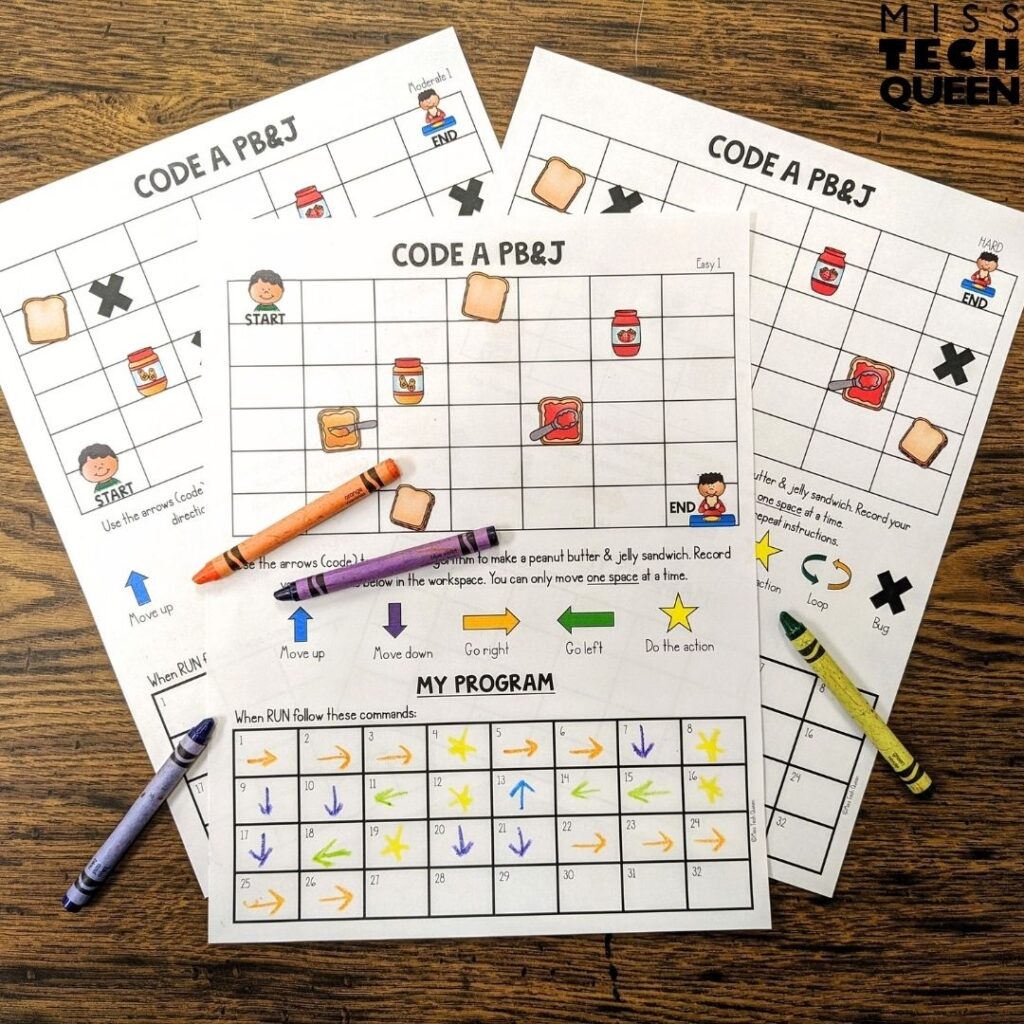
One reason I love using these coding activities in my STEM centers is the built-in differentiation. It includes easy, moderate, difficult, and bonus options. Your students have the chance to progress from basic directional coding to challenges involving bugs, loops, and changing directions.
A few quick tips when starting coding activities. You’ll want to introduce the coding vocabulary and symbols before placing the activity in a center. I always start by having my students complete an example together so they understand how to record one direction at a time. After that is when I place the appropriate levels at the center and let my students work through them independently.
Coding with Robots
Once your students know how to operate your classroom robots, you can introduce a STEM center that has robots. My Coding with Robots bundle is full of coding activities that work with floor robots such as Bee Bot, Robot Mouse, Dash, and Sphero. You can create a reusable mat or let your students arrange pieces to make their own maze.
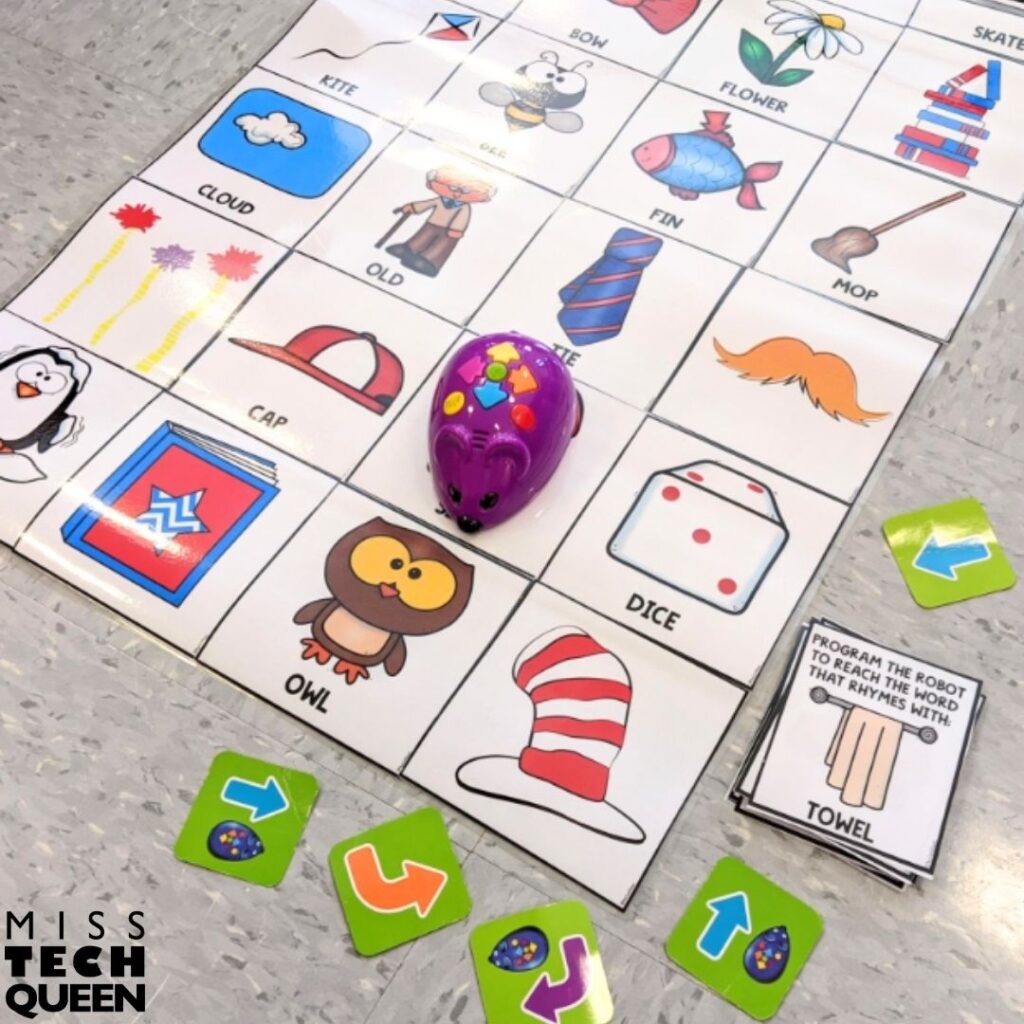
With the mat, your students place the robot at the starting point and select a task card. The card tells them which location their robot needs to reach. Your students will need to program the directions, run their code, and see whether their robot reaches its target.
If it does not work, your students can return the robot to the starting point and try again. The code cards provide visual support, while the optional response sheets let your students record their programs.
Bring Math Into Your STEM Centers
STEM centers can also give your students another way to practice familiar math skills. This works especially well if you are a classroom teacher who wants STEM experiences connected to what you are currently teaching. By using STEM centers, you can review math without turning the center into another stack of worksheets.
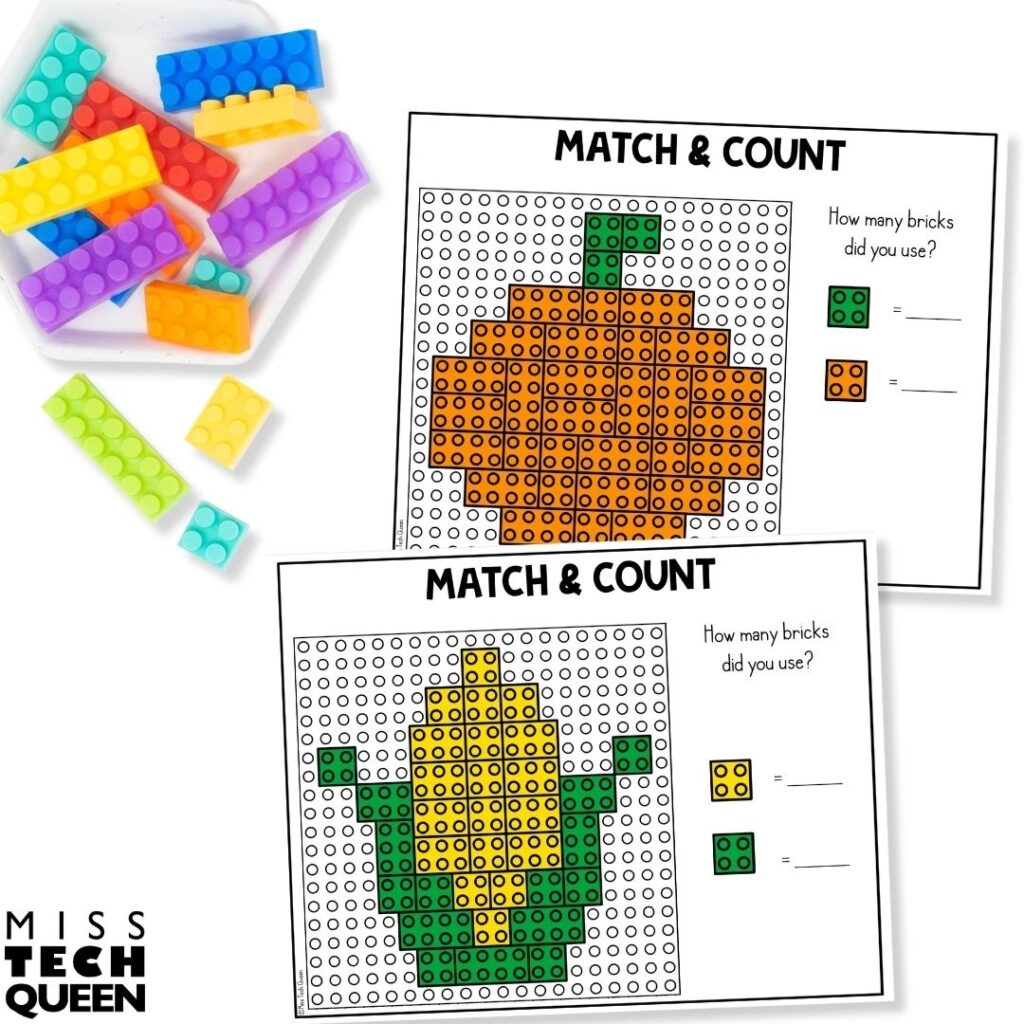
My Building With Math activities combine dice, building bricks, and math practice. For your younger students, one activity has them match brick colors and count how many they use. Other versions include addition and multiplication practice. This lets you use the same type of center while choosing a math skill appropriate for your students’ abilities.
When preparing this center, make sure to set it up with the needed building bricks, dice, the task card, and the preferred response sheet. This avoids the random roaming around the room, questions, and distractions that can happen when our students are feeling unsure. I recommend laminating the activity sheets or using page protectors so your students can use dry-erase markers.
Keep STEM Centers Fresh Without Starting Over
STEM centers do not have to be complicated to give your students meaningful opportunities to create, build, code, and problem solve. Start with a few activities, teach the routines, and give your students time to become comfortable working independently. You can always add more as your students become more confident.
Here is one of my favorite parts of finding STEM centers that really work. You do not have to reinvent them every month. Once your students know the routine, change the challenge instead of changing everything else. Keep your building materials and swap the task cards for a new season or theme. Change the robot mat, introduce another coding challenge, or bring out different math activities. Your students get something new, but they already know how the center works.
You can make familiar STEM centers more challenging as students grow, too. Add a different response sheet, introduce harder coding, or ask your students to explain more of their thinking. You are building on routines that already work instead of constantly starting over.
Most importantly, make STEM centers fit the classroom you actually have. Your centers may look different depending on your schedule, supplies, students, and available space. When the routines work for you and your students, STEM center time becomes something everyone can look forward to.
Find More STEM Centers for Your Classroom
Once your students know how STEM Centers work, having activities ready to rotate makes planning so much easier. You can spend less time searching for your next challenge and more time choosing what fits your students. My TPT store has even more STEM resources you can use for centers, early finishers, enrichment, or class activities.
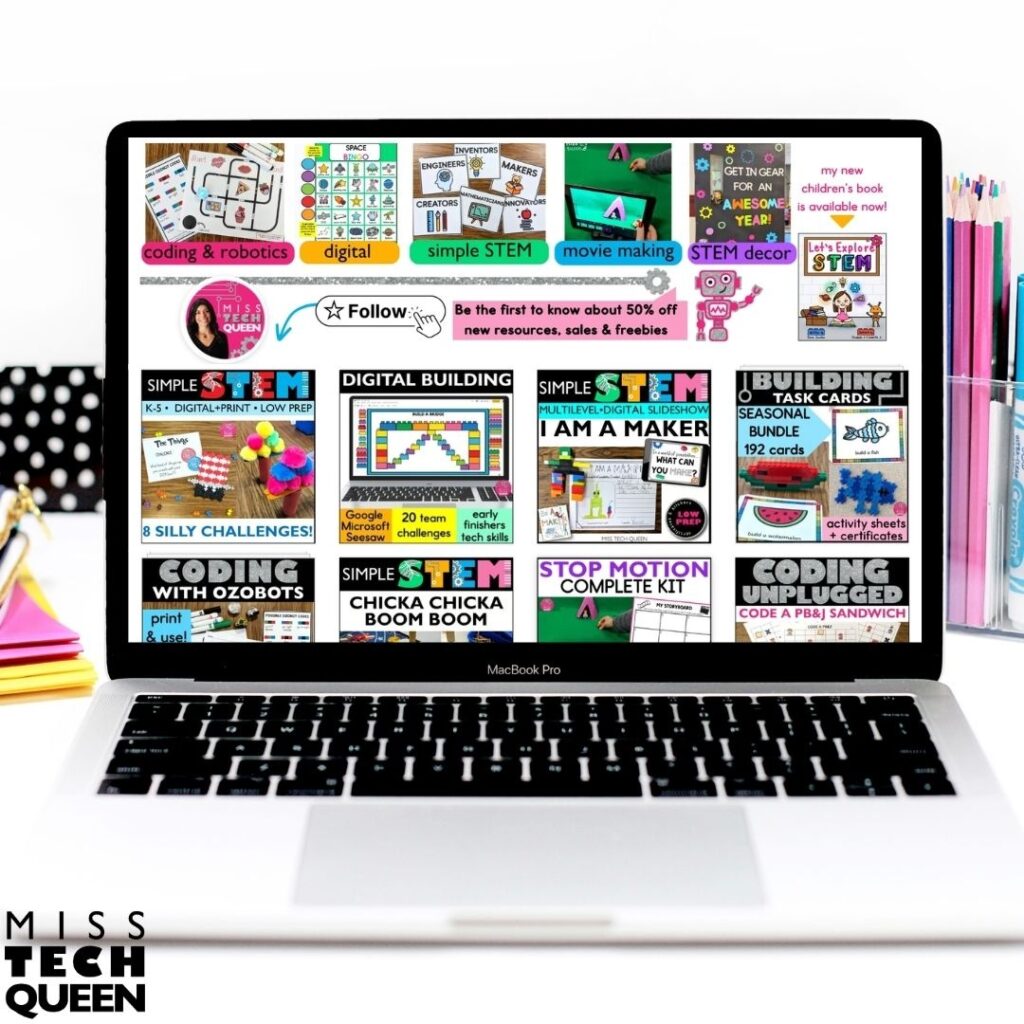
If you want STEM activities ready throughout the year, check out my STEM for a Year Club. You will find a growing collection of low-prep challenges that encourage building, creativity, problem-solving, and collaboration. Many use simple classroom supplies and can easily fit into STEM center routines you already have in place.
Whether you grab individual resources from my TPT store or use the STEM for a Year Club, you do not have to reinvent STEM time each week. Choose the activities that fit your students, prep your center materials, and let those familiar routines do the rest.
Save These STEM Center Ideas for Later
Save this post to your favorite STEM Pinterest board so these setup tips and activity ideas are ready when you need them. Come back whenever you need a fresh center idea!