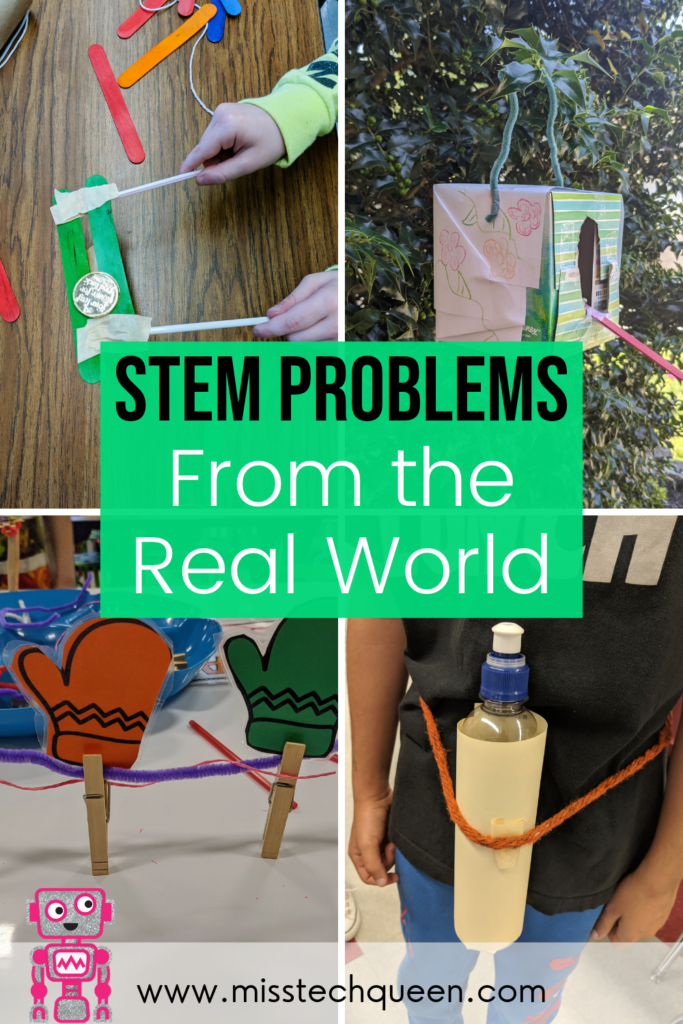


Do your students understand the why behind their STEM challenges, or do they simply see them as a fun break from their regular lessons? There’s nothing wrong with your students getting excited about building something, but STEM should go beyond creating a cool project! When your students understand the real world problem they’re trying to solve, their designs begin to have a greater purpose. They start thinking about who might use their invention, what problem it solves, and how they can make it work. The good news is that you don’t need complicated materials or elaborate lessons to make those connections. These eight hands-on STEM challenges will help your students explore real world STEM problems while building their creativity, critical thinking, and engineering skills.
Why Should Your Students Solve Real World STEM Problems?
One of my favorite things about teaching STEM is helping my students recognize that engineering happens all around them. Every tool, structure, and invention began with someone identifying a need or problem. A bridge helps people cross an obstacle, while a water bottle holder makes carrying water more convenient. These everyday examples help our students understand that engineering isn’t limited to scientists working in laboratories.
When you introduce STEM problems through familiar situations, your students have a reason to think carefully about their designs. Instead of simply asking them to build something, you’re challenging them to create a solution with a purpose. Their materials, design choices, and measurements all become important because the finished creation needs to accomplish something specific.
Before beginning a challenge, spend a few minutes discussing the problem with your class. Ask your students whether they’ve experienced something similar or noticed a solution in their everyday lives. You might even show pictures of existing inventions and discuss what makes them useful. These conversations help your students begin thinking like engineers before they pick up their building materials.
Solving Everyday STEM Problems with Simple Inventions
Some of the best STEM problems come from situations your students already understand. They don’t need to imagine themselves designing a skyscraper or developing a complicated machine. Instead, they can start by considering how to make everyday tasks easier, safer, or more convenient.
Design a Water Bottle Holder to Solve an Everyday STEM Problem
Think about how often your students carry water bottles throughout the school day. Now imagine they’re participating in a sporting event and need somewhere to keep their water nearby. They want to stay hydrated without constantly stopping to figure out where to put their bottle. This familiar situation gives your students an opportunity to design something useful.
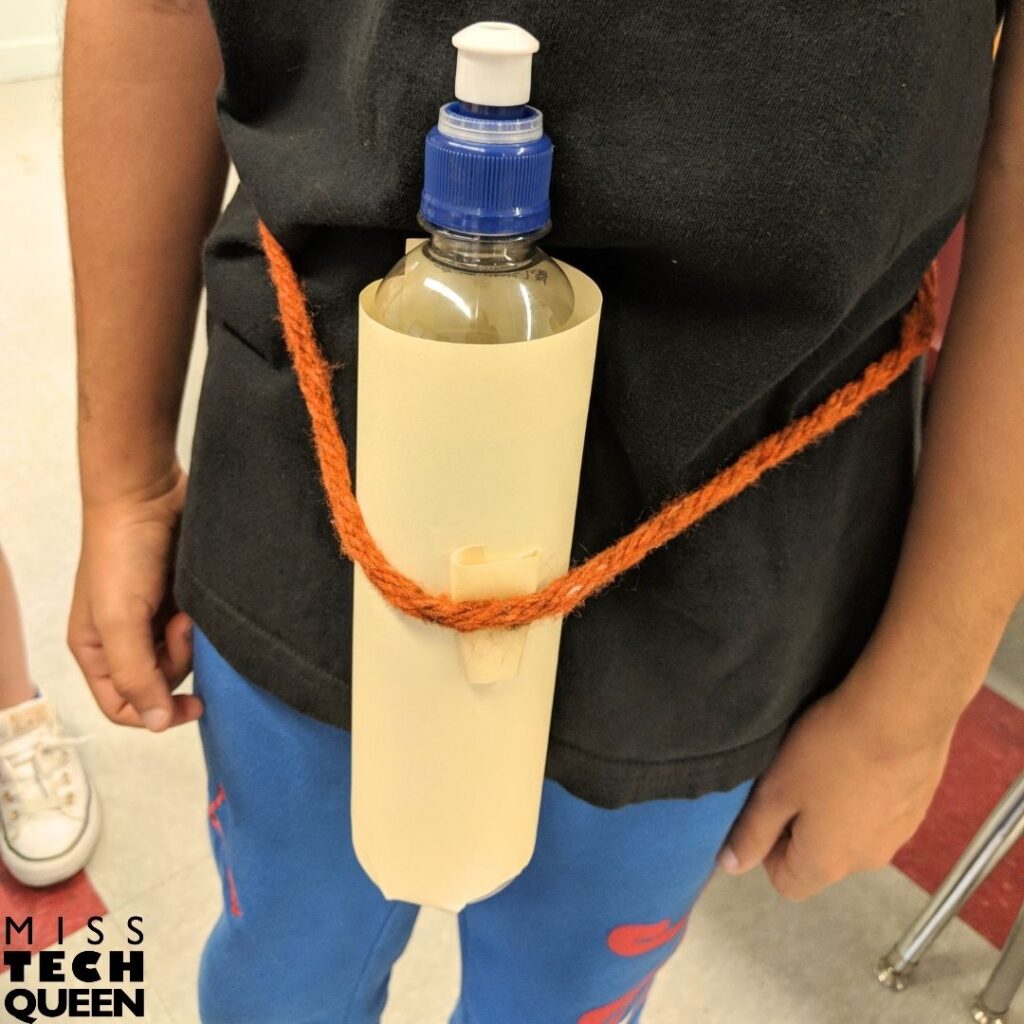
In my Quench Your Thirst Water Bottle Holder STEM Challenge, your students create a holder that keeps a water bottle accessible during a sports game. Using materials such as construction paper, string, cardboard, index cards, and tape, your students design their own invention. The challenge requires their creation to hold a water bottle while making it easy to drink water on the move.
Before handing out materials, show your students an empty water bottle and ask them to imagine carrying it during a sporting event. Where could they keep it so their hands are free, but they can still grab a drink? As they brainstorm, give your students a few minutes to sketch their ideas before building. Once they’ve created their holders, have them place a bottle inside and walk a short distance to see whether it stays secure. Then, ask them to remove the bottle without taking apart their invention. If the bottle falls out or becomes difficult to reach, have your students adjust their design. They might need to strengthen the bottom, change the opening, or add more support around the bottle.
Create a Mitten Holder to Solve Winter STEM Problems
Winter recess can be an adventure all on its own! Between coats, hats, gloves, and scarves, keeping track of all your students’ belongings can feel like a full-time job. Somehow, there’s always that one mitten nobody can find! Instead of seeing this as another classroom frustration, consider turning it into a STEM problem. Challenge your students to think about how they could create a better way to organize their winter gear.
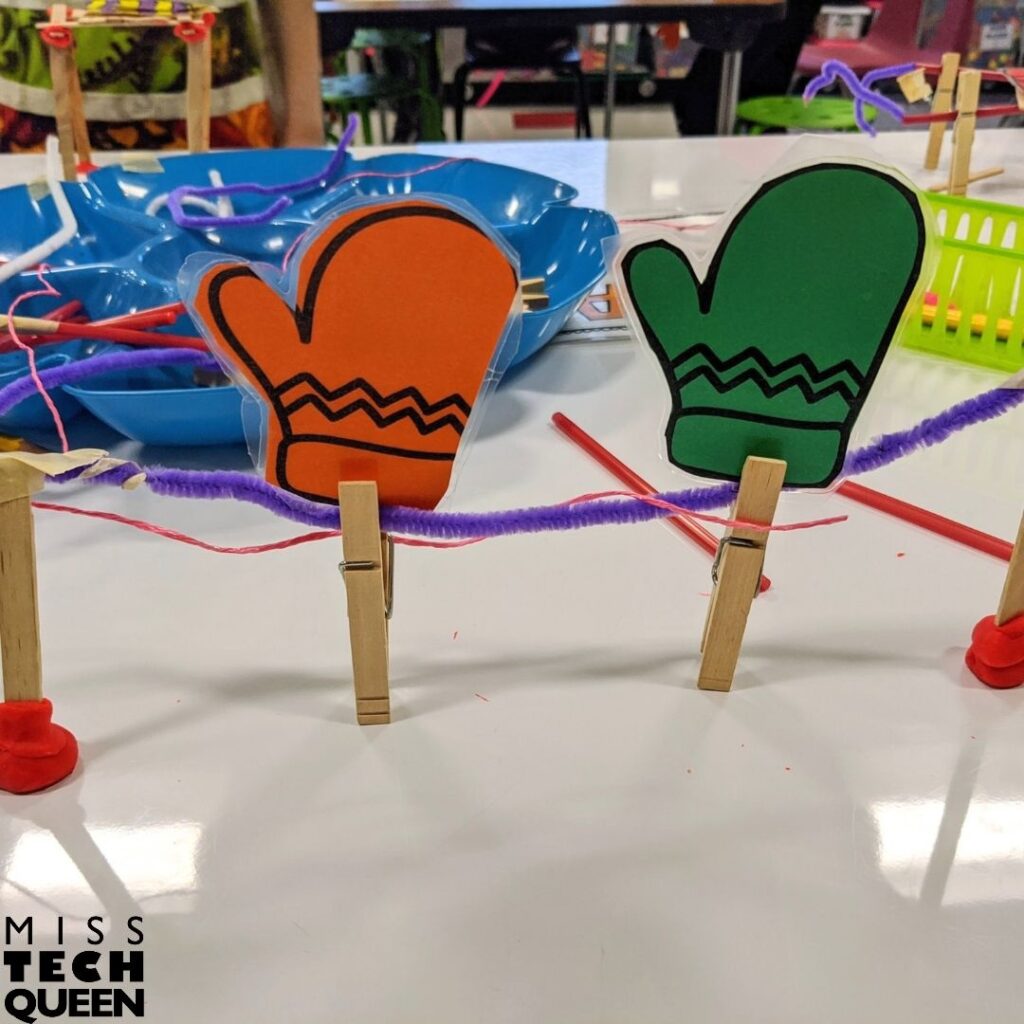
My Winter Mittens STEM Challenge asks your students to design a structure that can hold mittens. Your students will use materials such as popsicle sticks, play dough, clothespins, and straws to create their designs. I also include mitten cutouts in the resource that your students can use with their finished structures.
This challenge creates a natural connection between engineering and math. Your students will measure the height and width of their structures and count how many mittens they can hold. Ask your class what would happen if they needed to store twice as many mittens. Would they make their design taller, wider, or change how the mittens are arranged? These kinds of questions help your students recognize how available space and storage needs influence engineering decisions.
Design a Cooking Tool with Grillin & Chillin
Not every STEM problem needs a complicated solution. Think about something as simple as flipping a hamburger on the grill. You wouldn’t want to reach over a hot cooking surface with your bare hands! That’s why we have tools like tongs and spatulas. They’re everyday inventions that your students probably recognize, but may have never stopped to think about. This challenge gives them a chance to explore why different tools are designed for different jobs.
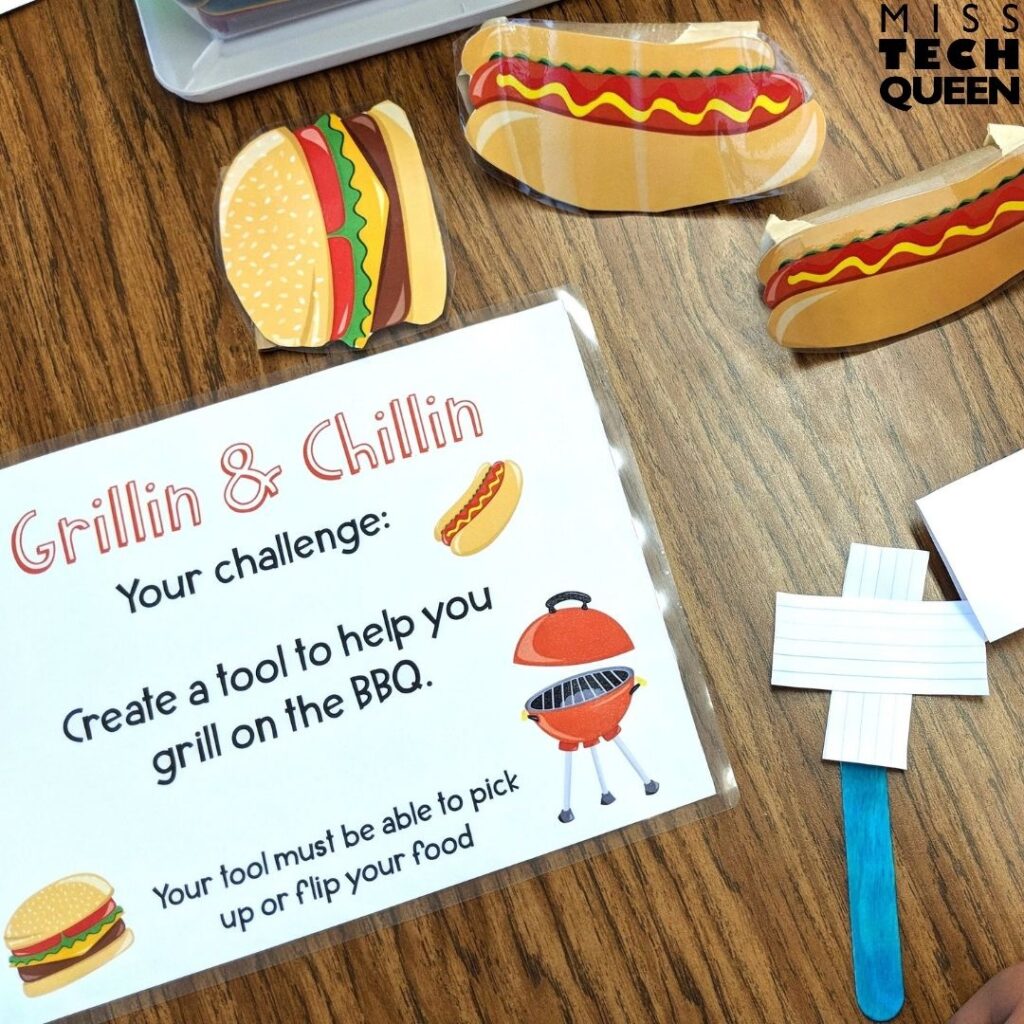
My Grillin & Chillin STEM Challenge lets your students design a tool for handling pretend food. Your students will need to consider how their creation will pick up or flip objects while using simple building materials. This introduces the idea that a tool’s design should match the job it needs to accomplish.
To connect to the world, take the time to show your students several kitchen utensils before beginning. Compare tongs, spatulas, and serving spoons, and discuss why each has a different shape. Ask which tool would work best for flipping a hamburger or picking up a small object. Your students can then use these observations to think about grip, movement, and control as they develop their own inventions.
Solving Environmental STEM Problems Through Engineering
Real world STEM problems aren’t always about making our own lives easier. Engineers also develop solutions that address environmental concerns and the needs of animals. These challenges help our students consider how their decisions can affect the world around them.
Build a Bird House to Explore Habitat Problems
What happens when birds lose the trees and natural spaces they depend on? As habitats change, some birds may have fewer safe places to nest and raise their young. This environmental problem gives our students a meaningful reason to explore how shelters are designed.
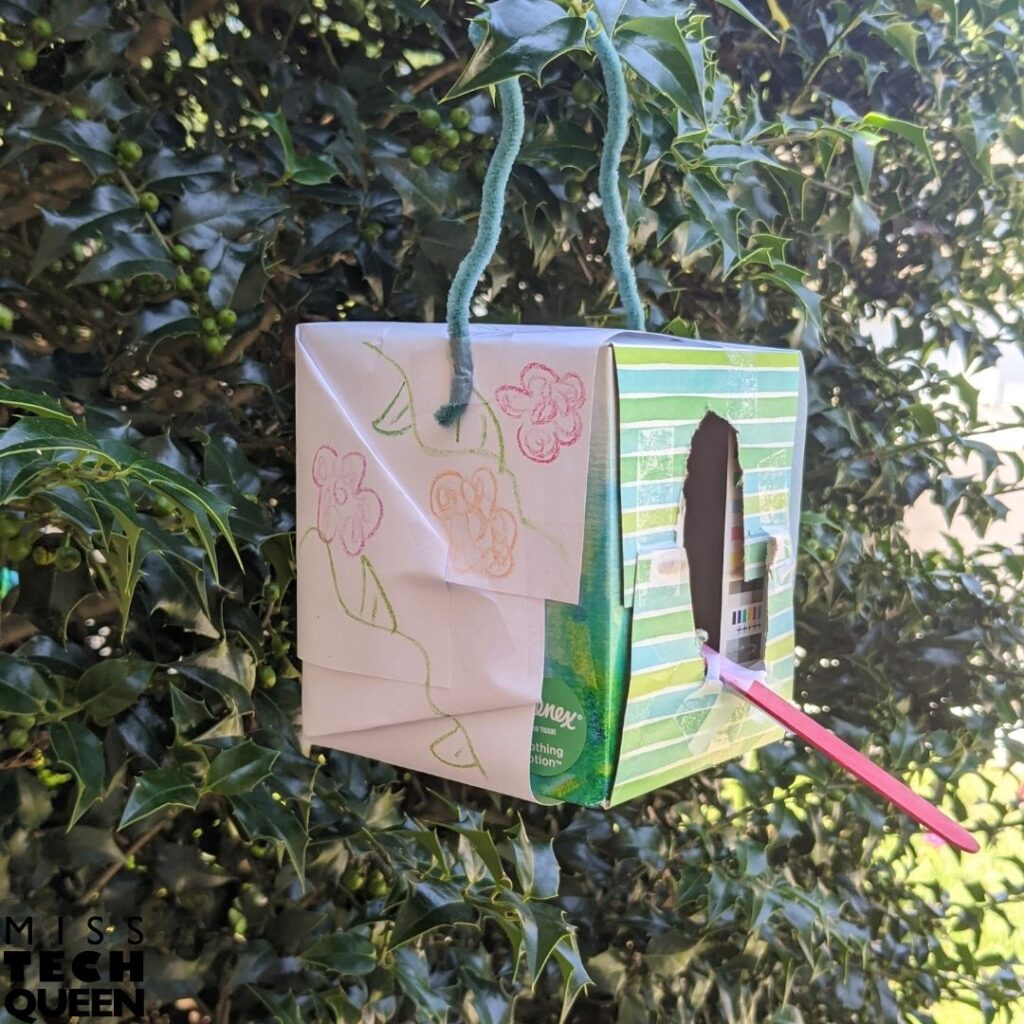
In my Build a Bird House STEM Challenge, your students will use recycled materials to create a birdhouse. Their design must include a perch and a way to hang the structure. Before your students begin building, show them pictures of different bird nests and ask what they notice. Some birds build nests in trees, while others use cavities or sheltered spaces. Why might one type of shelter work for one bird but not another?
I include digital activities about birds, nests, and recycling that can help introduce these ideas. As your students design their birdhouses, remind them to consider the bird’s needs rather than simply making something that looks like a house. A colorful design might catch our attention, but the bird needs a structure suited to its size and nesting habits.
Build a Bird Feeder to Support Wildlife
Birds need more than shelter. They also need access to appropriate food sources, and different species have different feeding habits. Bird feeders give your students another chance to consider how people design objects for animals.
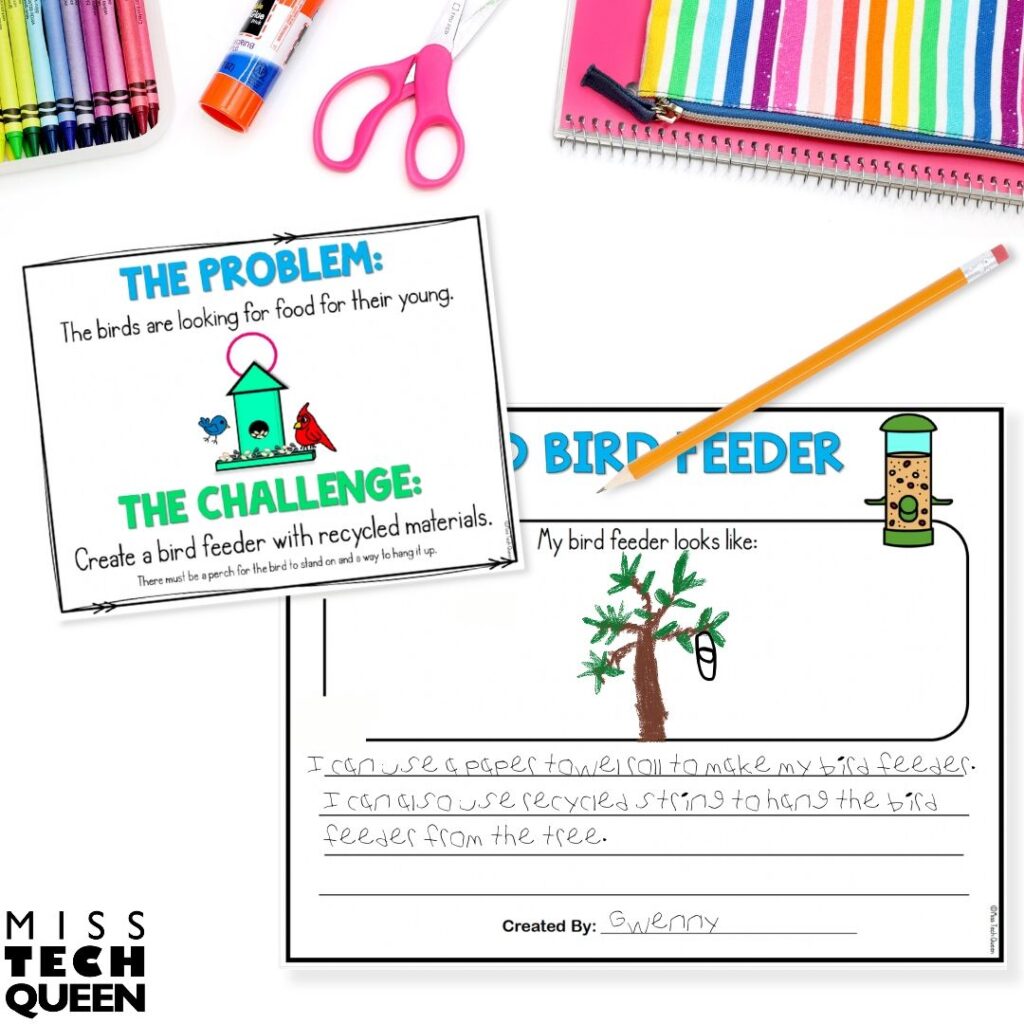
My Build a Bird Feeder STEM Challenge asks your students to create a feeder using recycled materials. Their designs must include a perch where a bird could stand and a way to hang the feeder. I provide a suggested list of materials, such as cardboard, popsicle sticks, straws, string, and other recycled items.
As your students plan their feeders, encourage them to think about how birds would access the food. Where would the food go? Would the perch provide enough space for a bird to land? How could the feeder be positioned to stay stable? These questions help your students connect their design decisions to the purpose of their creations.
Both bird challenges work well as classroom engineering models. If you plan to place finished designs outdoors, research the needs of local bird species first. Outdoor birdhouses and feeders require suitable materials, dimensions, placement, and maintenance to protect wildlife.
Designing Tools to Solve Real World STEM Problems
One of the most interesting ways to introduce STEM problems is to ask your students to improve a familiar task. Many inventions exist because someone wanted to complete a job more efficiently. From vacuum cleaners to garden tools, engineers keep developing new ways to help us do everyday work.
Build a Leaf Machine to Make Yard Work Easier
Picture a yard covered in fallen leaves. Someone could spend hours collecting them by hand, but what if a tool made the job easier? This is the type of problem that encourages your students to think about how machines and inventions help people.
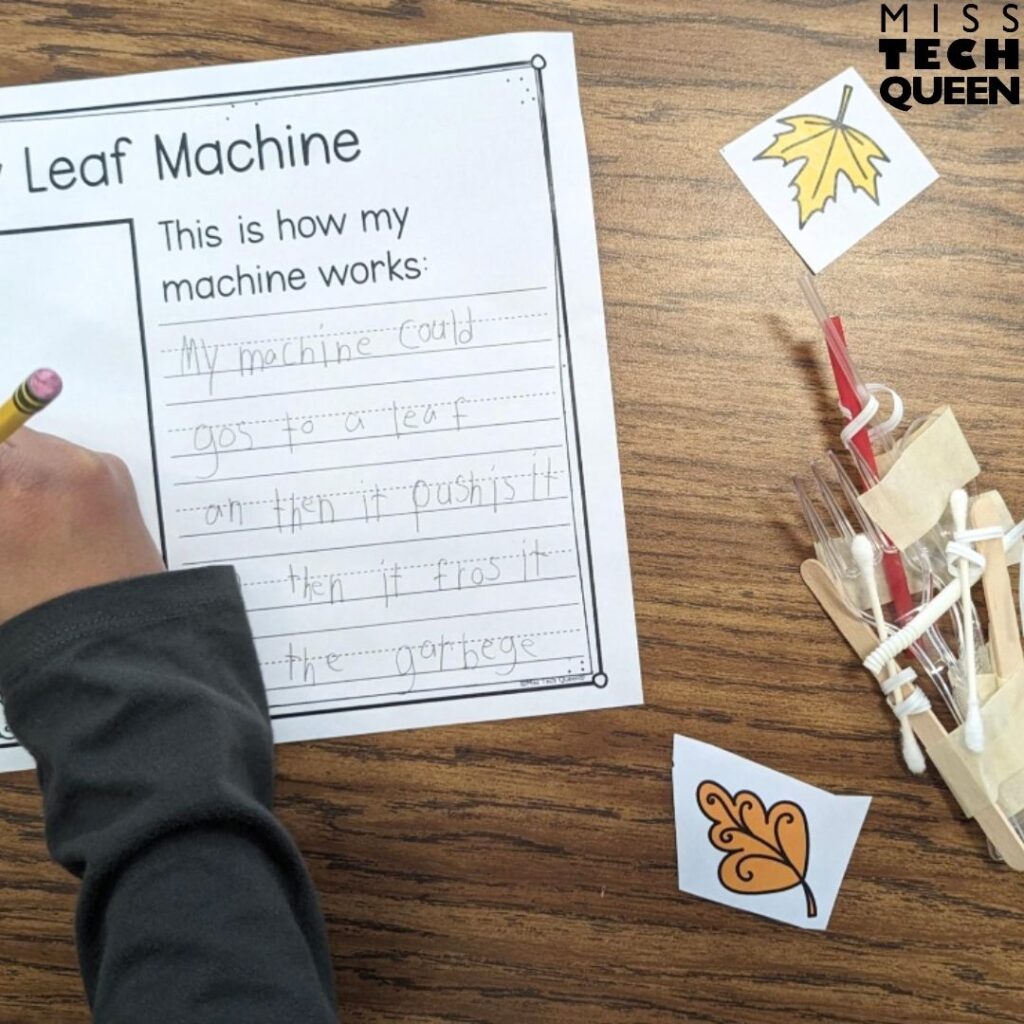
In my Build a Leaf Machine STEM Challenge, your students will design a device that can pick up as many leaves as possible. They use materials such as cardboard tubes, straws, pipe cleaners, paper strips, and tape. I also include pictures of different leaf-collecting machines that you can use to introduce the challenge.
As they look at the pictures, ask them to notice how each machine gathers leaves and what makes its design useful. Then set up a small collection area with paper leaves scattered across a table or the classroom floor. Give each student or group the same number of leaves to collect and explain that their goal is to gather as many as possible using their invention.
Once your students finish building, give them 30 seconds to collect leaves with their machines. Have them count how many they collected and record their results. This gives your students a measurable way to determine whether their designs work. You might discover that some of your students have created tools that grab individual leaves, while others have designed something that gathers several at once.
After the first round of testing, ask your students to look at their results and identify one thing they could change. If a tool keeps dropping leaves, could a wider opening or different gripping mechanism help? If it only collects one leaf at a time, how might your students modify it to gather more? Give them another chance to test their machines using the same number of leaves and time limit.
Solving Transportation STEM Problems with Structures and Boats
Transportation provides some of the clearest real world examples of engineering. We need ways to cross rivers, travel between communities, and move supplies from one location to another. These challenges introduce your students to the importance of stability, strength, and weight.
Build a Bridge to Solve Transportation STEM Problems
Imagine needing to cross a river without a bridge. Traveling to school, delivering supplies, or visiting another community could become much more difficult. Bridges solve this problem by connecting places that obstacles would otherwise separate.
My Building Bridges Around the World STEM Challenge has your students design and construct a three-dimensional bridge. They can use LEGOs, wooden blocks, popsicle sticks, and other classroom materials. The resource includes pictures of bridges from around the world. These will help your students to explore different structural designs before creating their own.
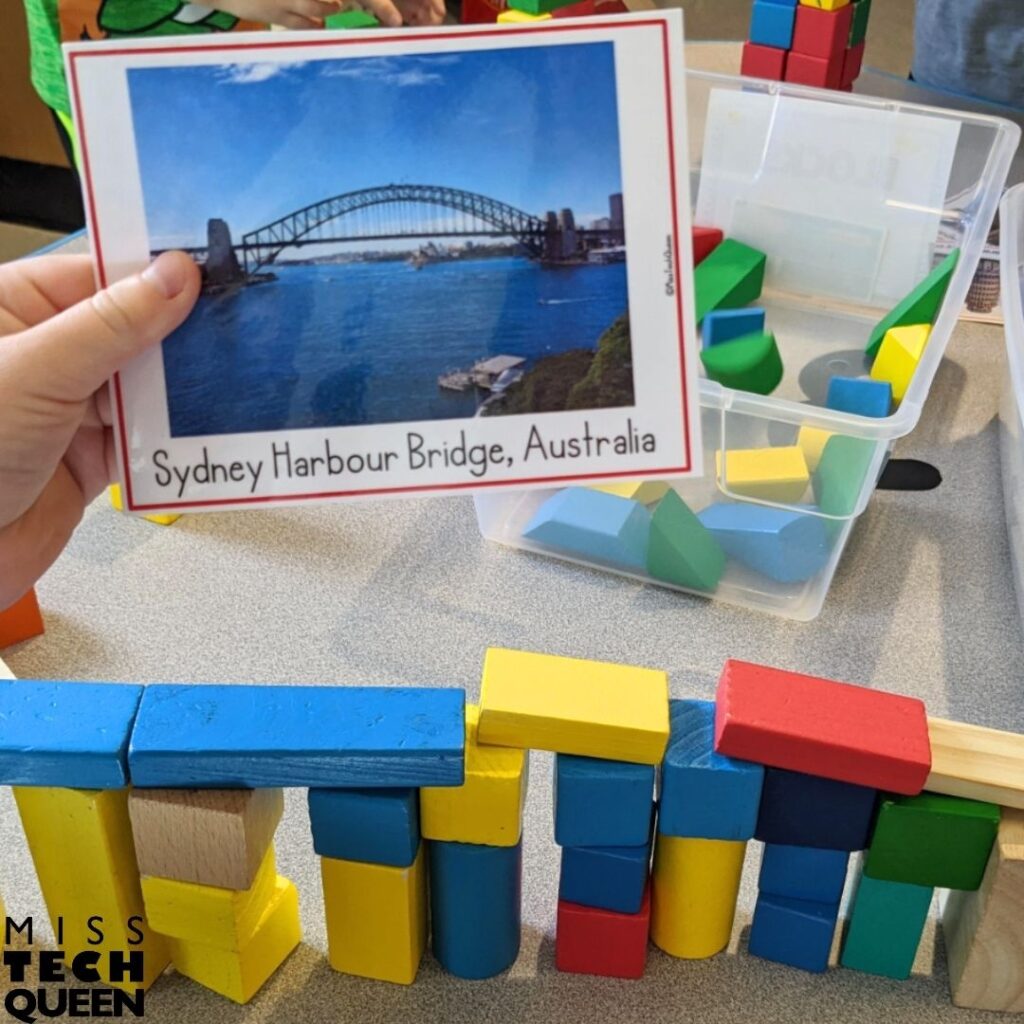
One of the most important parts of this challenge is the opportunity to investigate structural strength. Your students will test whether their bridges support a toy car or train. For another challenge, you can introduce heavier objects, such as pennies or books. You can also have your students measure their bridge’s height and length while recording how much weight it supports.
What happens when your students’ bridge collapses during testing? Instead of immediately telling them how to fix it, use that moment to encourage some engineering detective work! Ask your students to look at where the bridge started bending or breaking. Did the middle need more support? Were the building materials connected securely? Encourage your students to change one part of their structure before testing it again with the same weight. This helps them understand that a design that doesn’t work the first time isn’t a failure. It’s an opportunity to figure out what needs to change.
Build a Boat to Transport Cargo
Bridges help us cross obstacles, but boats offer another way to move people and supplies. Cargo ships transport everything from food to vehicles across waterways. Their designs must keep them afloat while carrying significant weight.
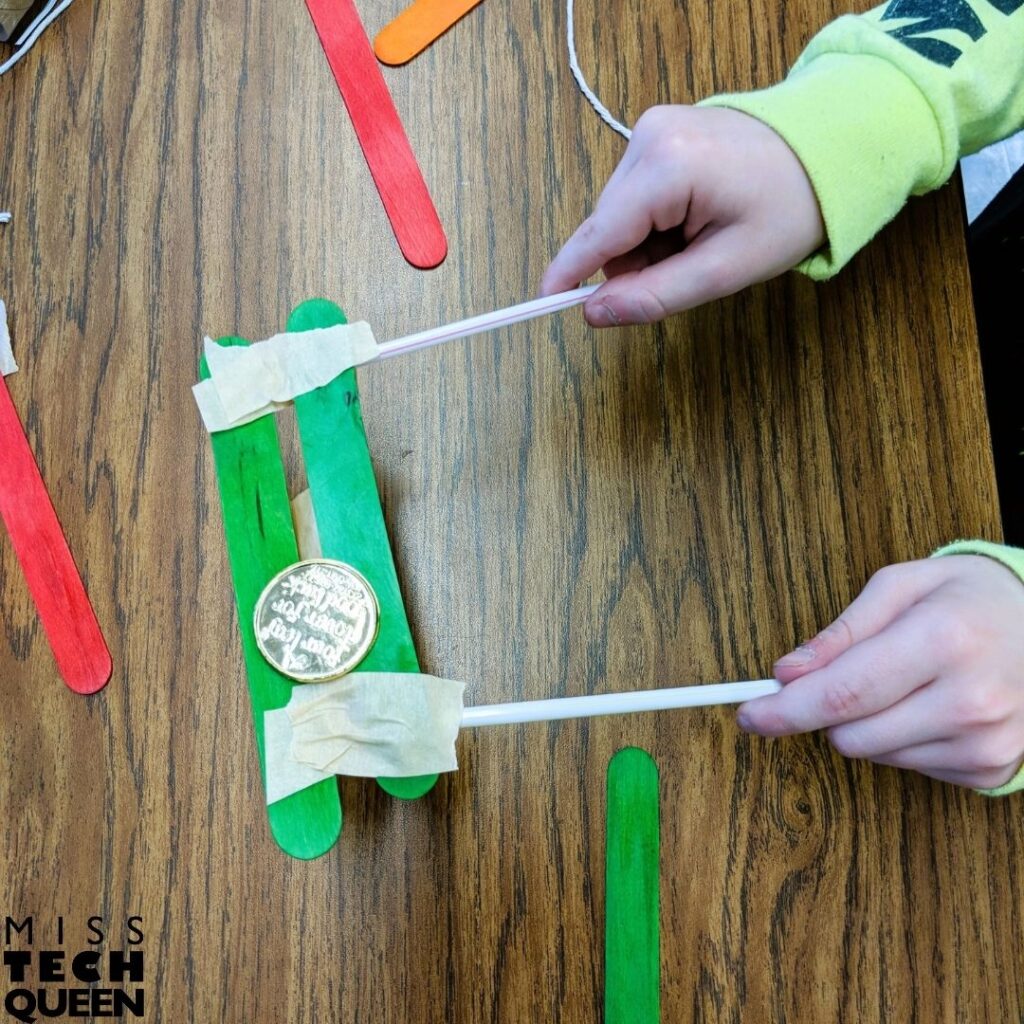
My Build a Boat to Hold Gold STEM Challenge introduces this concept through an entertaining leprechaun storyline. In this storyline, your students must create a boat that can transport a pot of gold down a river. The boat must stay afloat while carrying its cargo.
After your students have created their boats with the provided supplies, you will then move on to testing out their designs. While testing their designs in water, they will use pennies or pretend gold coins. As they progress through the challenge, your students will explore how much weight their boats can support before sinking.
Here’s where your students can discover that bigger doesn’t always mean better! Two boats made from the same materials might hold very different amounts of weight. As your students add pennies, guide them to notice whether their boats tilt, sink lower in the water, or begin taking on water. If a boat tips to one side, your students can investigate what happens when they spread the coins more evenly. It’s a simple way to introduce buoyancy and weight distribution while helping them understand why cargo ships need carefully designed structures.
Helping Your Students Recognize STEM Problems Beyond the Classroom
Once your students begin recognizing real world STEM problems, encourage them to look for other examples throughout their day. They might notice a backpack that needs better storage, a playground that could use more shade, or a classroom supply that is difficult to organize. Each observation can become the starting point for an engineering conversation.

One simple activity is to create a classroom STEM problem board. Invite your students to write or draw problems they notice at school, at home, or in their community. They don’t need to know how to solve the problem immediately. The goal is to help them practice noticing opportunities for improvement.
As your students share their observations, discuss which problems could be addressed through engineering. What materials might be needed? Who would benefit from the solution? What would a successful design need to accomplish? These conversations encourage your students to see themselves as capable problem-solvers, even when they aren’t completing a formal STEM challenge.
Find More STEM Challenges for Your Classroom
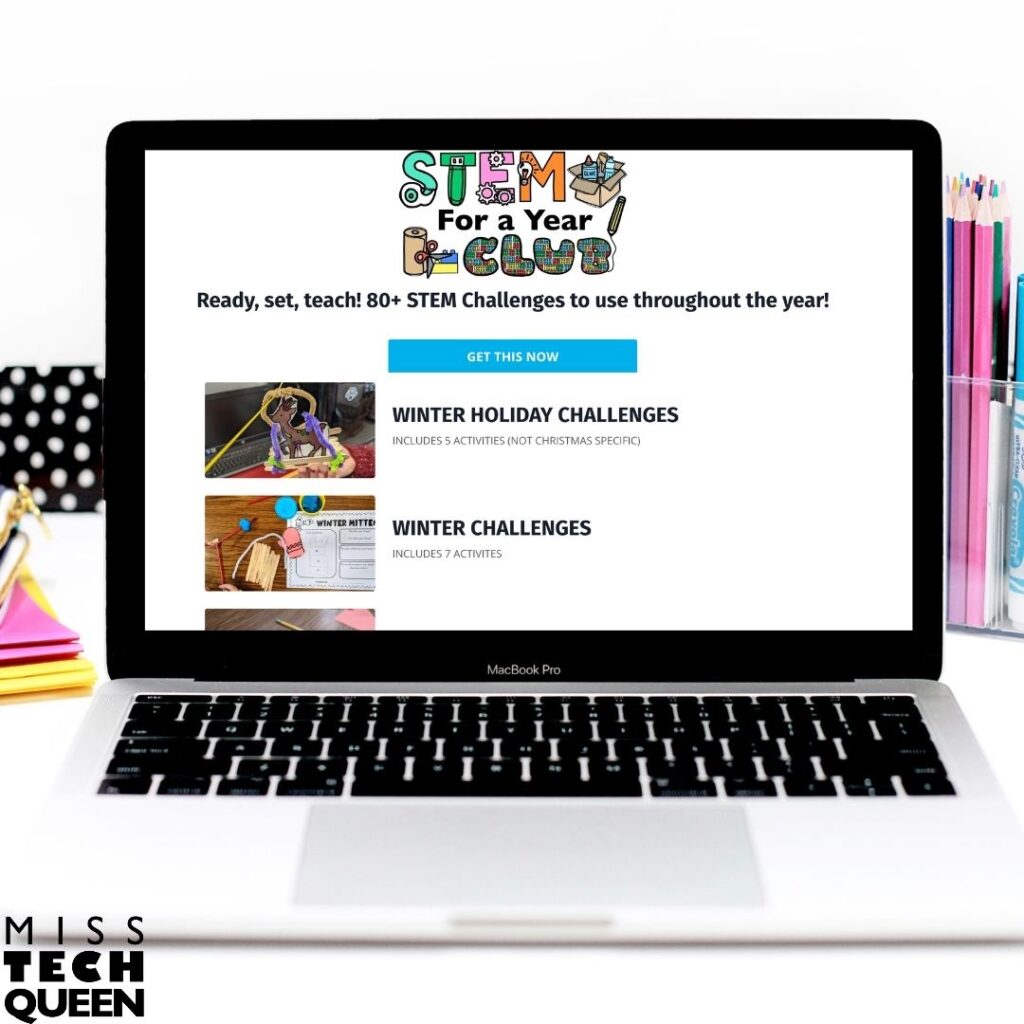
Whether you’re planning a STEM center, a whole-class challenge, or an engineering unit, having engaging activities ready to use can make planning much easier. If you’re looking for a way to bring meaningful STEM learning into your classroom all year long, check out my STEM for a Year Club! You’ll have access to a variety of hands-on STEM challenges that encourage your students to think creatively, solve problems, and apply their engineering skills. With activities ready to incorporate into your lessons, you can spend less time searching for ideas and more time helping your students discover what they can accomplish through STEM.
Make Real World STEM Problems Part of Your Classroom
Teaching STEM doesn’t have to begin with an elaborate project or expensive supplies. Sometimes all it takes is helping your students recognize a problem they’ve encountered before and giving them the chance to design a solution.
The next time you introduce a STEM challenge, begin by asking your students what problem they’re trying to solve. That simple question can change how they approach the entire activity. Instead of focusing only on what they’re building, they’ll begin thinking about why their creation matters.
Save for Later
Save this post to your favorite Pinterest board for STEM activities. You’ll have eight challenges ready to revisit whenever you need inspiration for your next STEM lesson!