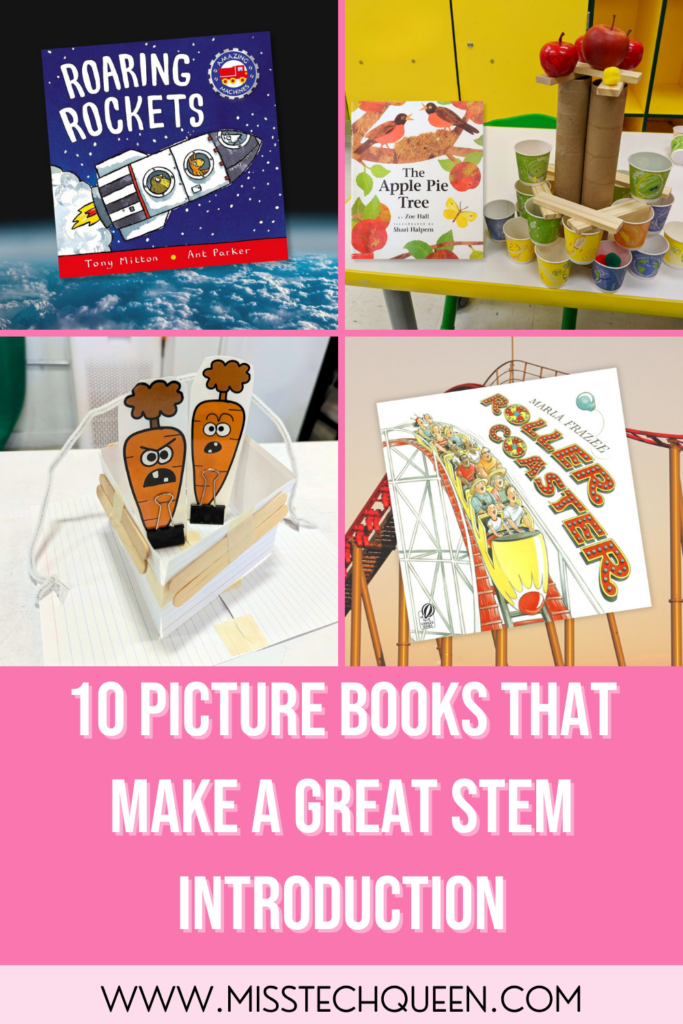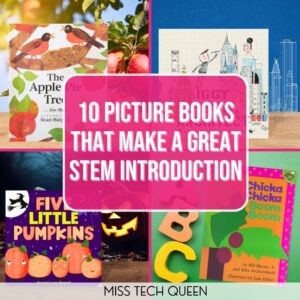
Do you remember the picture books someone read aloud to you when you were a kid? You may not remember every worksheet you completed. There’s a chance you may remember a few illustrations or stories from picture books that are tucked away somewhere in your brain. Picture books have a way of helping us see an idea instead of only hearing about it. That makes them especially useful when you’re introducing a STEM challenge. Before your students ever touch the tape, cardboard, blocks, or craft sticks, a picture book can help them visualize the problem they’re about to solve.
Why Picture Books Belong in Your STEM Lessons
STEM challenges can be exciting, but that doesn’t mean all our students immediately know what to do. You may announce that everyone is building a bridge, and half the class is already digging through the supplies. Meanwhile, another one of your students is frozen because they are still trying to picture what kind of bridge you mean. Picture books can give everyone a common starting point.
The illustrations are especially helpful for our young learners. Our students can study shapes, structures, materials, movement, and other details they may eventually use in their designs. A picture book about a roller coaster, for example, lets our students notice hills and turns before designing a track themselves.
Stories also give STEM challenges a reason to exist. Instead of simply saying, “Build a gate,” you can introduce five pumpkins that need somewhere to sit. Suddenly, your students aren’t completing an isolated building activity. They’re solving a problem they see and can understand to solve.
Picture Books Help Our Students See Themselves as STEM Thinkers
Not every child hears the word “engineer” and immediately thinks, “That’s me!” Picture books can make STEM concepts feel much more approachable. Our students are able to meet characters who wonder, create, make mistakes, solve problems, and keep trying. Those are the same habits they’ll need during a STEM challenge.
Books also give us an easy way to talk about mistakes before building begins. When a character’s first idea doesn’t work, stop and talk about it. Ask, “Was that a failure, or did the character learn something that could help with the next idea?” That conversation can change how our students react when their own tower falls five minutes later.
You also don’t have to turn your read-aloud into a thirty-minute STEM lecture. Choose one idea you want your students to notice. That might be balance, structure, motion, a character’s problem, or how something is designed. Then carry that idea into the challenge.
Below are 10 picture books that I have paired with STEM challenges to help you set the stage for your next successful STEM class!
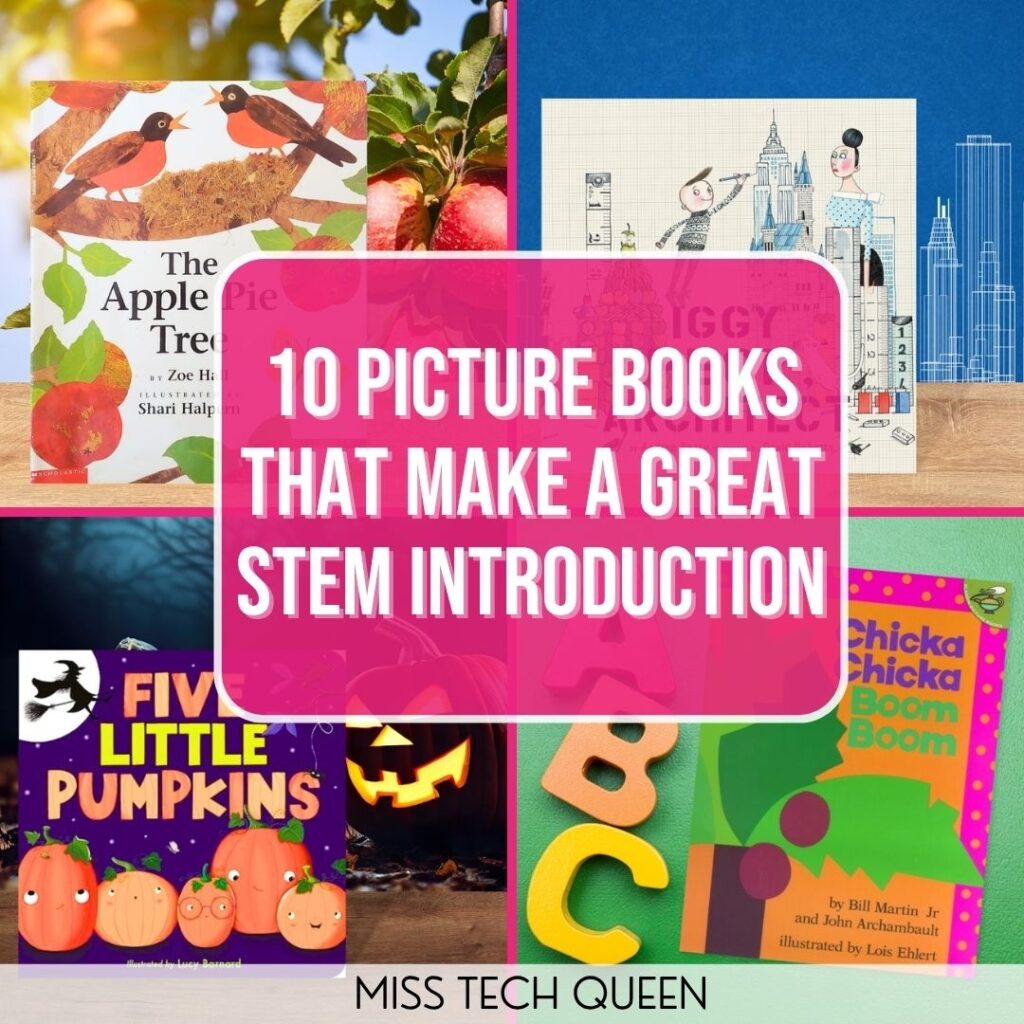
1. Use Picture Books to Explore Balance With Chicka Chicka Boom Boom
Chicka Chicka Boom Boom gives you a perfect setup for talking about balance. As the letters make their way up the coconut tree, eventually there are more letters than the tree can handle.
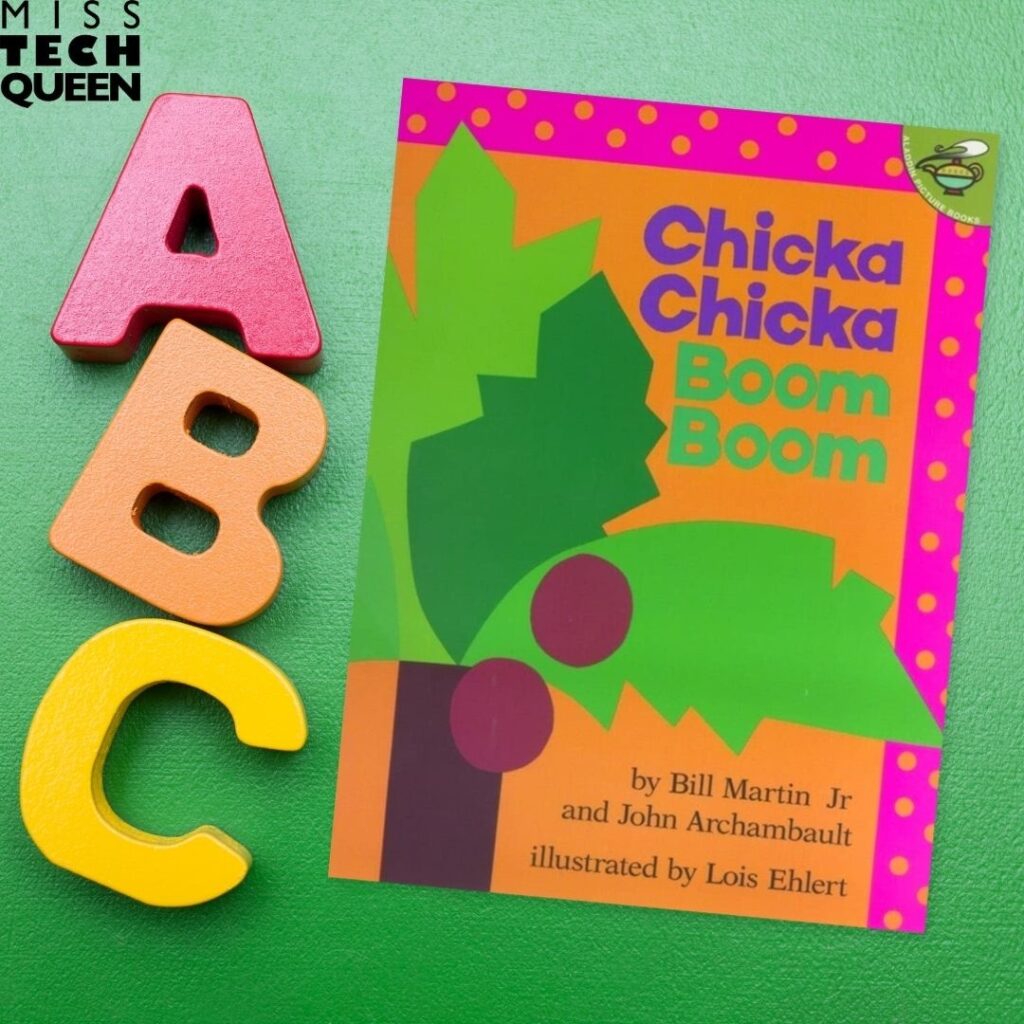
Before moving into your STEM challenge, go back to that part of the story. Ask your students what they think caused the problem. What might make an alphabet tree more stable? Would changing the base help? Don’t solve the problem for them. You’re planting ideas they’ll get to investigate themselves.
Then introduce the Chicka Chicka Boom Boom STEM Challenge. Your students will build their own alphabet trees and see how many letters they can balance on top. I give suggestions for materials like paper tubes, craft sticks, blocks, and different types of letters, but you can use what you already have. Give your students time to plan before they start building, and encourage them to predict how many letters their tree will hold.
After the first test, have them look closely at what happened, make one change to their design, and test it again. This keeps the focus on experimenting and improving instead of simply creating an alphabet tree.
2. Let Picture Books Establish the Design Criteria With Five Little Pumpkins
Sometimes a picture book can practically write your STEM challenge for you. Five Little Pumpkins gives your students an important detail before they’ve even seen their building materials: the five pumpkins need to sit on a gate!
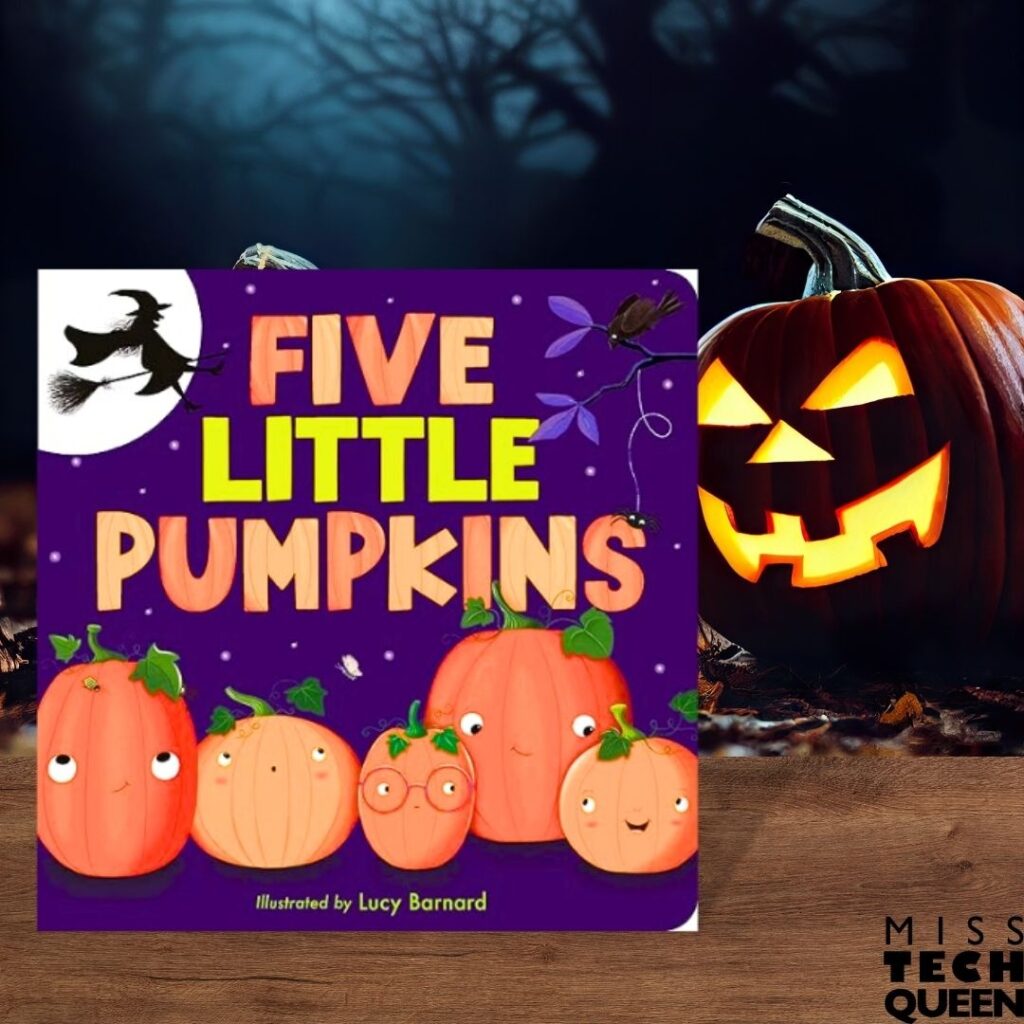
After reading, return to that idea. Ask, “If we were building the gate, what would it absolutely need to do?” Guide your students to identify that it needs to support all five pumpkins. You’ve just introduced design criteria without needing a lengthy explanation.
Then present the Five Little Pumpkins STEM challenge. From this challenge, your students will know how they’ll determine whether their design works. Can their gate hold all five pumpkins? If it can’t, they have a reason to reconsider the structure and make changes.
This is a great example of using picture books to give students the information they need to solve the challenge. You don’t read the story because it happens to have pumpkins. Students use the story to determine what a successful design needs to accomplish.
3. Study the Engineering Process in Picture Books With Walter’s Wonderful Web
Walter’s Wonderful Web gives you a different way to prepare your students for STEM. Instead of focusing only on the finished web, your students can pay attention to Walter’s attempts along the way.
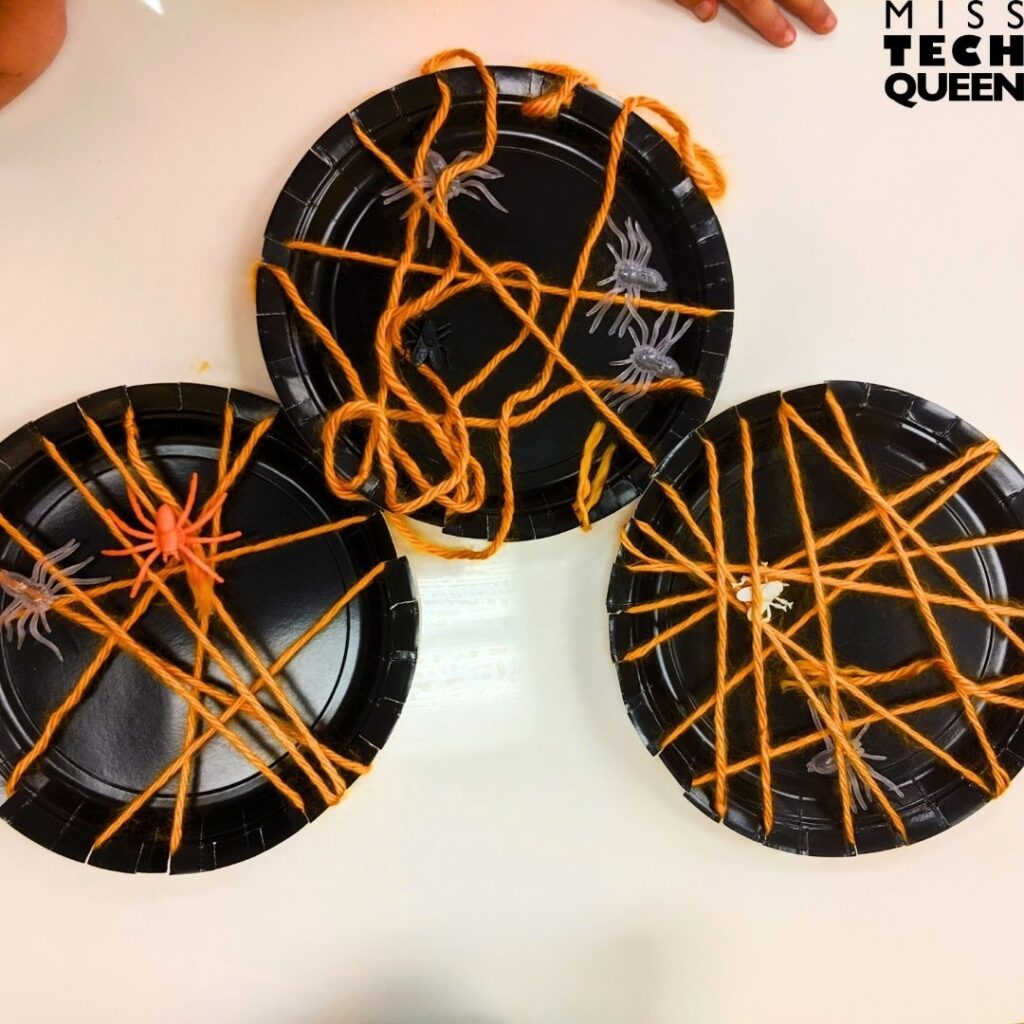
Before reading, tell your class to watch what Walter does when something doesn’t work. Afterward, talk about the different designs he tries. Ask your students why engineers might need more than one attempt to solve a problem.
Then let your students tackle my Weave a Web STEM Challenge. Rather than expecting everyone to create the perfect web immediately, encourage your students to experiment with different designs. The goal becomes trying, noticing, changing, and trying again.
This particular picture book can help normalize redesign before your students begin. When their first web doesn’t work exactly as planned, they already have a character who showed them what comes next.
4. Use Picture Books to Think Like an Engineer With Iggy Peck, Architect
When you read Iggy Peck, Architect, your students meet a character who loves designing and building. That makes Iggy a natural person to study before asking your students to become engineers themselves.
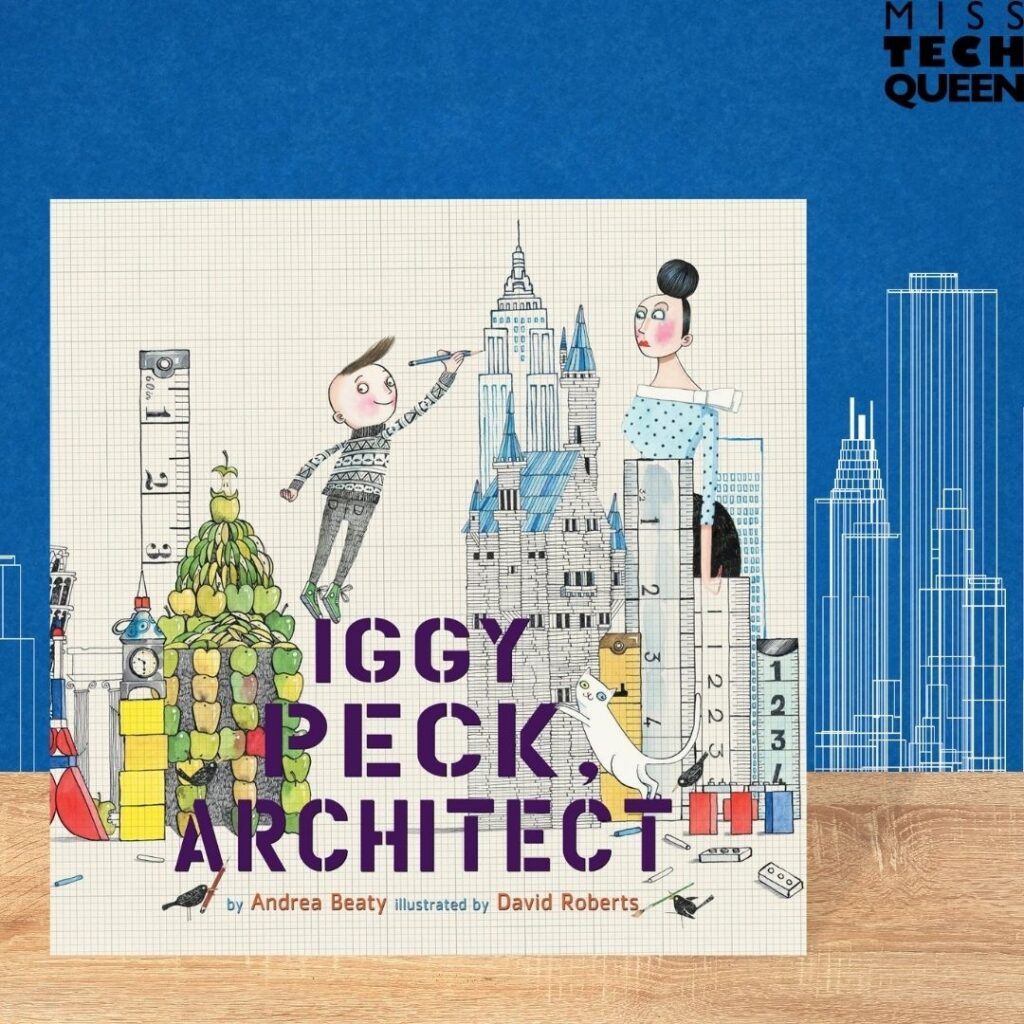
Instead of immediately moving from the book into building, spend a few minutes looking at design. In my Build a Bridge STEM challenge, I included photographs of bridges from around the world. This way, you can move from Iggy’s fictional creations to real structures. Ask your students what they notice about the different bridge designs and why bridges don’t all look alike.
Then introduce the challenge. Give your students access to your chosen building materials, but resist showing them one “correct” bridge. Let their observations influence their plans before they create, test, and improve their structures.
Picture books work differently here because the story introduces an engineering mindset. Your students see someone who creates before they examine how real engineers have approached a similar task.
5. Extend Picture Books With a New Problem in Creepy Carrots!
A STEM challenge doesn’t always have to solve the exact problem presented in a story. Sometimes it’s even more fun to ask your students what could happen next. After you read Creepy Carrots!, introduce a new scenario. The creepy carrots need to get out of the garden. Your students now have a problem the author didn’t solve for them.
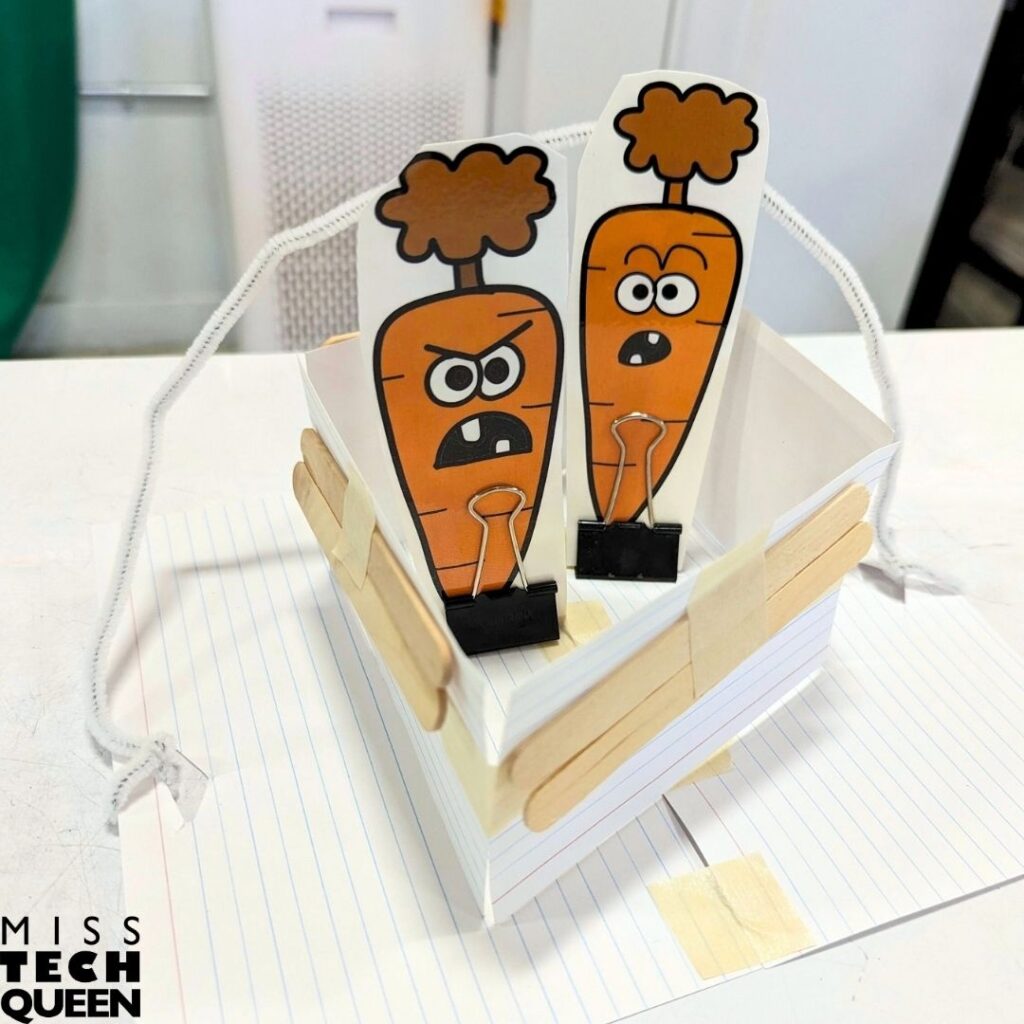
In my Creepy Carrots Zipline STEM Challenge, your students’ goal is to construct a zipline and a carrier or basket to help the carrots escape the garden. Give your students access to craft materials and let them decide how they will keep their carrot secure as it travels.
Once their designs are ready, have your students test whether the carrier stays attached and makes it from one end of the zipline to the other. If the carrot falls out, the carrier gets stuck, or the design does not travel as expected, encourage your students to figure out what needs to change. They can adjust their carrier or zipline before testing again.
That gives this challenge its own engineering problem; it’s not enough to make something that looks like a carrier. It actually has to transport the carrot successfully. That makes the testing feel purposeful and ties well into the “help the creepy carrots escape” story extension.
6. Observe Motion in Picture Books With Roller Coaster
Roller Coaster by Marla Frazee can turn your read-aloud into an observation activity. Before reading, tell your students they’re going to become roller coaster designers. Their job is to pay attention to the track. As you read, pause occasionally to study the illustrations. Where do your students notice hills, drops, twists, and turns? Where might the coaster speed up or slow down?
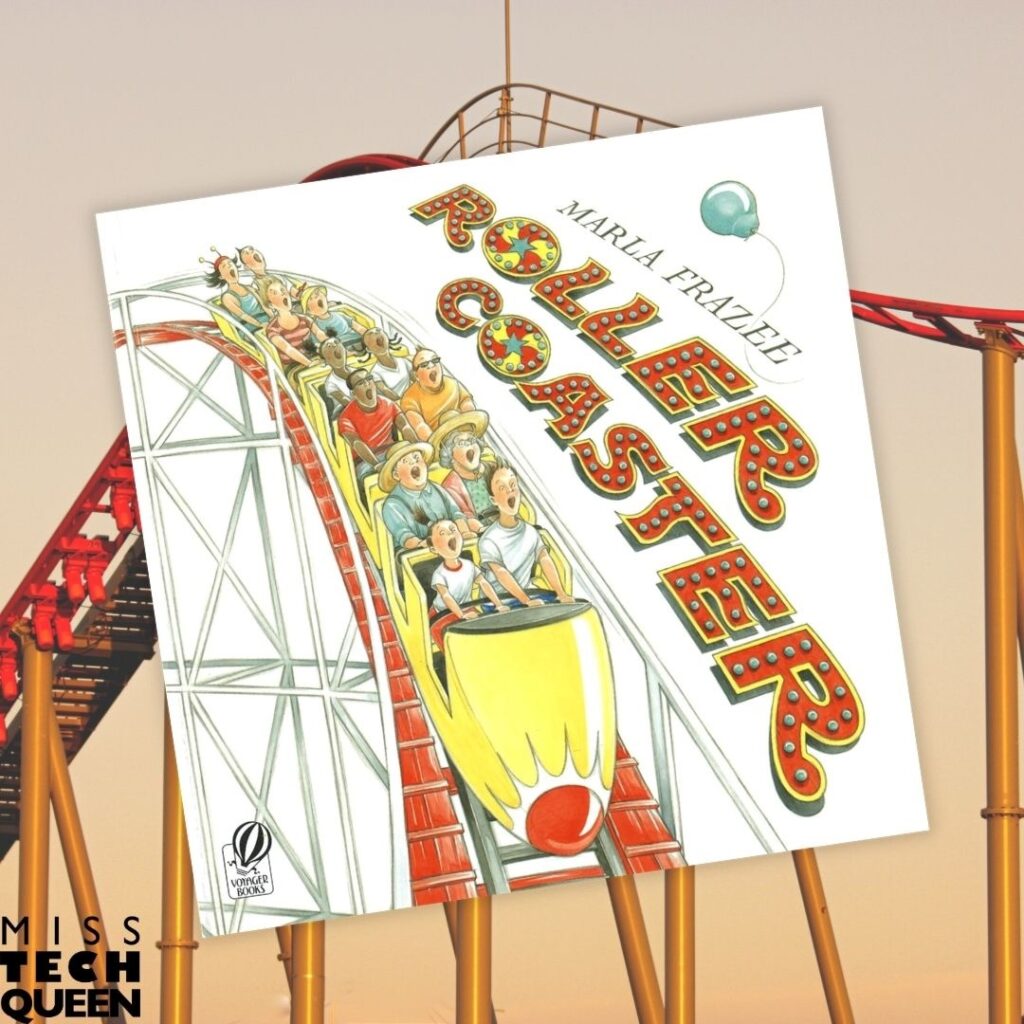
After they share their observations, tell your students they’ve been hired as lead designers for an amusement park. Using my Roller Coaster STEM Challenge, have your students construct a track where a marble must travel from beginning to end without assistance and finish in a cup. Their goal is to keep the marble traveling for the longest amount of time.
You can use stopwatches or have a timekeeper in your groups to time their marble. After receiving their first time, have them go back to identify trouble spots. Picture books are helpful with this challenge because the illustrations become visual research your students can use as inspiration when designing their own tracks.
7. Designing a School Bus for a Pigeon
The Pigeon HAS to Go to School! gives you a fun way to introduce the idea of designing for someone else. As you read, ask your students to pay attention to the Pigeon’s feelings about going to school. What worries him? What might make getting to school feel a little easier?
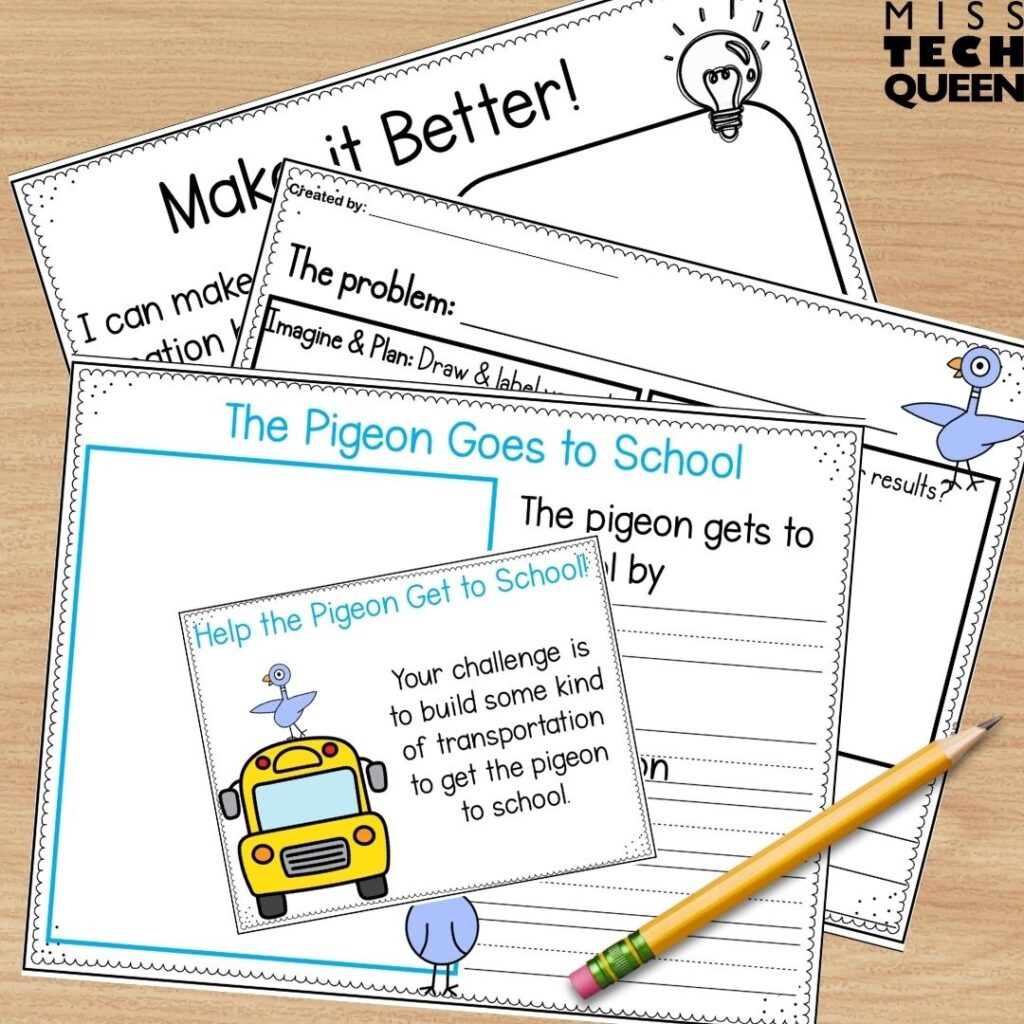
Then introduce my Pigeon Has to Go to School STEM Challenge. Your students can use what they learned about the Pigeon as they think about the transportation they’ll create. Before building, ask them to consider what their bus needs and how their design will help get the Pigeon to school. This gives your students a purpose beyond simply building a bus.
As your students create, ask them to explain some of their design choices. You might ask, “Why did you include that?” or “How would that help the Pigeon?”
8. Use Picture Books to Investigate How Structures Support Weight
With The Apple Pie Tree, your students can watch an apple tree change throughout the seasons. Eventually, those branches support the apples growing on the tree. That’s the detail I’d zero in on before this STEM challenge.
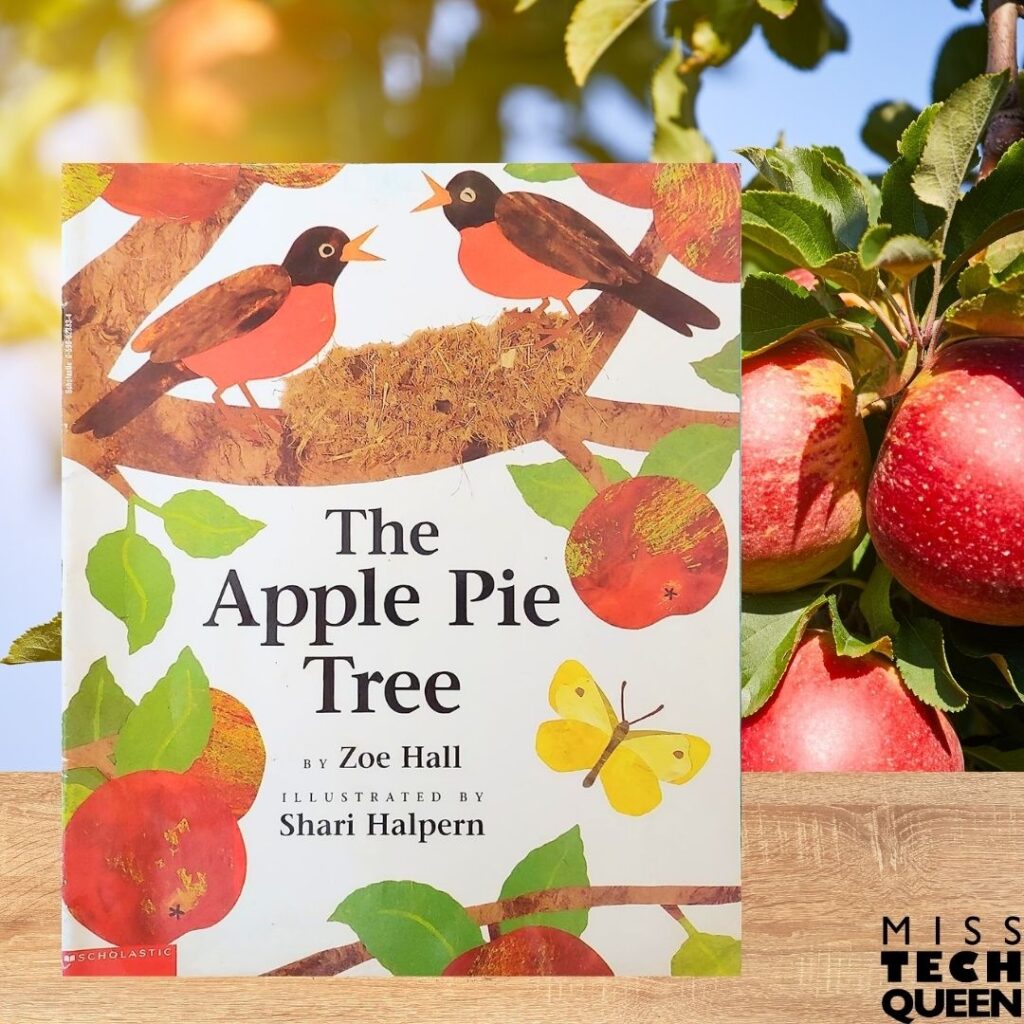
After reading, give your students my Apple Tree STEM Challenge. Their goal is to construct an apple tree and determine how many apples they can balance on it. Before building, look closely at the tree illustrations. Ask your students to think about what their own model tree would need to stay standing while holding apples. What parts of their design might need to be especially sturdy? You can also have them predict where to place the apples so the tree stays balanced as they add more.
Then have them build, adding the apples, and paying attention to what happens to their structure. If the tree begins to lean or falls, encourage them to decide what they could change before testing again. Instead of showing them how to build a strong tree, you’re giving them the opportunity to discover which designs work through testing and changing.
9. Another Balancing and Math STEM Challenge
You don’t necessarily need a new picture book for every STEM challenge. The Apple Pie Tree can also lead into my Apple Stack STEM Challenge. This time, instead of focusing on how a tree supports its apples, shift the conversation toward balance. Ask your students what they think makes something easier or harder to balance.
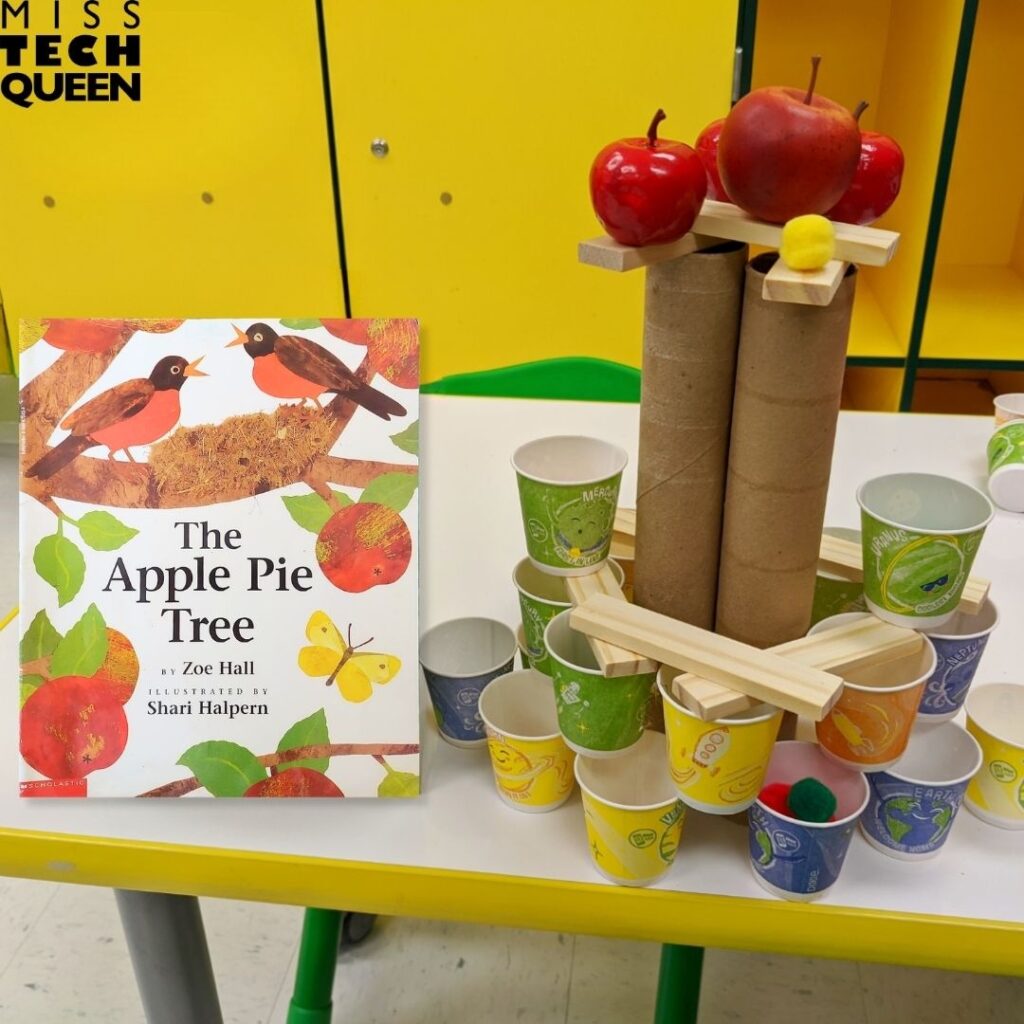
There are a couple of different challenges you can have your students work through. One challenge asks your students to build a tall tower that can balance an apple on top. Let them experiment with their materials and test their ideas. If the apple falls or the tower tips, have your students make adjustments.
You can also extend the challenge into math. Have your students measure their towers, record how many apples they balance, look for symmetry, or write an equation using the materials in their designs. This gives you a completely different way to use the same picture book while combining STEM, balance, and math.
10. Rocket Girl STEM Challenge
Before reading Roaring Rockets by Tony Mitton, give your students a job. Ask them to listen and look for details that could help them design a rocket. As you read, talk about the different parts your students notice and what those parts might do.
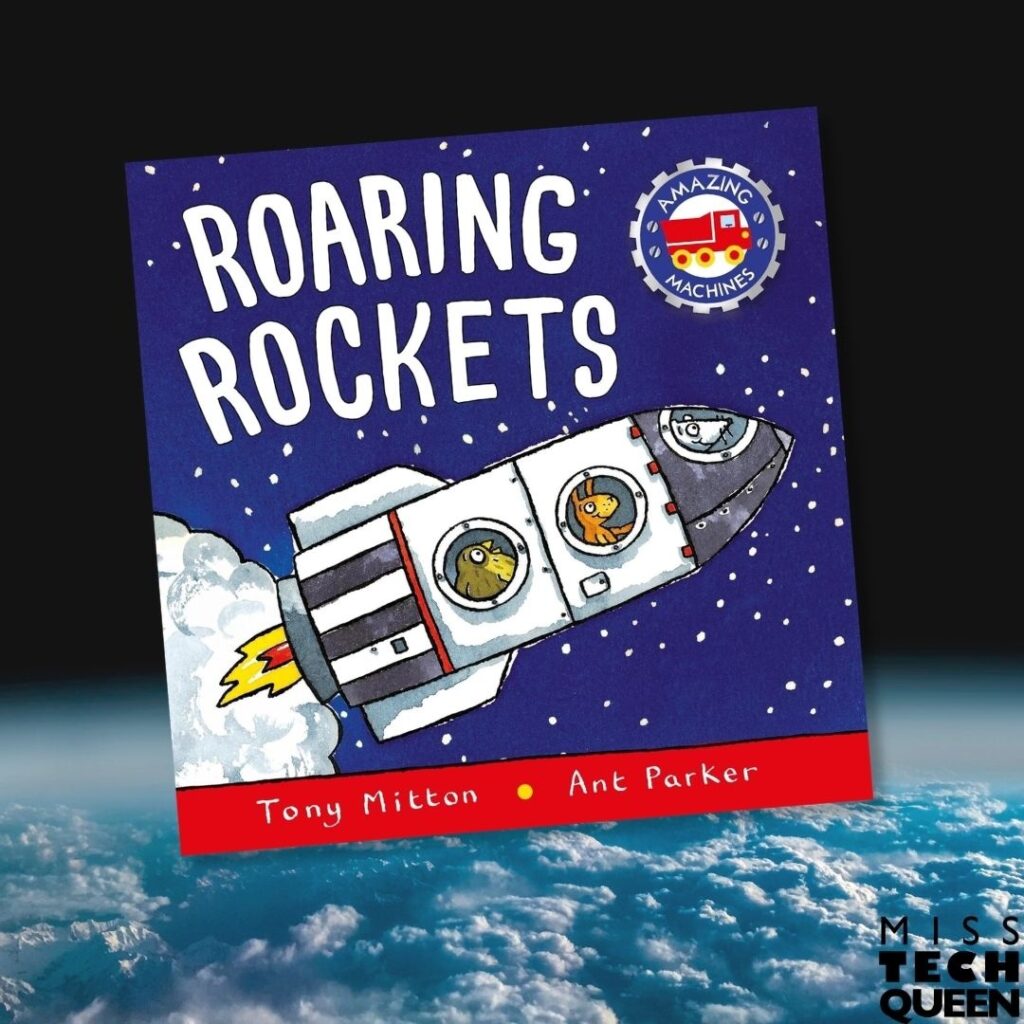
Then introduce my Rocket Girl STEM Challenge. I include questions about rocket shapes, rocket parts and their purposes, how rockets leave the ground, and rocket stages to help your students connect the illustrations to real rockets.
In this challenge, your students will build a rocket with at least two parts and explain what each part is for. Before they begin, have them think back to the parts they noticed while reading Roaring Rockets.
As they plan and build, ask, “Why did you include that part?” and “What job does it have?” Your students will decide which parts to include. This gives them a reason to use information from the picture book instead of simply building something that looks like a rocket.
Choosing Picture Books for Your Own STEM Challenges
You don’t need a specially created STEM picture book every time you want to make this connection. Start with the challenge you’re already planning. Then ask yourself, “What do my students need to understand, notice, or wonder about before they begin?”
If they’re building a structure, look for picture books that show interesting structures or characters facing a similar problem. Find illustrations that let them observe movement. If redesign is important, a character who tries repeatedly can show that mindset before materials ever hit the tables.
Remember not to force the connection. Reading an apple book before an apple activity doesn’t automatically strengthen the STEM lesson. The best picture books give your students something they can carry from the read-aloud into their challenge.
Find Even More STEM Challenges
Once you start pairing picture books with STEM challenges, it gets pretty easy to see opportunities everywhere. A character problem can become a design challenge. An illustration can spark a building idea. A few story details can give your students the background they need before creating.
If you want even more ready-to-use STEM challenges, visit my TPT store to browse more STEM challenges and activities for different seasons, themes, and skills. You can also explore my STEM for a Year Club for an even bigger collection of challenges you can connect with picture books throughout the school year.
Start With a Story and See Where STEM Takes You
The best part about connecting picture books with STEM is that there isn’t only one way to do it. One story might help your students notice how something is built, while another introduces a problem they can solve. You can even use the same book to launch two completely different challenges.
So, take a look at the picture books already sitting on your classroom shelves. There may be a character, problem, illustration, or idea that connects perfectly with a STEM challenge you already teach. Sometimes a familiar read-aloud is all you need to turn “Today we’re building…” into a challenge your students already have a reason to care about.
Save for Later
Save this post to your favorite STEM Pinterest board so you can come back to these picture books the next time you need an easy STEM introduction.