

Have you ever looked up from helping a student or doing a task and wondered how your classroom became so loud so quickly? One minute, your students are excitedly discussing their designs or helping a teammate debug code. Next, someone is calling across the room for tape. Another group is celebrating a successful build, and you can barely hear yourself think. If you’ve ever wondered how to manage classroom noise during a busy STEM or technology lesson, you’re not alone. The truth is, productive classrooms are rarely silent. The goal isn’t to eliminate student conversations. It’s to help our students understand when, how, and at what volume they should communicate so learning remains the focus.
Why You Don’t Need to Eliminate All Noise to Manage a STEM Classroom
If you’ve ever walked into a STEM classroom in the middle of an engineering challenge, it probably didn’t sound like a traditional classroom. You may have heard students asking questions, sharing ideas, testing designs, and celebrating small victories together. That’s exactly what meaningful learning often sounds like. Collaboration naturally creates conversation. Conversation helps our students think more deeply about what they’re doing.
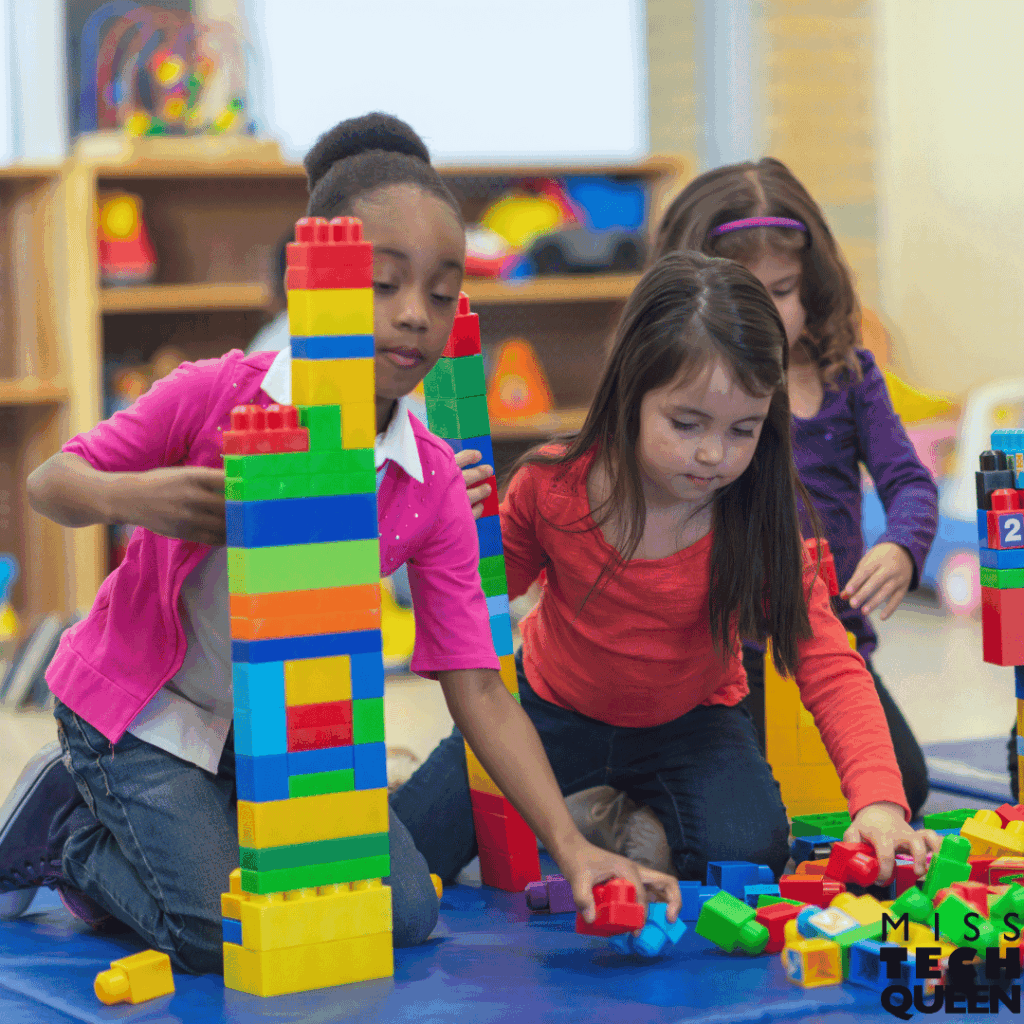
Think about a group working together to build the tallest tower. One student suggests using a wider base, while another notices the structure keeps leaning to one side. A third student recommends moving a support piece before the tower collapses again. Those conversations are an important part of the learning process because our students explain their thinking, solve problems together, and make decisions as a team.
The challenge begins when productive conversations slowly become unrelated conversations. You might have students start talking across the room instead of within their groups. Several groups begin competing to be the loudest without realizing it. Before long, your students can’t hear directions, teammates become distracted, and the excitement that supported learning begins to work against learning. Managing classroom noise isn’t about creating silence. It’s about helping your students recognize the difference between productive collaboration and unnecessary distractions.
Why It Can Be Difficult to Manage Classroom Noise
Many of us assume our students simply get too excited during hands-on activities. While excitement certainly plays a role, it’s rarely the only reason a classroom becomes louder as the lesson continues. Sometimes, the volume increases because our students aren’t entirely sure what they’re supposed to do or how they’re supposed to communicate during each part of the lesson.
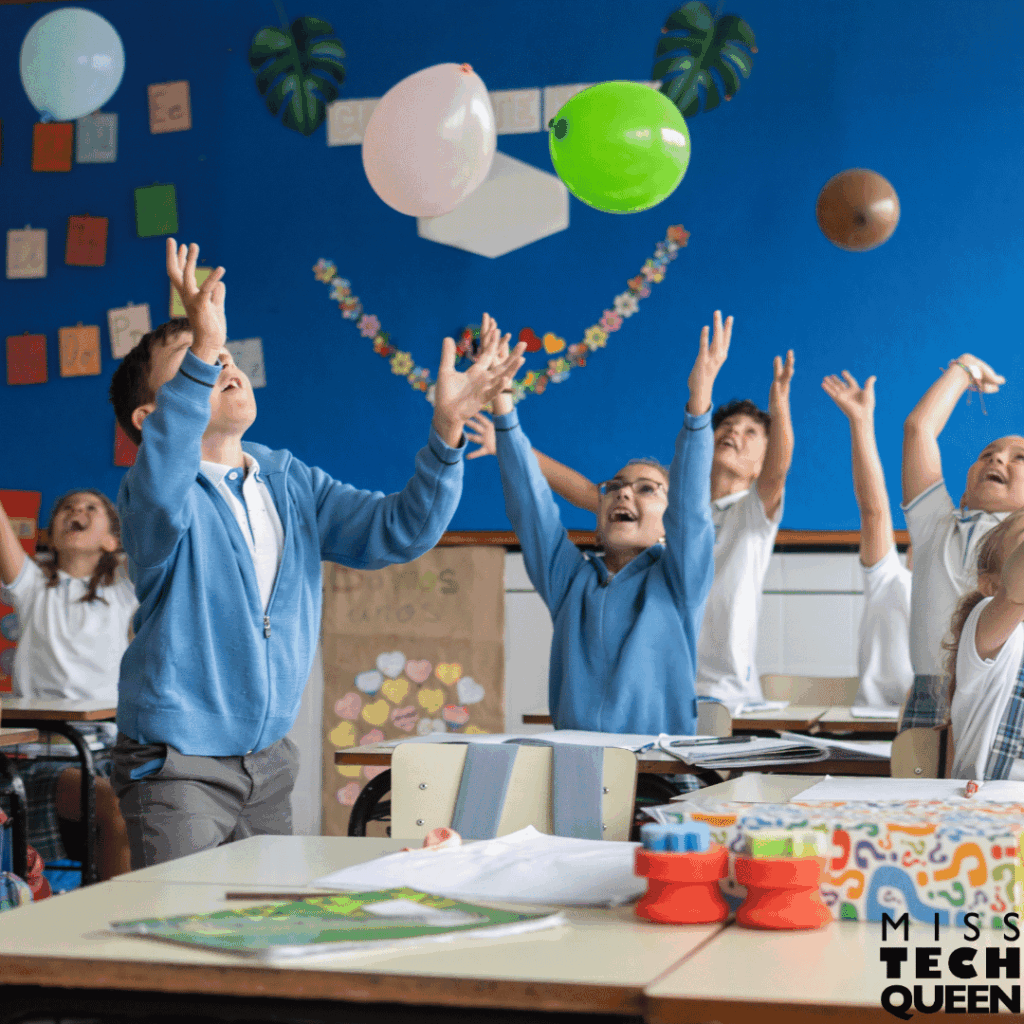
Imagine your students have just started a coding challenge. You have one group finish the first task quickly and begin chatting while they wait. Another group is stuck and starts calling for your help from across the room. Someone else realizes they forgot scissors and asks another table to borrow them. None of these situations started as behavior problems, but together they quickly raise the overall noise level.
This is why the best way to manage classroom noise begins long before voices become too loud. When your students know exactly what is expected during directions, collaboration, testing, cleanup, and transitions, they spend less time guessing what to do next. Clear routines remove uncertainty. That confidence often leads to calmer, more purposeful conversations throughout your lesson.
9 Strategies to Help Manage Classroom Noise
Before we jump into specific strategies, remember that your goal is to create an environment where each of your students can collaborate, think, and communicate without competing to be heard. These classroom management strategies will help you set clear expectations while giving your students the tools they need to manage their voices more independently.
1. Teach Voice Levels to Help Manage Classroom Noise
One of the biggest mistakes we can make when trying to manage classroom noise is assuming our students already know what an “appropriate voice” sounds like. Instead of simply announcing, “We’re using Voice Level 2 today,” take time to explain what that actually sounds like and why it matters. When your students understand both the expectation and the reason behind it, they make better choices even when you aren’t standing beside them.
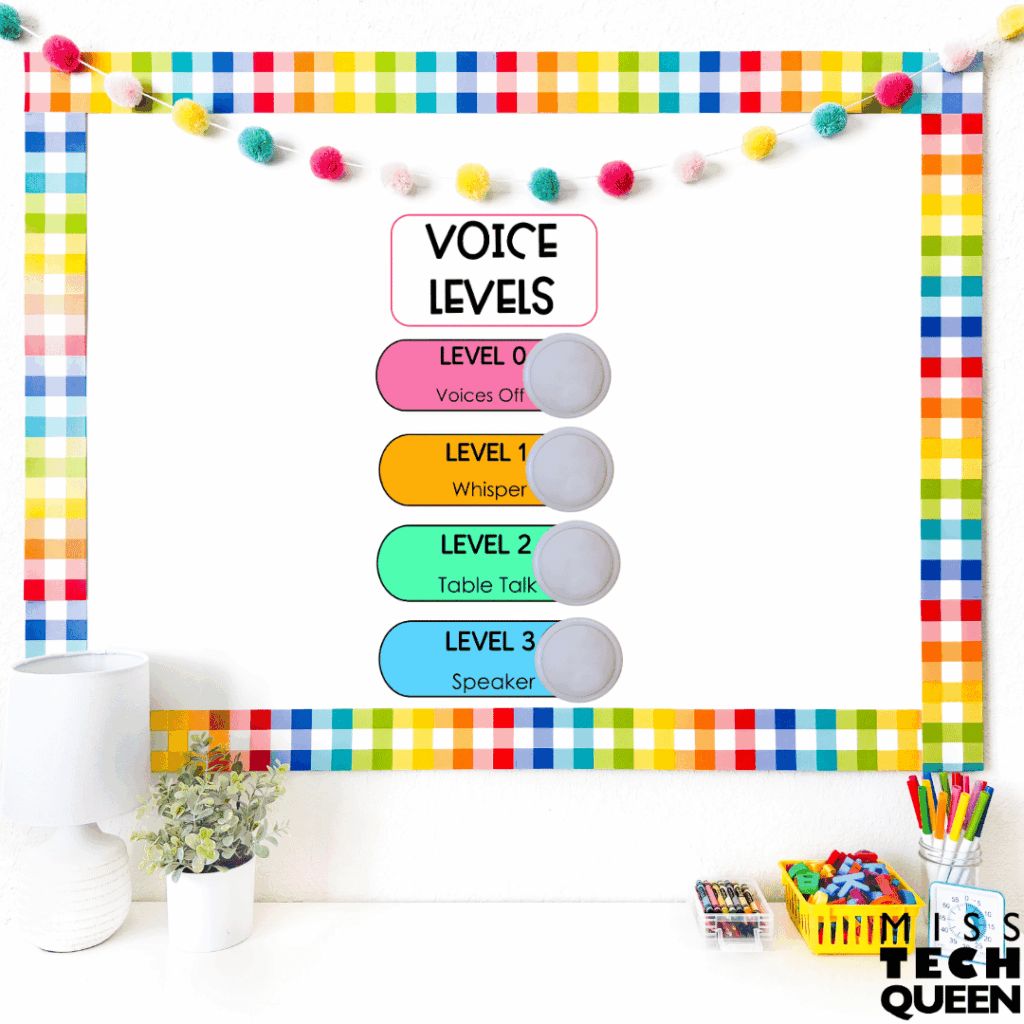
Before beginning a collaborative activity, connect the expected voice level to the lesson itself. You might tell your class, “Today we’re building bridges, so everyone will need to hear the ideas their teammates share. If one table is much louder than everyone else, nearby groups may have trouble concentrating or discussing their own designs.” Then model each voice level with your class. Invite a few volunteers to demonstrate what Voice Levels 0, 1, 2, and 3 sound like, so everyone can hear the differences before the activity begins. Those conversations and demonstrations help your students understand that voice levels aren’t about keeping the classroom quiet. They’re about making sure every group has the opportunity to learn.
Once your students understand the expectations, make the current voice level easy to see throughout class. A voice level chart paired with tap lights gives your students an instant visual reminder without interrupting the lesson. Before each activity, simply turn on the light next to the expected voice level. As your lesson changes from direct instruction to partner work or cleanup, you can quickly switch the light to match the new expectation. My editable Voice Level Charts make it easy to implement this strategy and share your expectations while giving your students a visual they can refer to all year long.
2. Practice Your Expectations Before the Real Activity Begins
It can be tempting to explain the rules once and jump straight into an exciting STEM challenge. After all, your students are eager to start building, coding, or creating. Taking just a few extra minutes to practice your expectations is one of the easiest ways to manage classroom noise later. Your students can’t meet expectations they’ve never had the opportunity to rehearse.

Let your class practice moving through a few common classroom situations. Ask partners to spend thirty seconds discussing their favorite ice cream flavor using the expected voice level. Then end the conversation with your attention signal and compliment them on what they did well. Next, have your students practice gathering materials from the supply station before returning to their seats. These simple practice opportunities allow you to coach your students in a low-pressure setting before the real lesson begins.
Don’t worry if everything isn’t perfect the first day. Building classroom routines is a process. Each time you pause to reinforce a positive example or briefly reteach an expectation, you’re helping your students develop habits that will carry into future lessons. Before long, transitions become smoother, conversations stay more focused, and you spend far less time redirecting unnecessary noise.
3. Set Different Voice Expectations to Manage Classroom Noise
Not every part of your lesson should sound the same. Your students will naturally become confused when they’re expected to use one voice level for every activity. Instead, help them understand that the appropriate volume depends on what they’re doing at that moment. Just as they use different tools for different STEM challenges, they’ll use different voice levels throughout class.

For example, you might begin class with Voice Level 0 while you explain the day’s challenge and demonstrate new materials. Once your students move into their teams, you can switch to Voice Level 2 so they can discuss ideas and solve problems together. During cleanup, you may continue using that same level or lower it if students need to hear directions about organizing supplies. Since expectations change with the activity, your students learn to adjust their voices instead of maintaining the same volume throughout the period.
As you transition between activities, make it a habit to announce the new expectation before students begin. A quick reminder, such as “We’re moving into our building time, so we’re switching to Voice Level 2,” helps everyone start on the same page. Those reminders become part of your classroom routine, and your students begin adjusting their voices naturally as the lesson changes.
4. Use Attention Signals Instead of Raising Your Voice
When your classroom starts getting louder, it’s natural to raise your own voice so your students can hear you. I’ve done that myself many times. The problem is that our students often respond by talking even louder themselves. Before long, everyone is competing to be heard. I encourage you to choose one attention signal and use it consistently until it becomes second nature for your students.
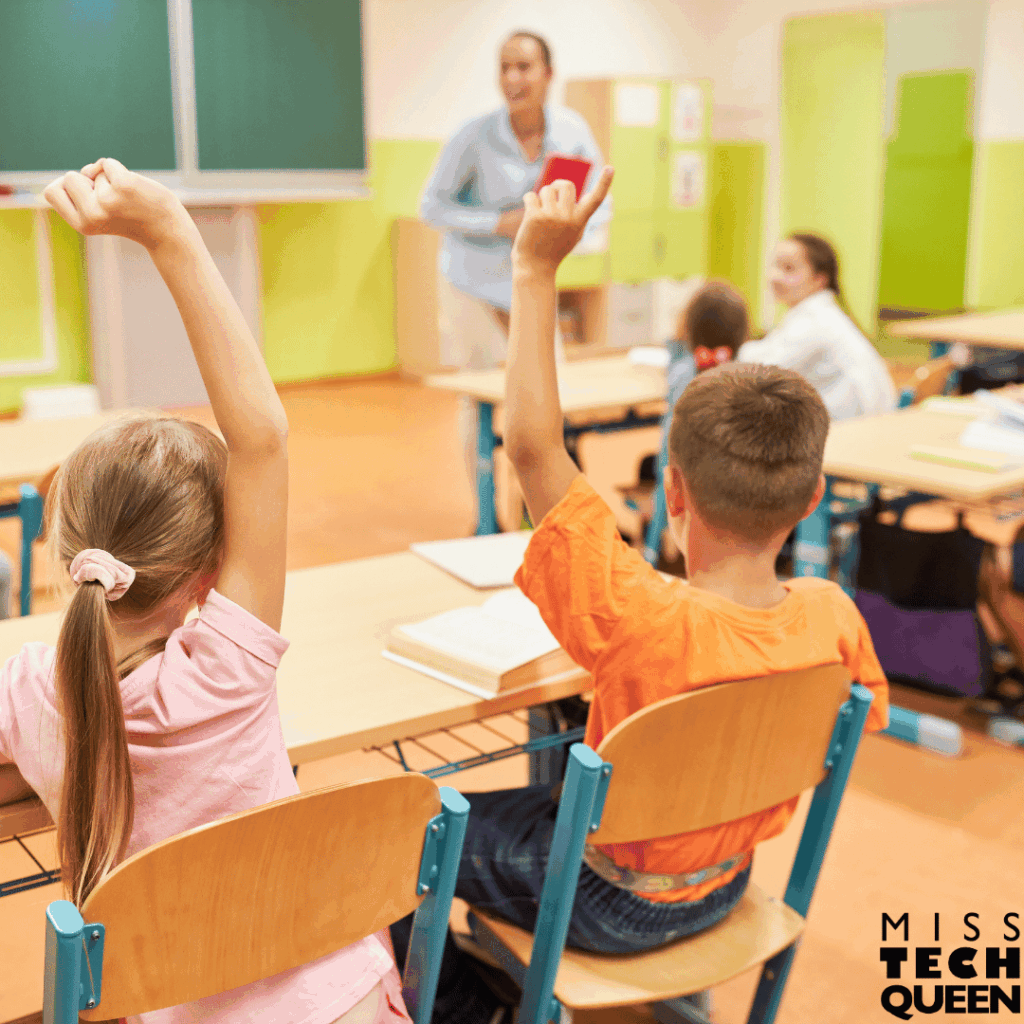
You might ring a chime, clap a simple pattern, use a call-and-response, or raise your hand. Whatever signal you choose, stop talking once you’ve given it. Give your students a few moments to notice the signal, finish their sentence, and direct their attention back to you. If you continue talking while your students are still chatting, many of them won’t realize you’ve asked for their attention.
Your students won’t master this routine after one lesson. During the first few weeks, you’ll probably need to practice it several times a day. Celebrate when your class responds quickly. If they don’t, simply practice again before moving on. That consistency teaches your students exactly what to do, making interruptions shorter and helping your lesson keep its momentum.
5. Organized Materials Help Manage Classroom Noise
Sometimes the noise in your classroom has very little to do with student behavior. Instead, it comes from your students trying to figure out where supplies are or who has the materials they need. Every time someone calls across the room for glue, asks another group to borrow scissors, or leaves their table to hunt for tape, the overall noise level increases.
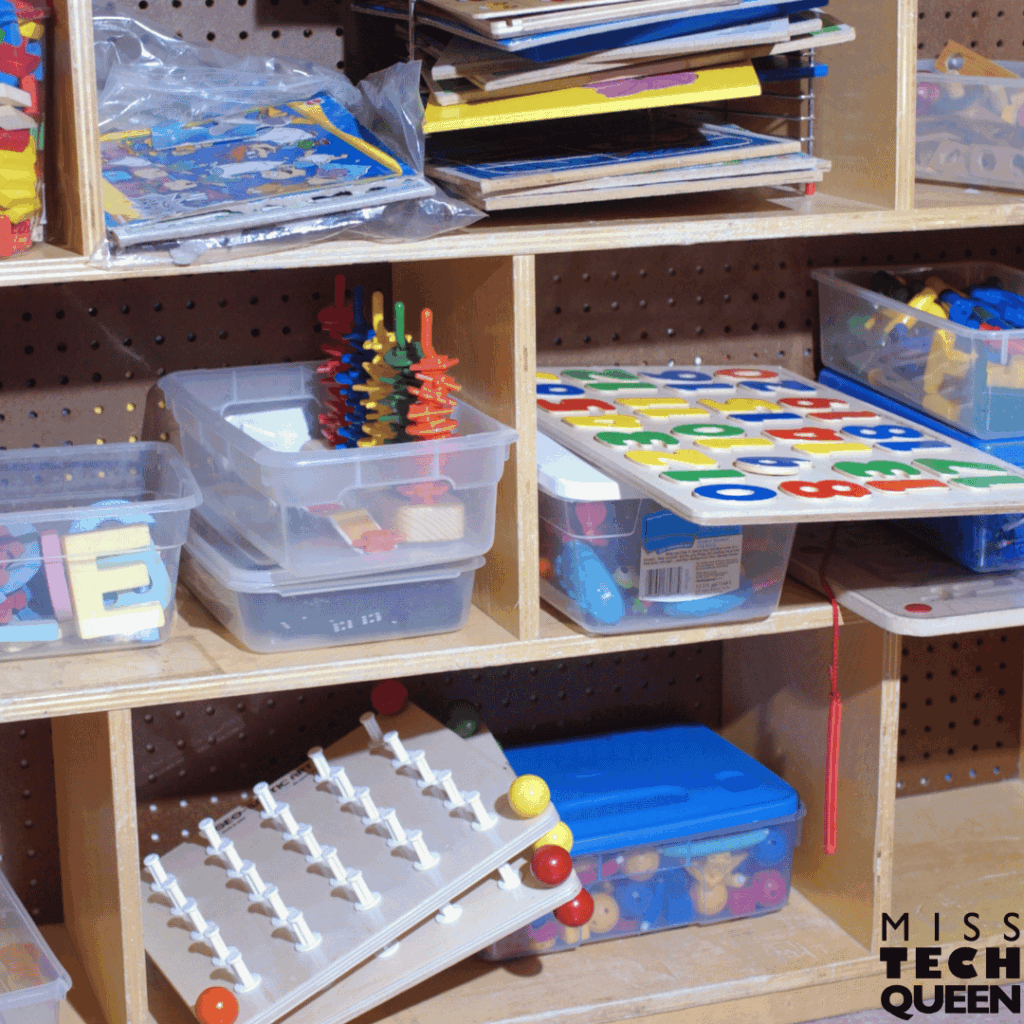
Before your lesson begins, think through how your students will access all the materials they’ll need. I like placing common supplies in table bins so each group has its own set of basics. If your students need specialty items, choose one supply station where everything is clearly labeled. You can also assign one student from each group to collect materials while everyone else stays seated and reviews the directions.
You’ll probably notice another benefit besides a quieter classroom. Your students spend less time waiting and more time engaged in the activity. Instead of solving dozens of small supply problems throughout the lesson, you can focus on answering questions about the STEM challenge or the technology project itself.
6. Give Every Student a Purpose During Group Work
Have you ever noticed that the loudest groups are often the ones where one or two students aren’t actively participating? When your students don’t have a clear responsibility, they naturally begin looking for something else to do. Giving every student a job keeps everyone involved while making collaboration much more productive.

The size of your groups also plays a big role in classroom noise. It’s easy to place four students together for every activity because the tables are already arranged that way. Not every STEM challenge requires four students. If the activity only has one robot, one laptop, or one set of building materials, someone is likely to spend time waiting. Your students who are waiting will often begin chatting about unrelated topics simply because they don’t have anything meaningful to do. For smaller challenges, consider using partners or groups of three, so everyone stays actively engaged.
Once you’ve decided on your groups, assign simple roles that match the activity. One student might gather supplies while another records observations. Someone else can build the prototype, operate the technology, or present the group’s final solution. For some challenges, I’ve made one student a timekeeper and another a moderator to ensure everyone is contributing and staying on track. Rotate those responsibilities throughout the year so each of your students experiences different roles.
7. Build Quiet Reset Moments Into Your Lesson
Even the best-managed classrooms have moments when they need to manage classroom noise a little more intentionally. That’s completely normal, especially during a STEM challenge or technology project. Instead of waiting until the room feels chaotic, plan a few natural reset moments throughout your lesson. These short pauses help everyone refocus before the noise gets out of hand.
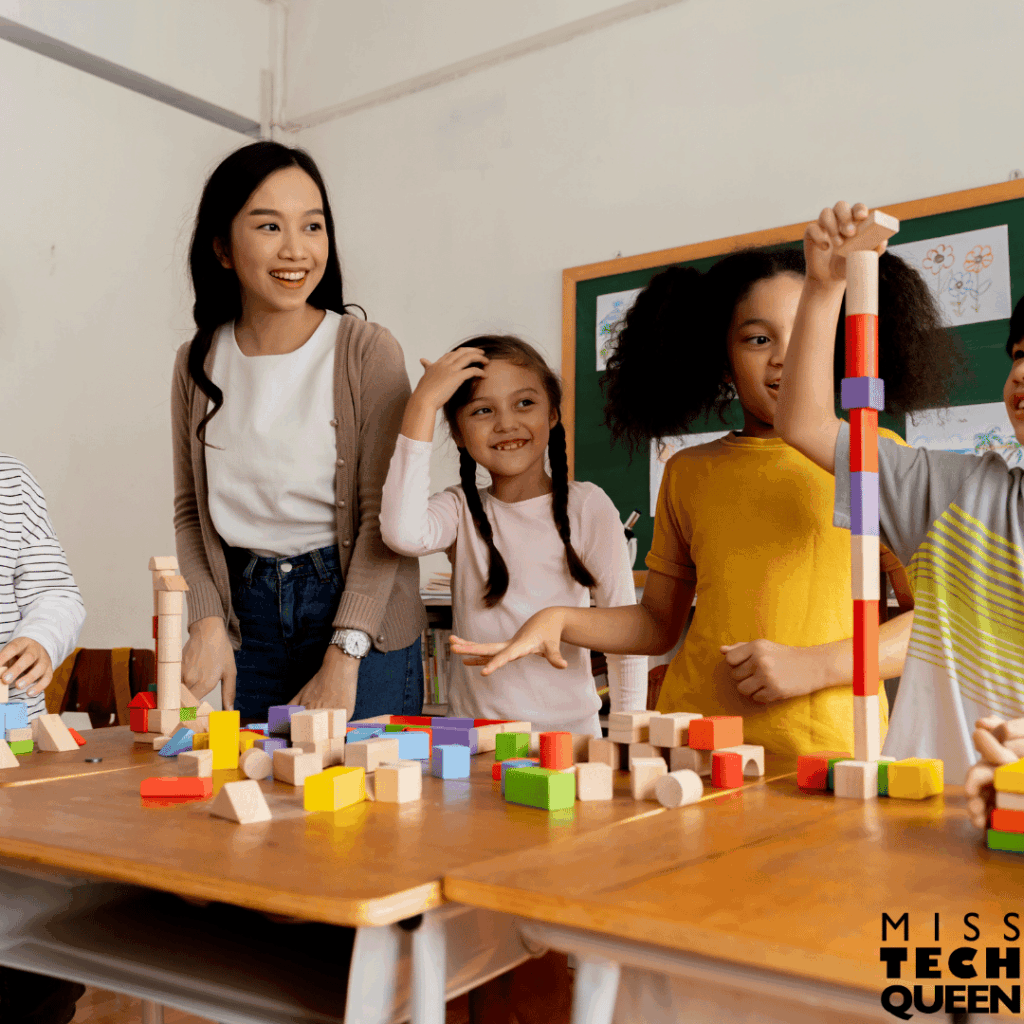
You might stop the class halfway through the activity and ask everyone to freeze. Once your students are looking at you, invite a few groups to share something that’s working well or a problem they’re trying to solve. You can quickly answer common questions, remind your students of the current voice level, and then send everyone back to work. The entire reset might take only a minute, but it often prevents you from spending the rest of class redirecting your students.
I also like using these moments to celebrate what I’m seeing around the room. You might say, “I noticed several groups testing different solutions instead of giving up,” or, “I love how Table 4 is making sure everyone has a chance to share an idea.” Your students will leave the reset feeling encouraged rather than corrected. They’ll be ready to jump back into the challenge with a clear focus.
8. Notice the Behaviors You Want to See More Often
When the classroom starts getting noisy, it’s easy to focus on the students who aren’t meeting your expectations. The problem is that the groups that work well often receive very little attention. A simple shift in what you say can encourage the behaviors you want without turning every reminder into a correction.

As you walk around the room, narrate the positive choices you see. You might comment, “I like how this group is keeping their conversation at Voice Level 2,” or, “I noticed everyone at this table stopped talking as soon as the attention signal was given.” Those comments show your students exactly what success looks like without putting anyone on the spot.
You’ll probably find that nearby groups begin adjusting their own behavior without being asked. Your students will naturally notice which behaviors are receiving positive attention. Your classroom will become a place where expectations are reinforced through encouragement instead of constant reminders about what students are doing wrong.
9. End Class With a Quick Reflection
The last few minutes of class are about more than cleaning up supplies. They’re also an opportunity to help your students think about how they worked together. Taking a minute to reflect helps your students connect their teamwork, communication, and voice level to the success of the activity they just completed.

Before your students line up, ask one or two simple questions. You might ask, “When did your group communicate really well today?” or, “Was there a time when your voices became too loud for your teammates to hear each other?” Give your students a chance to share a few responses before dismissing them. These conversations help your students recognize patterns they may not have noticed during the activity.
Those reflections also give you valuable information for planning your next lesson. If several of your students mention that cleanup became noisy, you know that’s a routine to revisit. If they share that working in smaller groups helped everyone stay focused, you can build on that success. Little by little, your students become active participants in creating the kind of classroom environment where everyone can learn, collaborate, and enjoy hands-on activities.
What to Do When You Need to Manage Classroom Noise Quickly
No matter how well you prepare, you’ll eventually have a class that becomes louder than you expected. Maybe a tower finally stayed standing after several attempts. Perhaps one exciting discovery spread across the room. Those moments happen in every STEM and technology classroom. The key isn’t expecting perfection. It’s knowing how you’ll respond when the volume starts to climb.

When you notice the noise getting out of hand, resist the urge to talk over your students. Instead, use your attention signal and wait until everyone is focused on you. Once the room is quiet, calmly acknowledge what you’re seeing. You might say, “I love how excited everyone is about today’s challenge, but our voices have gotten too loud for groups to hear each other.” Then remind your students of the expected voice level before inviting them to continue working.
If the noise immediately increases again, don’t be afraid to pause the activity for a quick reset. Have your students stop what they’re doing. Review the expectation, and then restart together. While it may feel like you’re losing a few minutes of instructional time, those brief resets often prevent repeated interruptions for the rest of the lesson. Your students learn that it’s okay to get excited, but they also learn how to regain focus so everyone can continue learning.
Classroom Management Tools Can Support Your Expectations
If you’re looking for an easier way to manage classroom noise, remember that no classroom management strategy works because of a single poster or classroom display. Your routines and consistency will always have the biggest impact on student behavior. However, the right visual tools can make it much easier for your students to remember your expectations without needing constant reminders from you.
If you’re looking for a simple way to establish consistent voice expectations, I created my editable Voice Level Charts specifically for classrooms like yours. The resource includes editable PowerPoint and Google Slides versions, multiple color options, and layouts that can be used with or without tap lights. Because it’s fully customizable, you can create voice levels that fit your own classroom routines and teaching style while giving students a visual reminder they can use independently all year long.

If you’re looking for engaging STEM challenges and technology lessons to use alongside these classroom management strategies, be sure to visit my TPT store. You’ll find resources designed to keep your students actively engaged while giving them opportunities to practice the collaboration and communication skills you’ve been building.
You Can Manage Classroom Noise Without Creating a Silent Classroom
The goal when you manage classroom noise is to help your students understand when it’s time to listen, when it’s time to collaborate, and how to communicate respectfully throughout the lesson. Clear expectations, consistent routines, and opportunities to practice those expectations help your students become more independent over time.
If you’re patient with the process, you’ll notice something exciting happens. Your students will begin managing their own voices instead of relying on constant reminders from you. That means fewer interruptions, smoother transitions, and more time spent watching your students explore, create, and solve problems together.
Save for Later
Learning how to manage classroom noise doesn’t have to mean managing constant chaos. Save this post to your favorite teacher Pinterest board so you’ll have these nine practical strategies ready to revisit as you build routines, teach expectations, and create a classroom where productive collaboration can thrive all year long.