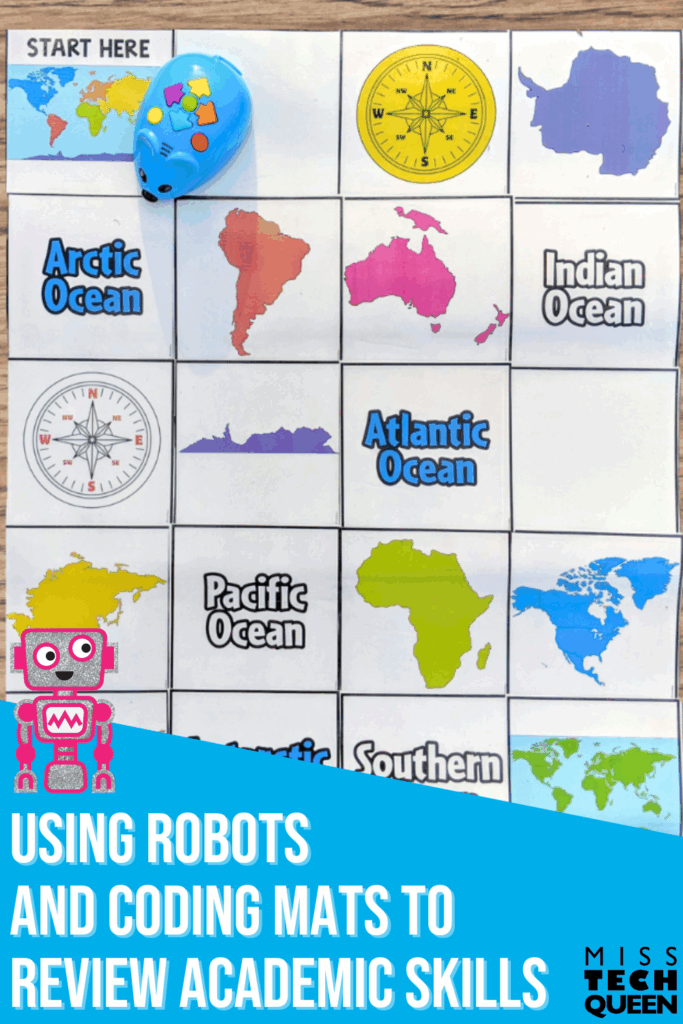

Have you ever noticed how quickly your students perk up the moment a robot rolls into the classroom? There’s something about those little flashing lights and beeps that instantly grabs attention. Coding mats take that excitement one step further by turning play into purposeful learning. Instead of just driving a robot around, your students can follow directions, solve problems, and review academic skills in a way that feels like a game.

What makes this even better is that coding mats can be used across subjects. Whether it’s reinforcing math facts, reviewing science life cycles, or practicing rhyming words, the robot becomes the star of the lesson while your kiddos hardly realize they’re working. That’s the power of pairing coding with content review. It’s hands-on, interactive, and downright fun.
Why I Love Using Robots and Coding Mats
When I first introduced robots into my classroom, I wasn’t just looking for a fun gadget. I wanted a tool that would spark curiosity while giving my students hands-on ways to practice academic skills. Coding mats quickly became one of my favorite teaching strategies. They take what could be abstract coding directions and make them visual, concrete, and connected to real learning tasks. Suddenly, a math problem or a science concept doesn’t seem so abstract when a robot comes into play!
Robots like Bee Bot, Robot Mouse, Dash, and Sphero are designed to move across the floor. This makes coding mats the perfect match. Your students program step-by-step commands, test them, and refine when the robot doesn’t quite reach its goal. It’s problem-solving in action! Even better, this practice is naturally engaging. Your students are so focused on helping their robot succeed that they often don’t even realize how much critical thinking, sequencing, and subject review they’re doing along the way.
How Coding Mats Support Learning Experiences

What makes coding mats such powerful classroom tools is how versatile they are. They give your students a chance to code while reviewing topics across subjects. Instead of sitting with a worksheet, they’re up and moving, talking through their steps, and collaborating with peers. This movement and interaction build stronger retention because your students see, say, and do all at once.
Coding mats also provide immediate feedback. If the robot doesn’t reach the correct square, your kiddos know right away and can debug their code. That process of trial and error encourages persistence and builds confidence. It’s also a great reminder that mistakes are an important part of the learning process. That’s a lesson we all love to reinforce!
Classroom Management Tips for Coding Mats
One of the first things I get asked by teachers is, “How do you actually run this in a classroom full of kids?” The good news is that with a little structure, coding mats are surprisingly easy to manage. I always recommend starting by modeling how to set up the robot on the start square and showing a sample code sequence. This way, your students see what success looks like before they dive in.
If you have limited robots, small groups work best. While one student programs the robot, others can act as the navigator (double-checking the code) or the debugger (ready to help if the robot goes off track). Rotating roles keeps everyone engaged while waiting their turn. It also helps reduce the frustration of only one person getting to touch the robot.
Another simple trick is to laminate mats so they stay in place and last longer. You can even tape them down if your floor is slippery. Having task cards ready in piles and designating a spot for finished cards also keeps the activity running smoothly. With these little systems in place, coding mats become a calm, organized, and productive part of your day.
Differentiation and Adaptations with Coding Mats

Another great feature of these coding mats is how easily they adapt to different learners. If you’re working with younger students, try smaller mats with fewer steps so they can focus on basic sequencing. For your older or more advanced students, add in extra challenges like using loops, writing out their code before testing, or creating their own task cards to swap with classmates.
You can also scaffold coding mats to fit your classroom needs. Instead of asking your students to simply reach the pumpkin seed, challenge them to plot the entire life cycle path from seed to pumpkin. This requires more planning and reinforces content knowledge at the same time.
For your students who need extra support, pairing them with a peer or giving them visual code cards can make a big difference. They can see the steps, line them up, and then test them with the robot. Differentiation doesn’t mean creating entirely new mats. It’s about adjusting the task so that each of your students feels challenged, yet successful.
Tech Troubleshooting and Alternatives
Not every classroom has a set of Bee Bots or Spheros waiting in the cupboard. Sometimes, even when you do, technology has a way of acting up at the worst times. That’s why I always keep a few backup ideas handy when using coding mats.

If you don’t have access to robots, you can still use coding mats by swapping the robot for arrows, counters, or even small toy cars. Your students can walk the code themselves by moving a piece across the mat one step at a time. I’ve even had classes where my kiddos took turns being the robot, following their group’s coded directions as they walked across a giant floor mat. The laughter and learning were combined in the best way!
Having these no-tech options means coding mats stay accessible for every classroom. Whether you’re using high-tech robots or simple printable pieces, your students still practice sequencing, problem-solving, and reviewing academic content. The learning goals stay the same. It’s just the tools that change.
Coding Mats Across Different Subjects
One of the best things about coding mats is that they aren’t limited to just one subject. Since the mats are customizable and come in so many themes, they can easily support review in math, science, reading, and even geography. This flexibility means you can bring robotics into your classroom no matter what you’re teaching.
In math, coding mats can be used to practice everything from operations to vocabulary. Science mats help your students review cycles, processes, and even space concepts. Literacy mats make phonics and word study more engaging, while geography mats help your kiddos visualize the world around them in an interactive way. Each subject gets a little boost when students combine coding skills with content review.
I love that my students don’t see these activities as just another worksheet. They’re moving, laughing, coding, and learning all at once. That’s what makes coding mats so impactful. You can integrate them across your curriculum and still keep the excitement alive.
Phases of the Moon

Science review gets a whole lot more exciting when your students use robots to explore the phases of the moon. With the Phases of the Moon Coding Mat, your students start at a designated square and use task cards to program their robot to land on the correct moon phase. Some cards ask them to identify a phase by name, while others provide descriptions, like when the moon is half illuminated.
What I love about this mat is how it transforms a unit that can be tough for our kiddos to visualize. Instead of memorizing terms, they physically guide their robot to “waxing gibbous” or “new moon”. This movement cements the sequence of moon phases and makes abstract science content more concrete. Your students can work alone or with partners. The built-in response sheets give them a chance to reflect on what they learned after each round.
Geography and Landforms
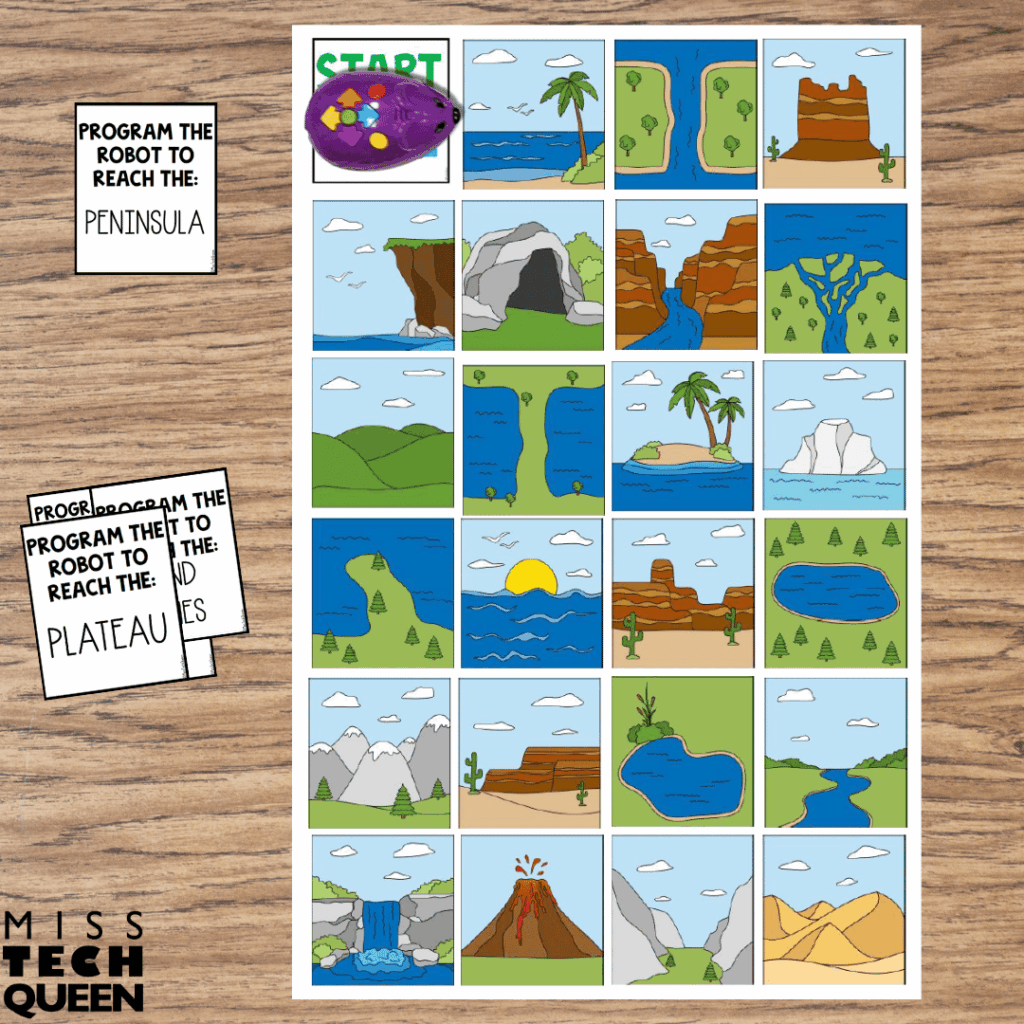
Geography lessons become an adventure with the Geography and Landforms Coding Mats. These resources include mats for both world geography and landforms, which gives you tons of flexibility, depending on your curriculum.

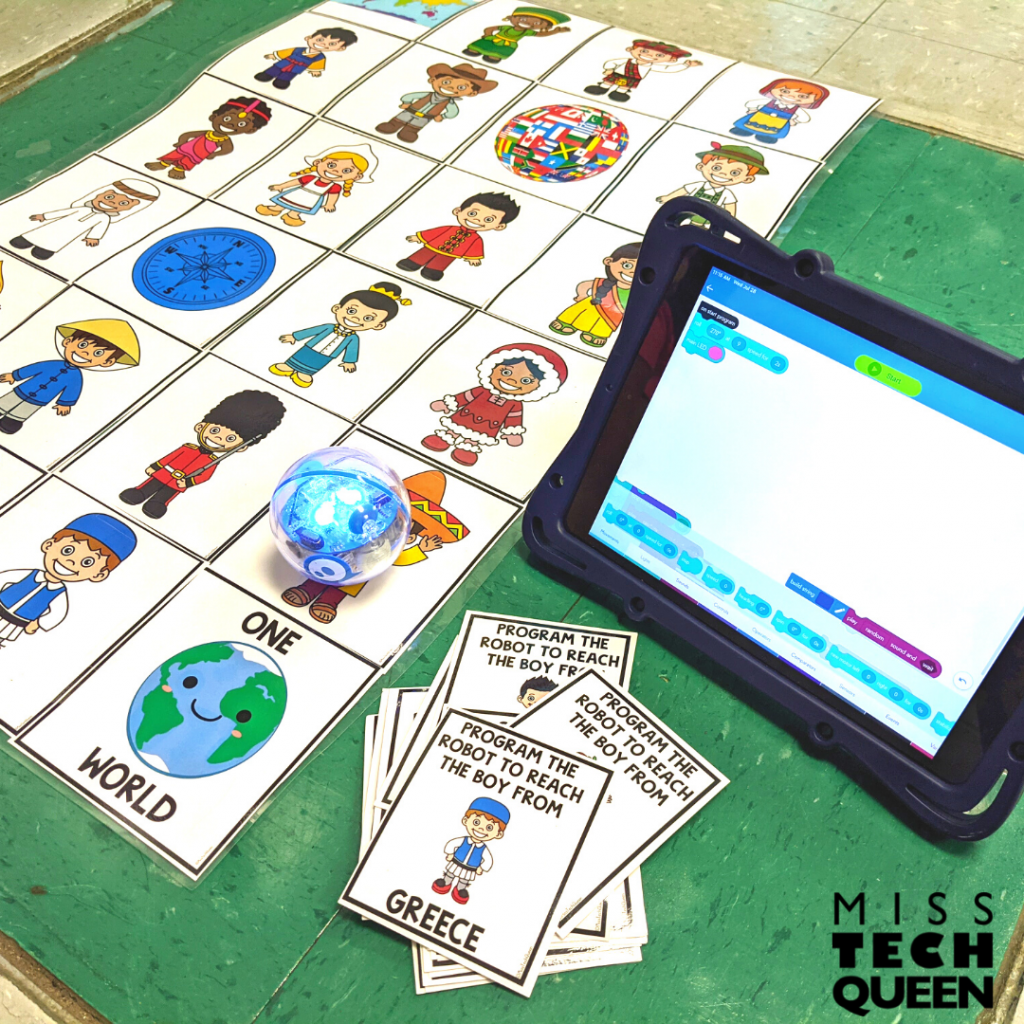
On the Around the World mat, your students might be asked to program their robot to reach a child from Brazil, Japan, or Kenya. It’s a creative way to review cultural geography and connect our kiddos to different parts of the globe. With the landforms version, the challenge might be to steer the robot toward a canyon, volcano, or glacier. This makes vocabulary practice so much more interactive.
Your students aren’t just memorizing locations or terms. They’re coding pathways, troubleshooting, and celebrating when their robot reaches the correct destination. These mats are especially great for partner work, since your students can talk through strategies and problem-solve together.
Life Cycles

The Pumpkin Life Cycle Coding Mat is a seasonal favorite that still packs in plenty of science review. Your students guide their robot through stages like seed, sprout, vine, flower, green pumpkin, and mature pumpkin. Task cards provide prompts, such as program the robot to reach the sprout, so your kiddos reinforce the sequence of the life cycle while coding.
This mat works well in the fall, but you can also use similar versions for other life cycles. The structure stays the same. There’s a start square, a set of task cards, and a mat with key vocabulary terms. The beauty is that coding mats like this encourage your students to connect scientific processes with movement and direction, which builds deeper understanding.
Rhyming Robot Coding Mats

Coding mats aren’t just for science and social studies. They can boost literacy skills, too! The Rhyming Robot Coding Mat has your students program their robot to reach a word that rhymes with a prompt like mug or hat.
This activity is perfect for your early readers, especially during Read Across America or literacy centers. It gets your students physically involved in word play. It also helps them practice an essential foundational skill, which is hearing and producing rhyming words. Since the task cards come in multiple versions, you can differentiate for different levels of learners. The robot’s success depends on picking the correct rhyme, so students are instantly motivated to get it right.
Math Skills

The Math Bundle of Coding Mats is packed with ways to reinforce math practice through robotics. These mats cover a range of math concepts. Each one follows the same engaging structure. Your students use task cards to direct their robot toward the correct square that matches a number, operation, or math vocabulary word.
The key here is that coding mats make practice interactive. Instead of answering problems on a worksheet, your students test their math thinking with every robot command. If they miscalculate, the robot doesn’t land where expected. That creates a natural moment for review and correction. It’s instant feedback combined with a sense of play, which makes math less intimidating.
Ready to Try Coding Mats in Your Classroom?
If you’re excited to bring coding mats into your lessons, the Bee Bot Coding Mats Bundle is the perfect place to start. This bundle includes a wide variety of mats and activities that cover reading, math, science, and more. Each mat comes with start squares, task cards, and optional coding cards so your students can sequence their steps before testing them with a robot.
What I love about this set is the flexibility. You can use the mats exactly as they are, or let your students get creative by arranging the photo squares to build their own mazes. Either way, you’ll have everything you need to make coding a regular part of your classroom routine.
If you’re ready to transform review time into something your students actually look forward to, check out the Bee Bot Coding Mats Bundle. It’s a resource that will keep your lessons fresh, engaging, and full of opportunities for creativity.
Why Coding Mats Work
Using robots with coding mats has been one of the most effective and enjoyable ways to review academic skills. Whether it’s moon phases, landforms, life cycles, rhyming, or math facts, the mats transform review sessions into interactive, student-centered learning experiences. Our kiddos code, collaborate, and problem-solve all while reinforcing key content.
If you’re ready to bring excitement and movement into your review lessons, coding mats are a fantastic place to start. With so many themes available, you’ll always have a new way to tie coding to your curriculum. Your students will thank you, and you’ll love watching them learn while having fun.
Save for Later
Want to remember these ideas for when you’re planning your next activity? Make sure to save this post to your favorite Pinterest board or share it with a teacher friend. That way, when you’re ready to bring coding mats into your classroom, you’ll have all the tips and resources right at your fingertips.