

As the warmth of spring emerges, bringing with it the promise of new life and the allure of summer, I can’t help but revel in the season. Yet, as a teacher, I know that this time of year can be a tad challenging. Spring sees our students buzzing with energy, but looming tests add a touch of stress to the classroom atmosphere. Navigating this balance is an art, and one effective way to do so is by integrating engaging Spring STEM activities.
Spring STEM activities are our secret tool that offers a lifeline to keep our students focused and thinking on deeper levels. Today, we’ll explore a variety of exciting and educational spring STEM ideas. These activities not only capture students’ imaginations but also cultivate a passion for learning that goes beyond the classroom. Let’s turn this season into a canvas for creativity and discovery in your classroom!
Spring STEM Activities Bundle for Your Classroom
As we dive in, I’ve got to share these STEM Activities for the Spring that have been absolute hits in my classroom. They’re the dynamite combo of hands-on, adaptable, and downright engaging for students.

These Spring STEM activities are a breeze to set up and perfect for any elementary classroom. Each challenge brings its own digital slide show that’s a game-changer. Other goodies include task cards, response sheets, and timers – everything a teacher dreams of, right? Your students can dive into typing on those response sheets or even throw in photos of their fantastic creations. And the best part? These challenges are adaptable, so they can seamlessly transition from the classroom to home.
Looking for non-digital as well? No worries, because the task cards are printable whether you want small or large sizes. The activity response sheets cater to every level your students might be at. You won’t need to stress about directions either because crystal clear teacher directions are included.
I’ve even included photos of student-made samples to guide you and your students through the creative journey. To top it off, I’ve made student certificates and printable stickers for you to celebrate your creators! Below I explain more about what these class periods may look like with each of the different challenges.
Recycling Challenges
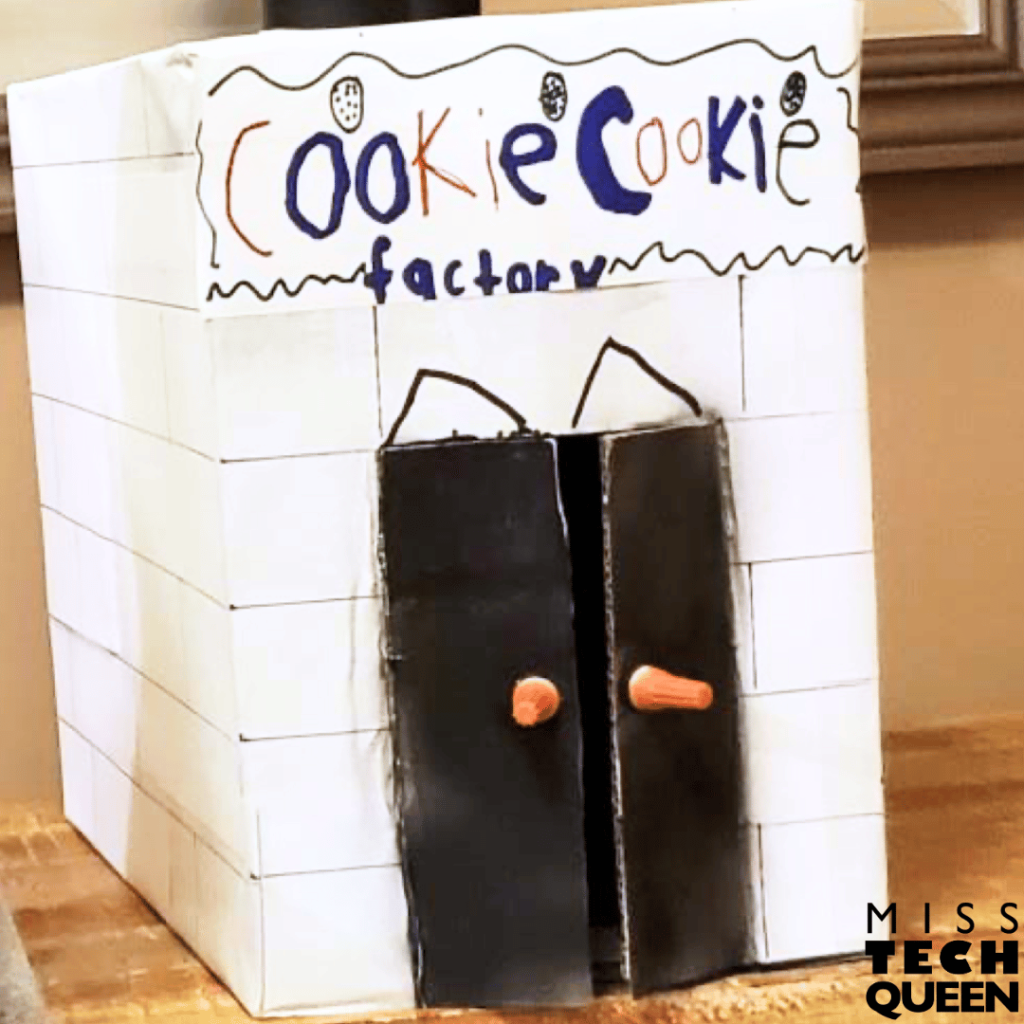
One of the most delightful spring STEM activities for kids is the Recycling Challenges. As spring invites us to clean up and rejuvenate, what better way to contribute than through upcycling? This activity is easily accessible and utilizes materials readily available around the house. You can finally repurpose that Amazon box! The concept of the activity is simple yet powerful. Your students find an item and transform it into something new, perhaps turning a box into a chair or a bridge.
Witnessing your students’ creativity during this activity is truly rewarding. Beyond the fun, it’s a golden opportunity to instill the lifelong principle of recycling. This activity is particularly fitting for Earth Day to help remind students of the impact each student can have on our planet. I have even enhanced the experience by providing certificates and stickers as rewards upon completing the challenge.
How to Implement in the Classroom
The beauty of this activity is that it’s flexible! You can utilize this with your students in the best format for your kiddos – whole class, digitally, or in centers.
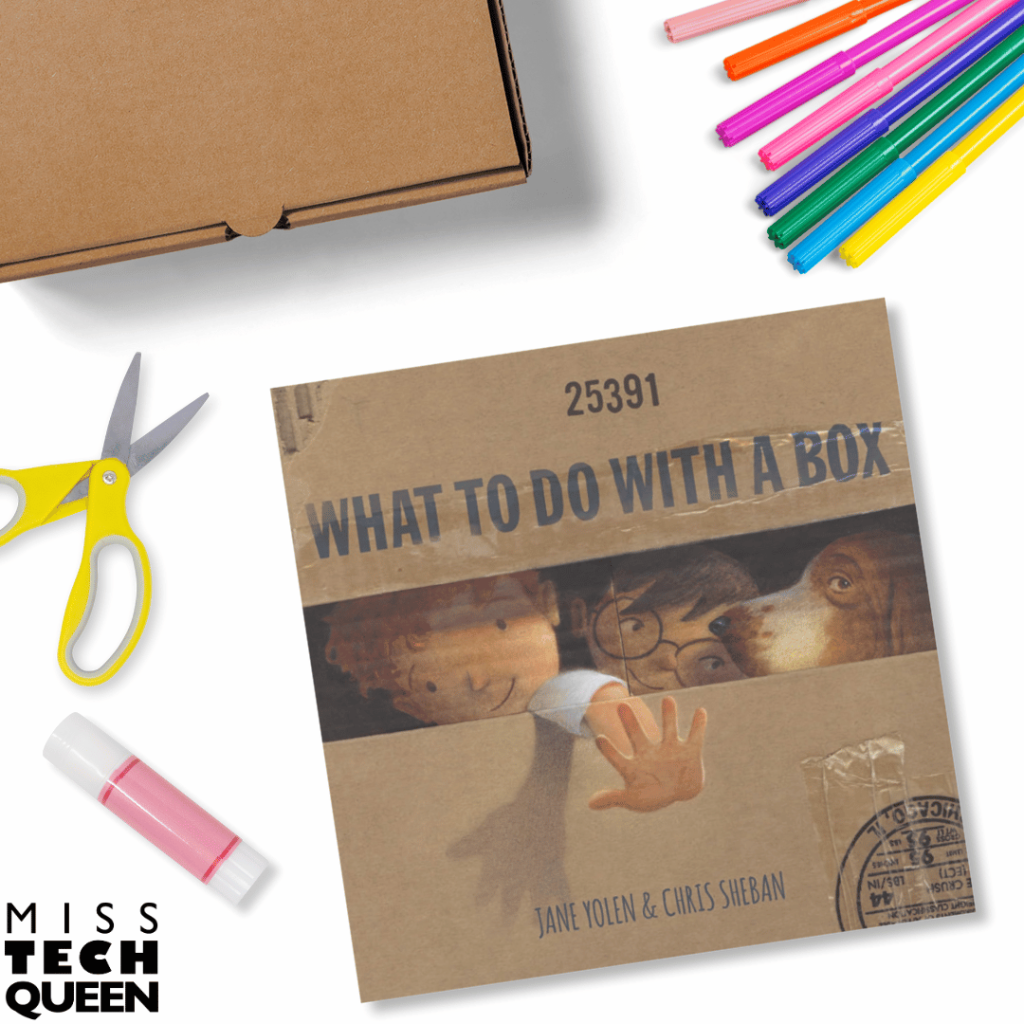
When I use this activity with my entire class, I start off with a read-aloud, typically What To Do With a Box. You can choose a different book as well! After our read-aloud, we chat about what recycling is, examples of recyclable materials, and why recycling is important. Then I pass out the activity sheets that go over the 3Rs, compare recyclable vs. non-recyclable items, and the different categories.
Once those are finished, I introduce them to their recycling challenge! With their boxes, they have to create something useful. Like the chair or bridge, I mentioned above. They are able to use five other recyclable materials to help their creation. They have 20 minutes to work on their creation. I remind them as well to look for ways to improve their design and to always retest. After the time is up, each group shares their creation, explains their reasoning, and what they would do differently next time!
Create a Birdhouse for Easy Spring STEM Activities
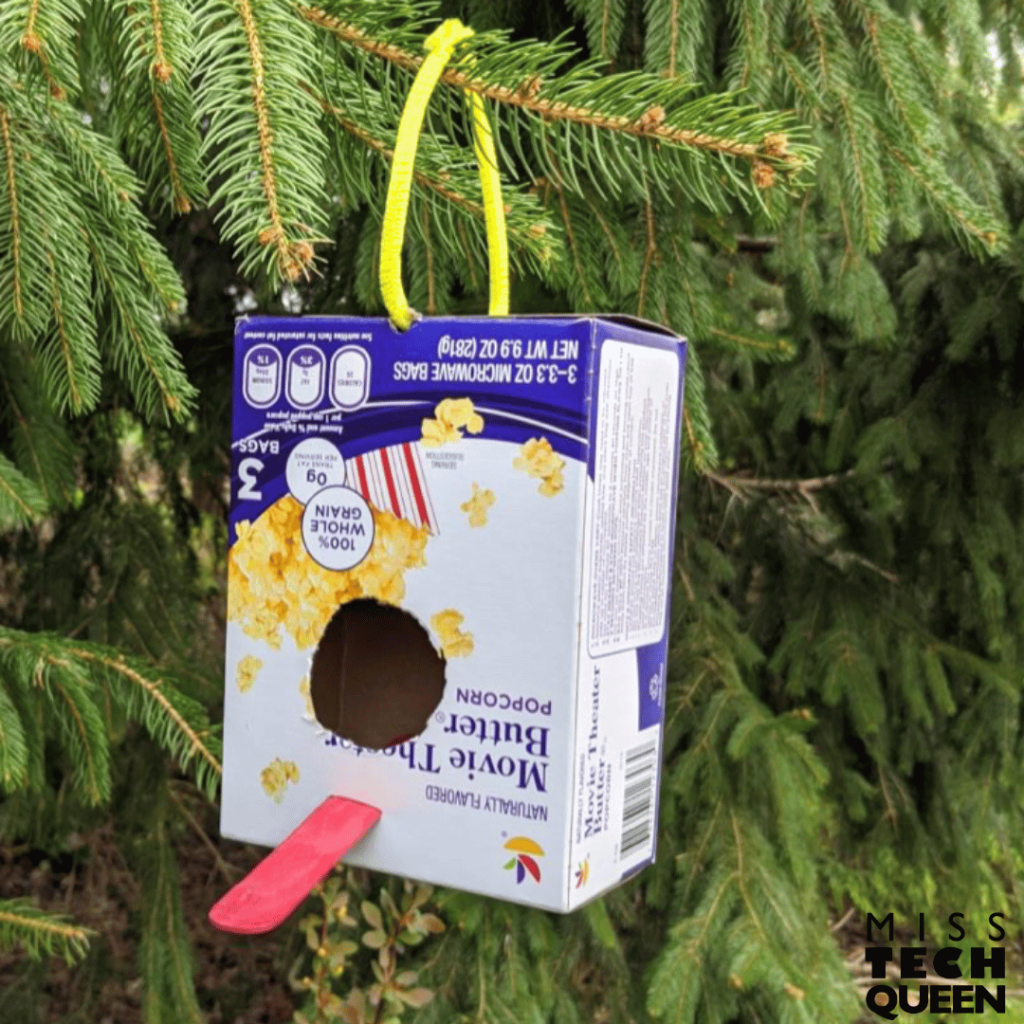
What better way to celebrate spring than by engaging students in activities that connect them with the vibrant world of nature? As the world comes alive again, it presents a perfect opportunity to teach about the amazing ecosystem surrounding us. One way is to challenge students to create birdhouses, a STEM activity that uses simple materials while incorporating an interactive Google Slideshow for an enriching learning experience about birds.
In the interactive slideshow, students will learn more about bird homes with an engaging video and then answer critical thinking questions. They will also learn more about recycling and its importance. You will also be given a few great ideas for books to read with students to increase their understanding of both recycling and birds! This Spring STEM activity for kids will be so much fun for students and is an excellent way to integrate your science core in an exciting way!
How to Implement in the Classroom
For this particular challenge, I do both a read-aloud and an interactive slideshow that has awesome videos that go along with our activity sheets. You can use the same read-aloud as our first challenge, What To Do With A Box, or you can read This is the Nest That Robin Built.
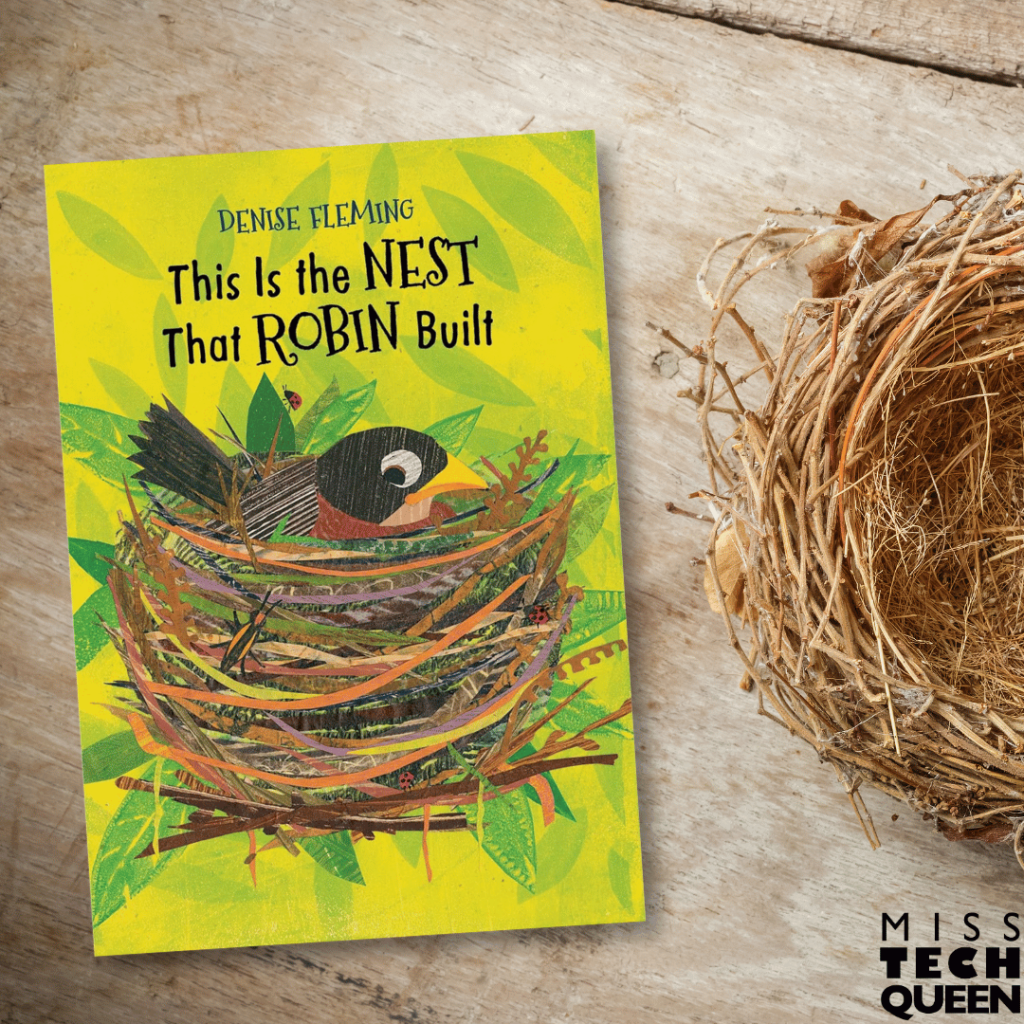
After our read-aloud, I want my students to see the different types of real bird nests, so we take a look at the videos. We talk about why birds need their nests and the types of materials they search for to build them. Once I feel like they have a good understanding, I give them their task. Their task is to craft a birdhouse with recyclable materials. Materials could be paper, plastic, cardboard, sticks, or long pieces of grass. I give my students about 20 minutes to build and make improvements.
Once their time is up, we look and listen to each group’s creation. If time allows, we practice giving constructive feedback. Then I give out certificates or stickers they can wear on their shirts!
Incorporate Math Spring STEM Activities
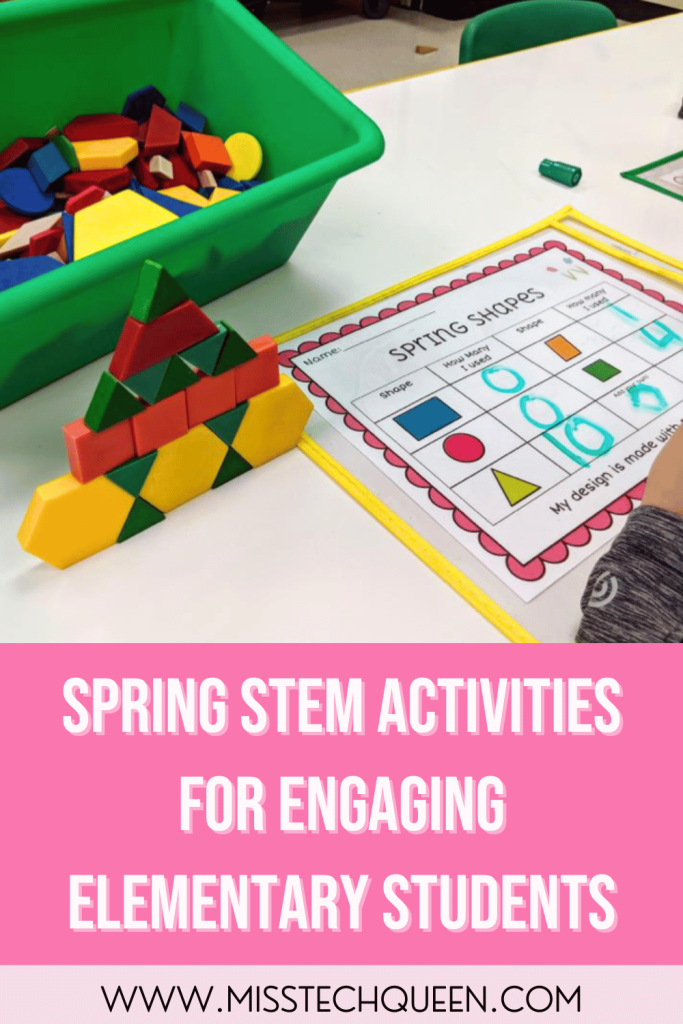
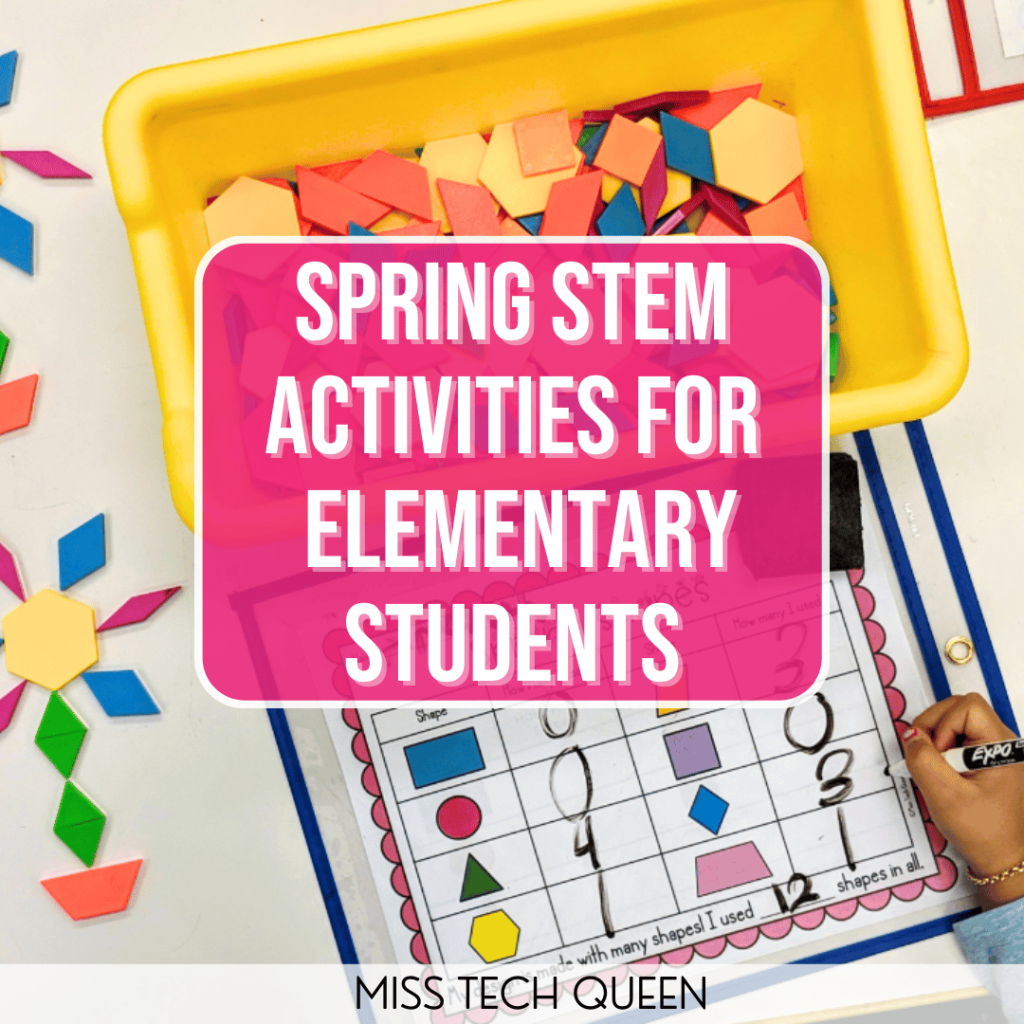
As educators, we’ve got the art of blending our main content with thrilling activities down to a science! Here’s another Spring STEM activity for your kiddos. This Spring Shape activity is a challenge that invites your students to craft spring pictures using pattern blocks. It’s the kind of low-prep magic that’ll turn your classroom into a math-inspired carnival!

To keep the math vibes alive, I toss in a handy recording sheet for my students. They get to tally up how many of each shape they’ve sprinkled into their masterpiece. No pattern blocks? No worries! Print and cut some shapes for your students, laminate them, and you’re set for years of creative math adventures!
How to Implement in the Classroom
In my classroom, we kick off this activity by reviewing different types of shapes and items they may see when spring arrives. Then, we read together When Spring Comes and as we do my kiddos are looking for shapes and springtime items!
I then explain to them they are going to create different spring designs with various shapes. They have about 25 minutes to create their spring design. Once they finish, they count up how many of each shape they have. As they wait for others to finish, they will fill out their response sheets after the challenge. Then, they will be able to see everyone’s designs and celebrate creativity!
Spring STEM and Hand-Eye Coordination

Another math STEM activity I use during spring is Spring Stacking where my students need to build the tallest caterpillar. Materials I make sure to have on hand during this challenge are bottle caps, unit cubes or rulers to measure, and the printable caterpillar faces. My students have always loved creating their caterpillars and using cubes or rulers to measure!
Plus this stacking challenge includes practicing some fine motor skills and hand-eye coordination that is great for kids of all ages. Additionally, there’s no denying the physics principles that are being applied here as students learn to balance their stack.
How to Implement in the Classroom
I introduce this activity by reading The Hungry Caterpillar! I use the physical book but an animated video of the story is in the slideshow. We talk about what caterpillars look like, some things they may do, and who eats them. Then, I give them the challenge to create the tallest caterpillar using the provided materials. I usually give around 20 minutes for them to work, measure, and redesign.
My kids love showcasing their final caterpillar. I’ll have them walk around to see each of their classmates’ caterpillars, and then time permitting, they’ll talk about them. As always, we celebrate with certificates or stickers for their hard work, creativity, and collaboration
Building with Blocks Spring STEM Activities

No matter the age, there’s just something magical about building with blocks. Even adults can’t resist them! That’s why I’m excited to share my Spring Spark Cards. These little cards are creative catalysts that spark your students’ imaginations in the best way. Picture a rainbow, an Easter egg, or a vibrant flower. These are just a taste of the 36 spark cards ready to set those imaginations on fire.
Now, you can use any small manipulatives you have lying around – be it LEGO, wooden blocks, unit cubes, or those cool plus-plus blocks. Don’t worry if you’re short on physical blocks. There are fantastic online resources like mecabricks.com where students can build virtually. Trust me, you’ll be blown away by the inventive ideas your students cook up!
And here’s the fun part, jump in and join the building bonanza! Who said the building was just for kids? You’ll be amazed at the spring-inspired wonders you can create alongside your students. They’ll love knowing their teacher is right there with them while building!
Coding Spring STEM Activities

To pull in the technology piece, I have some tried and true coding activities with springtime themes! The Earth Day Ozobot Activity and the Easter Ozobot Activity are both ideal for your kiddos who may have trouble drawing the pathways for the robot to follow. Instead, these activities have been made where your kiddos are in charge of coloring in the codes that will help the robot reach the end. There are multiple pathways they can create, which allows them to have some creative freedom! Each resource comes with two different mats that are at different levels to ensure you can meet your students where they are on their coding journey!
Additional Spring STEM Activities
Spring Zipline Challenge
In this Spring Zipline STEM challenge, we dive into one of the most exciting STEM adventures in my classroom, according to my kiddos. Like the first few challenges I shared, I use Google Slides to kick things off and guide us through a read-aloud video, task cards, and response sheets that set the stage.

My kiddos eagerly listen while they are given their challenge, which is to create something epic. More specifically they are creating a contraption that cradles a character and sends it zooming down the zipline. There are a few rules though. No taping the character to any materials. The character needs to ride inside the creation, and they’ve got to engineer a savvy way to hook onto the zipline.
For my older students, I throw in an extra challenge. I time their creation’s descent down the zipline. The reactions are full of excitement and wanting to start!
My students have 25 minutes to create with the provided materials. Materials include popsicle sticks, pipe cleaners, character cut-outs, timers, rulers, and more. For the cut-out characters, I’ll sometimes let them choose who they want their character to be. If they have a favorite basketball player, singer, or pet, they can send it to me or print it out. I do give them a deadline so we aren’t scrambling lat the ast minute!
Now, back to the building, I hit pause on the building frenzy with 10 minutes or so to spare. Students receive the response sheet where they illustrate and label their zipline design. It’s a moment of drawing, labeling, and writing about their engineering creation.
Spring Rainbow Challenge
Another challenge that is a big hit with my students is the Spring STEM Rainbow Challenge. I kick off the excitement using Google Slides, displaying images that ignite the curiosity of my students around rainbows. We observe the different kinds of rainbows to see the similarities and differences.

I provide each of my students with a small task card as they gear up for the challenge. Armed with scraps of different colored papers, tape, and scissors, they have 25 minutes to create their spinner. I have instructions on how to make a version that twirls. I typically use that version with my upper elementary students.
My students love that it’s hands-on. As they work, they test their designs, notice their quirks, and brainstorm ways to improve them. It’s all about improvement and innovation!
With just 10 minutes left, I hit pause to pass out the response sheets. I give them time to illustrate and color their designs on their paper. I remind them to label each of the parts and materials used. They wrap up by reflecting on what went well and what could be done differently.
Engage Your Students With These Spring STEM Activities
I’m thrilled at the thought of these spring STEM activities sparking excitement in your classroom or even extending the learning to your student’s homes! Witnessing the enthusiasm and creativity of my students is what makes these challenges so special. Go ahead, and dive into these fantastic spring activities. Whether it’s one activity or all, make spring a celebration of education and fun for your students! Here’s to a season filled with learning, joy, and a touch of STEM magic!
Looking for More STEM Activities to Try?
Check out these posts!
- Football STEM Ideas That Make You Say “Touchdown!”
- Integrating STEM Into the Classroom: How to use STEM Learning all Year Long
- Shifting From STEM to STEAM in the Classroom
Save for Later
Remember to save this post to your favorite STEM Pinterest board for when you are planning out your spring STEM activities!