

You planned a fun STEM challenge, gathered the supplies, and your students are ready to start building. Within minutes, tape is everywhere, materials are scattered across tables, and someone proudly announces they’re finished. That might sound familiar! While your students might be having a blast, you may wonder whether they’re actually learning anything about engineering. The good news is that you don’t need to turn your STEM lessons into complicated science experiments to make learning meaningful. By introducing the engineering design process, you can help your students think beyond building something cool and start approaching challenges like real engineers!
What Is the Engineering Design Process?
The engineering design process is a series of steps that engineers use to solve problems and develop solutions. Instead of jumping straight into building, your students learn to think about the problem, explore possible solutions, and make thoughtful decisions. They also discover that their first idea doesn’t always work, and that’s perfectly fine! In fact, figuring out what went wrong is often where some of the best learning happens.
When introducing the STEM design process to your students, I recommend keeping the steps simple and easy to remember. The five steps are Ask, Imagine, Plan, Create, and Improve. Displaying engineering design process posters in your classroom gives your students a visual reference they can return to throughout their challenges. Here’s what each step looks like in action:
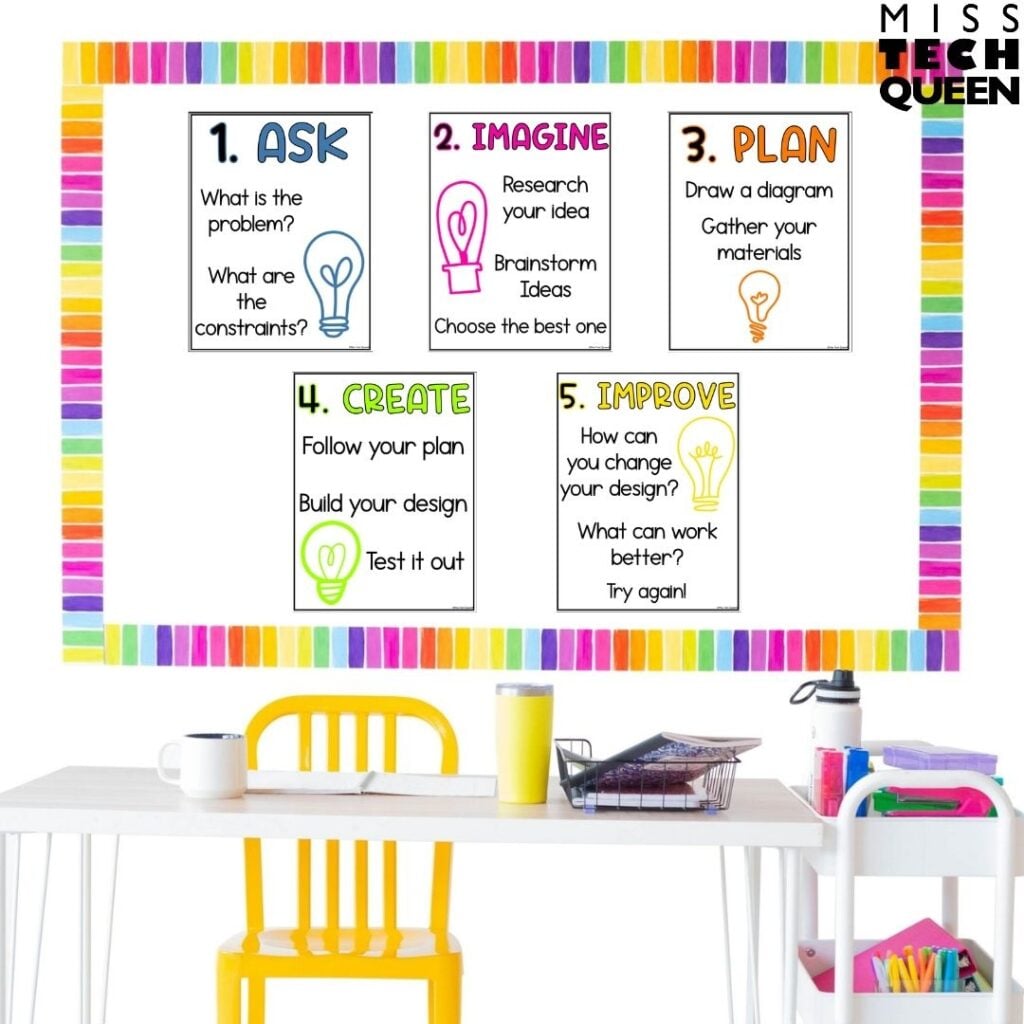
- Ask: What problem are we trying to solve? What does our design need to accomplish?
- Imagine: What are some possible solutions? What materials or designs might work?
- Plan: Which idea should we try? Can we sketch our design and identify the materials we’ll need?
- Create: Let’s build our design and see how well it works.
- Improve: What did we learn from testing? What could we change to improve our design?
One thing I love about the engineering design process is that it teaches students to see mistakes differently. A tower that falls over or a bridge that collapses isn’t necessarily a failed challenge. It’s an opportunity to ask questions and make adjustments. Encourage your students to explain why they’re changing something instead of starting over immediately. That small shift helps them understand that engineering is about problem-solving, not creating something perfect on the first try.
Make the Engineering Design Process Part of Your STEM Routine
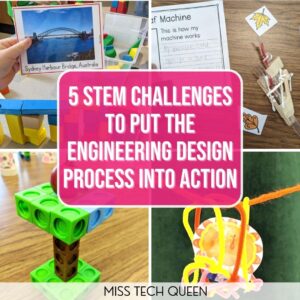
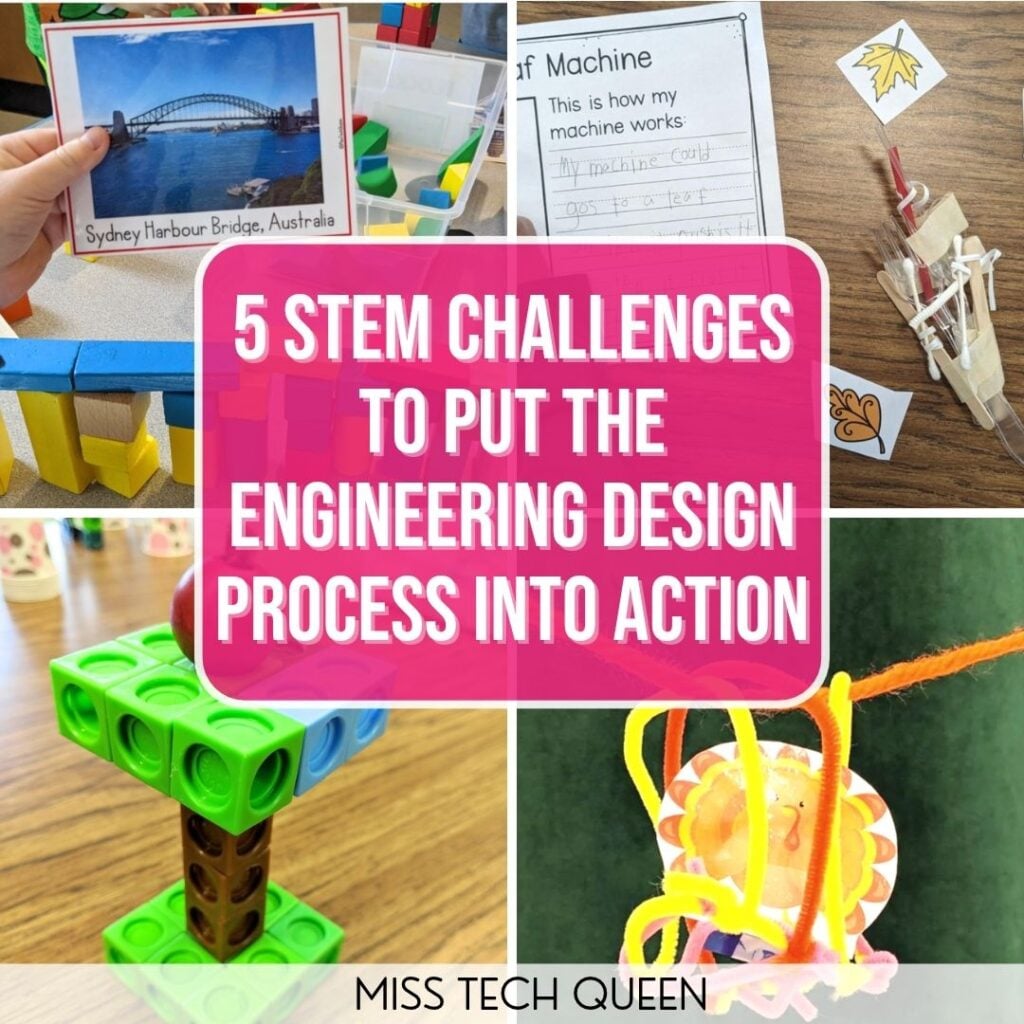
The engineering design process doesn’t have to be complicated to make a difference in your classroom. Sometimes, all it takes is a simple challenge and a few thoughtful questions to turn building time into meaningful learning. As your students ask questions, consider different solutions, and learn from their designs, they’re developing skills that extend well beyond STEM. We want to give them the opportunity to experiment, make mistakes, and surprise themselves with what they can accomplish. Here are 5 STEM challenges that are perfect for helping students put the engineering design process into action!
1. Explore Balance with an Apple Tower STEM Challenge
Building a tower might sound simple enough, but what happens when your students have to balance apples on top? Suddenly, they’re thinking about height, stability, and how their materials work together. My Apple Tower STEM Challenge lets your students explore those concepts through hands-on building. You can provide cups, linking cubes, wooden blocks, or LEGO bricks for construction. Small plastic apples work well for balancing, but pom-poms or beads work well too.
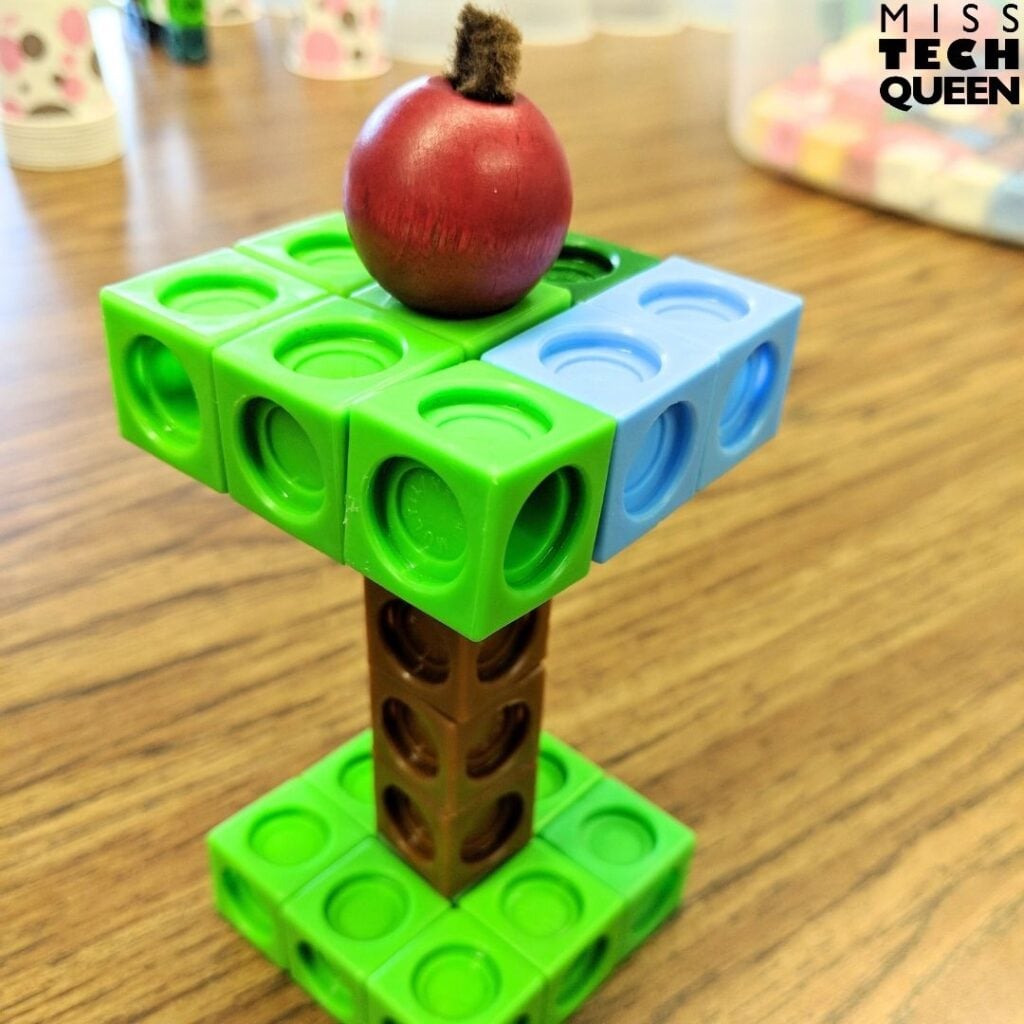
Before handing out the materials, ask your students what might make a tower stable. Would a wider base help? Does building taller always mean building better? Have your students sketch their ideas before constructing their towers. Once they’re ready, have them carefully add apples to see how their structures hold up. You might even challenge them to see how many apples their towers can support before losing their balance.
This is a great opportunity to help your students understand why the ‘Improve’ step matters. If their tower tips over, encourage them to examine what happened rather than immediately rebuilding the same structure. They might notice that the base was too narrow or that the apples weren’t evenly balanced. I included response sheets to give your students space to document their designs, testing results, and possible improvements. You can also connect this challenge to math by incorporating the optional symmetry activities and questions included in the resource.
2. Solve a Problem with the Turkey Retreat STEM Challenge
Sometimes, the easiest way to get your students invested in engineering is to give them a problem they want to solve. In my Turkey Hideout STEM Challenge, your students are tasked with creating a structure that keeps a turkey hidden. It’s a playful challenge, but there’s meaningful engineering behind it! Your students will have to consider how to arrange their materials to create a structure that provides enough coverage while remaining stable.
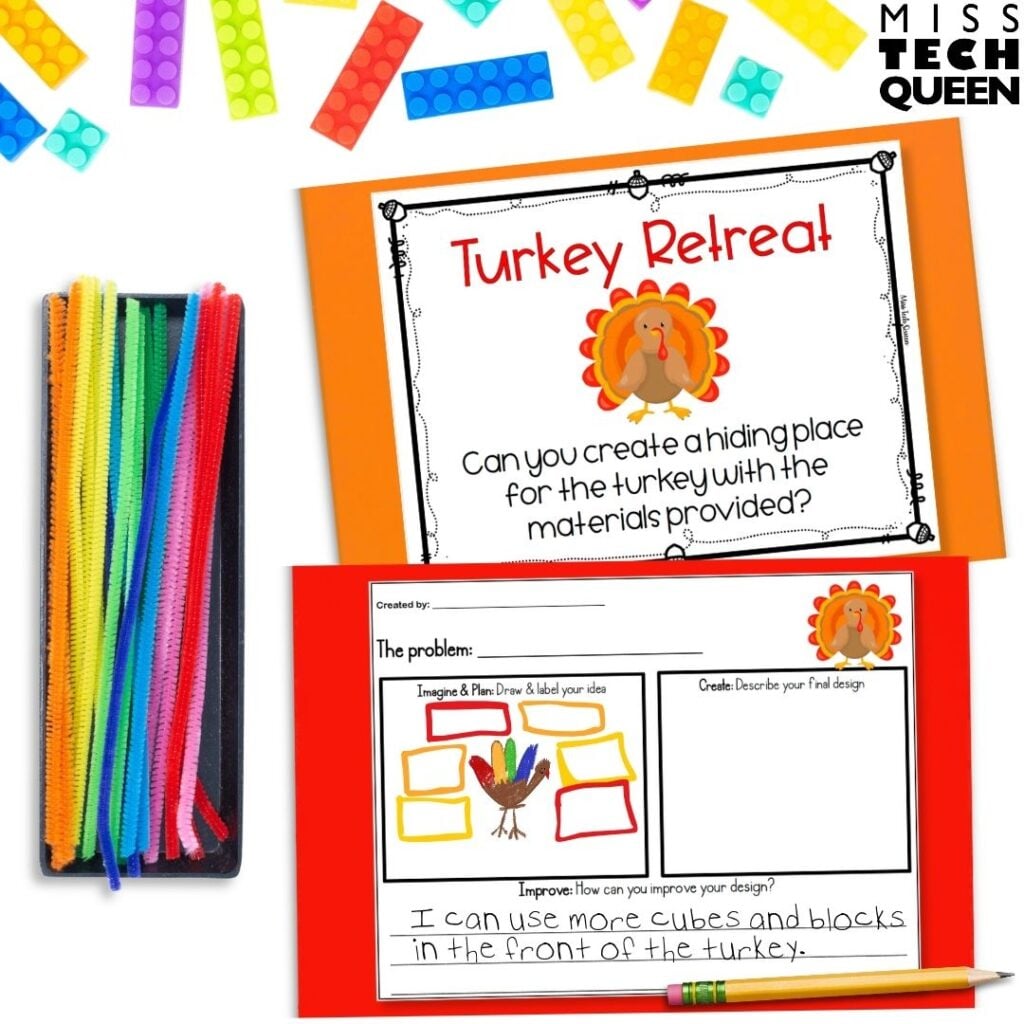
Start off by asking your students what a successful turkey hiding place would need. Should the turkey be visible from the front? What about the sides or top? Then, give your students time to imagine different structures before deciding how to use their building materials. As they construct their hiding places, encourage them to think about the purpose of each part. A wall, roof, or support piece should help keep the turkey concealed.
Once their structures are complete, have your students examine them from different angles. Can they still see the turkey? Does the structure stay standing without someone holding it? These simple checks can help students evaluate their designs. I have included engineering design response sheets so your students can describe their materials, explain how their structures protect the turkey, and identify possible changes. It’s a wonderful reminder that even a silly seasonal problem can encourage serious thinking!
3. Put Creative Thinking to Work with a Leaf Machine STEM Challenge
If you’ve ever watched leaves pile up outside, you know how quickly collecting them can become a big job. Why not let your students invent something to help? My Build a Leaf Machine STEM Challenge asks your students to design a tool that can collect leaves. Rather than telling your students exactly what their machines should look like, give them the freedom to explore different approaches. This is where creativity and engineering can work together.
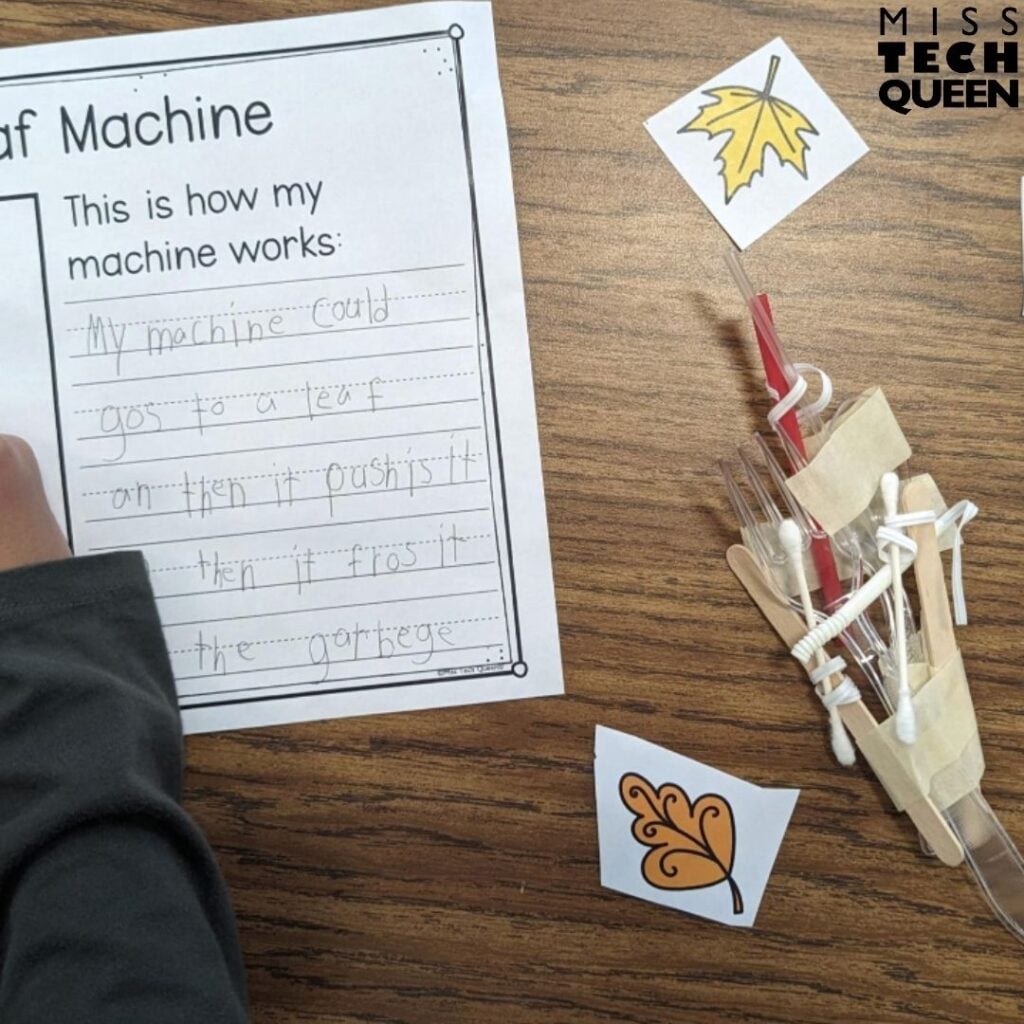
Begin by discussing the different ways people collect leaves. Some tools push leaves into piles, while others scoop or gather them. Then, ask your students which approach they think would work best for their designs. As they plan, encourage them to consider how their machines will actually collect the leaves. You could even set up a small testing area with paper leaves so your students have a consistent space to try their creations.
One way to make this challenge especially meaningful is to measure how well each machine works. Give your students a set amount of time to collect as many leaves as possible, then count their results. Ask them which part of their machine helped the most and what made collecting leaves difficult. Your students will begin to see that a creative invention must also accomplish its intended purpose.
4. Investigate Movement with a Turkey Runaway Zipline Challenge
In my Turkey Runaway Zipline Challenge, your students will design a way for a turkey to travel along a zipline. The challenge introduces movement and gives your students something they can actually measure. Instead of simply deciding whether their creation looks good, your students will observe how it performs. That makes it a great opportunity to connect engineering with data collection.
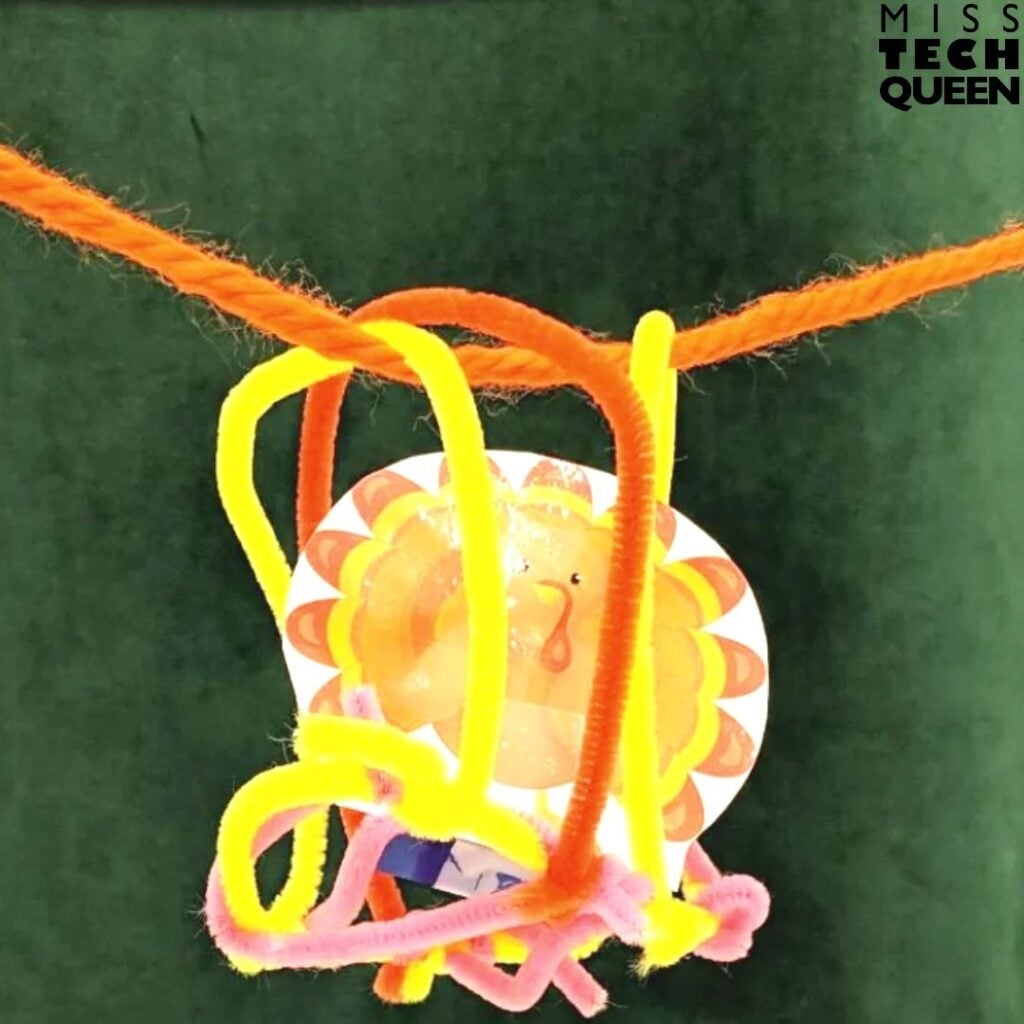
Before building, have your students think about what their turkey will need to travel along the zipline. How will they keep it attached? What might cause it to get stuck or move unevenly? Give your students time to develop their ideas and consider how the different parts of their designs will work together. When they’re ready, they can test their creations and observe how the turkey moves along the line.
What I especially like about this resource is that the response sheets include space for three timed trials. This gives your students the chance to record how long their turkey takes to travel down the zipline and compare their results. Rather than making random changes, encourage them to use those observations to guide their next design decisions. For example, if their turkey keeps getting stuck, they might investigate which part of their carrier is causing the problem. This is a great way to show your students how testing provides information engineers can use.
5. Build Stronger Structures with a Bridge STEM Challenge
Bridges are something your students have probably seen countless times, but have they ever stopped to think about how they work? My Build a Bridge STEM Challenge has your students explore what makes a structure strong enough to support weight. Before beginning, I recommend showing your students pictures of different bridges from around the world. The resource includes examples of beam, arch, truss, and suspension bridges, along with vocabulary to help your students understand these structures. Ask your students what they notice about the different designs and why bridges might be built in different ways.
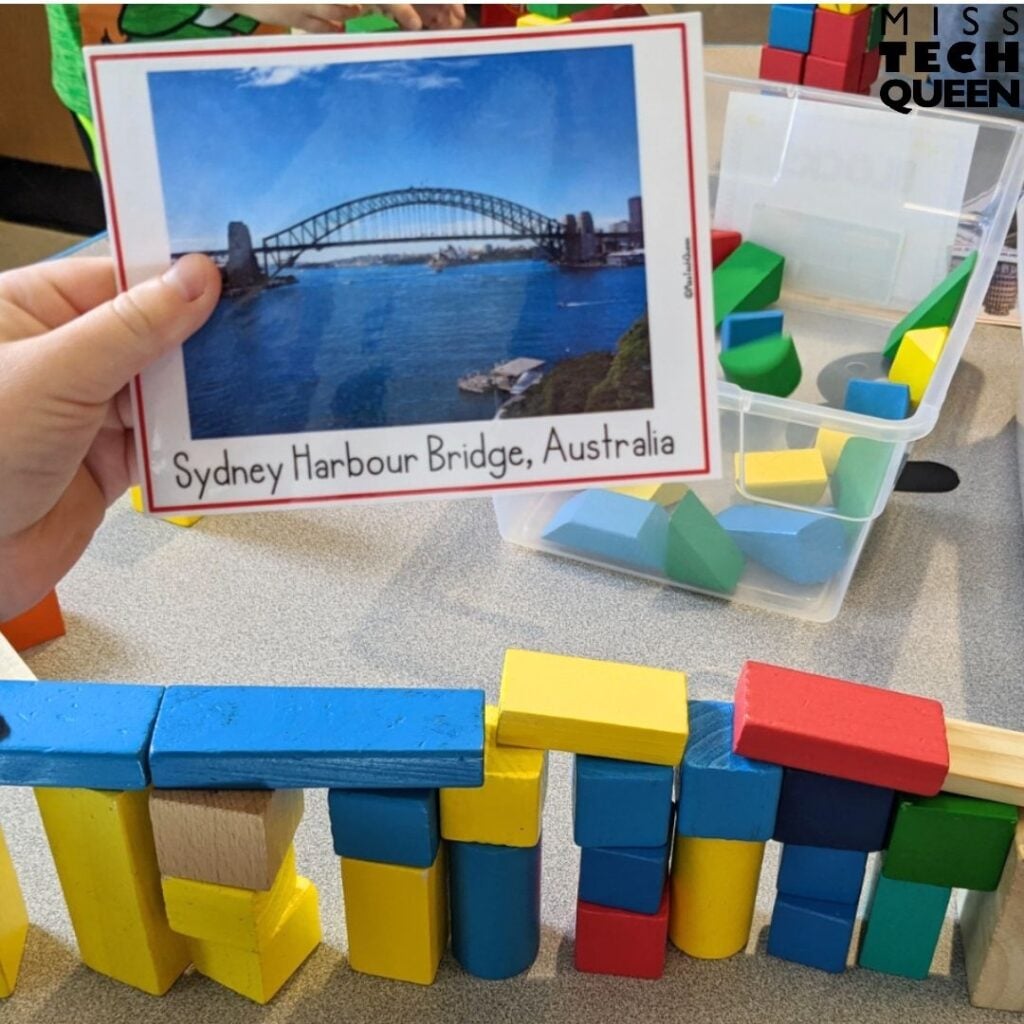
For the challenge, your students can use materials such as LEGO bricks, wooden blocks, and craft sticks to construct their bridges. Their goal is to create a structure that can support a toy car or train. You can make the challenge more difficult by asking your students to support additional weight using objects such as pennies. As your students build, encourage them to consider where their bridges need support and how they can arrange materials to add strength. The resource also includes an optional challenge where your students must build a bridge across uneven ground.
This activity offers a wonderful opportunity to incorporate measurement into the STEM design process. Your students will record their bridge’s height, length, and how much weight it can hold. These measurements give students information they can use to evaluate their structures. If a bridge bends or collapses under weight, ask your students where they noticed the problem and what might strengthen that area. Students can then use what they’ve learned to create a stronger design.
Help Your Students Get More from the STEM Design Process
As you begin incorporating the engineering design process into your classroom, remember that your students won’t automatically know how to work through every step. It’s worth taking a little time to model the thinking you want them to use. For example, before a challenge, you might say, “We know what our structure needs to accomplish, but we haven’t decided how to build it yet. What are some possible ideas?” Modeling questions like this helps your students understand that thinking and planning are just as important as constructing.

You also don’t need to make every challenge a competition. While it’s exciting to see which bridge holds the most weight or which tower balances the most apples, those results aren’t the only signs of success. Pay attention to how your students explain their choices, work through problems, and respond when something doesn’t go as expected. Your student who thoughtfully improves a design is demonstrating an important engineering skill, even if their final creation isn’t the strongest or tallest.
As your students become more familiar with the process, encourage them to take greater ownership of their work. Instead of immediately offering a solution when something goes wrong, ask what they’ve noticed and what they might try next. Keep your engineering design process posters visible so your students can refer to the steps independently. Over time, they’ll begin to recognize that the process isn’t something they complete once and forget. It’s a way of thinking they can use whenever they face a new challenge!
Find More STEM Challenges for Your Classroom
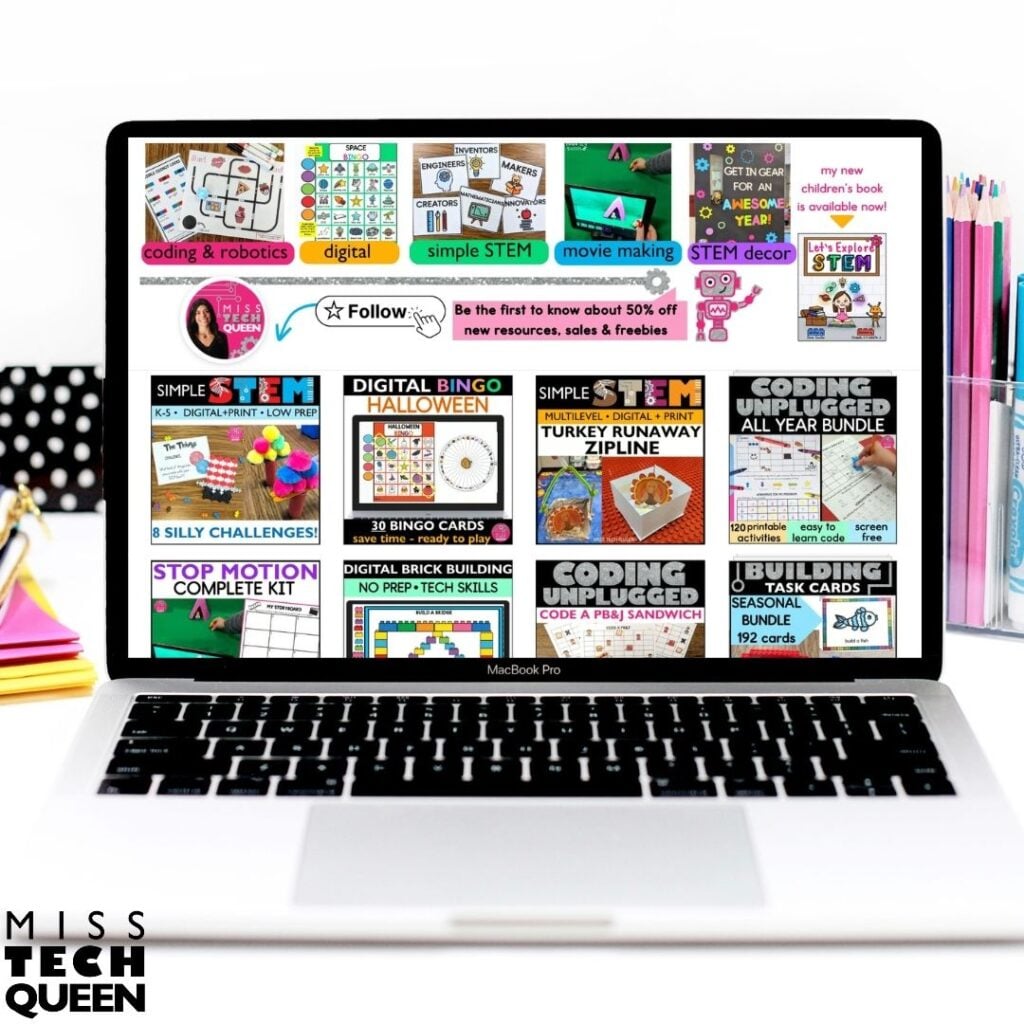
If you’re ready to bring more hands-on learning into your classroom, explore the STEM challenges in my TPT store! From seasonal building activities to challenges that explore movement, balance, and structural design, there are plenty of opportunities to keep your students thinking creatively. You can also explore my STEM for a Year Club for additional activities to use throughout the school year.
Whether you’re introducing the engineering design process for the first time or looking for fresh ways to reinforce it, having ready-to-use challenges makes planning a little easier. Choose an activity that connects to your current lessons, gather your materials, and let your students put their engineering skills to work!
Save for Later
Save this post to your favorite STEM Pinterest board so you can easily come back to these five engineering design process challenges when you’re planning! You’ll have plenty of ideas to help them put the STEM design process into action.