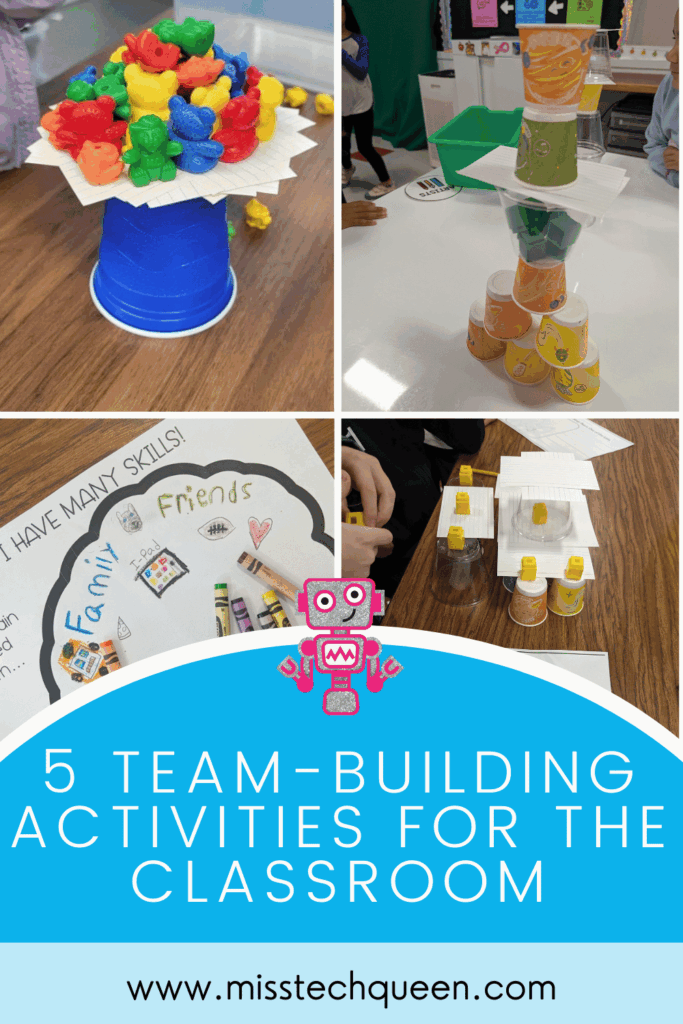


When I first started teaching STEM and Technology to my students, I quickly realized that I needed more than just fun challenges and cool tech tools. I needed to help my students become better teammates. That’s when team building activities became one of my favorite tools to build community and strengthen key STEM skills at the same time.

These activities aren’t just about having fun (though they definitely are!). Each one helps our students practice an essential soft skill, like brainstorming, communication, or a growth mindset, which makes our STEM challenges even more successful. You can easily implement each of these team building activities for students using the resources I’m sharing below. Let’s dive in!
Why Team Building Activities Belong in Every STEM Classroom
STEM is so much more than building towers or coding robots. It’s about building people. I’ve seen firsthand how the team building activities we do in the STEM classroom have helped my students grow not only as thinkers but as teammates, listeners, leaders, and problem-solvers. These soft skills are just as important as the hard skills we teach. They’re what truly stick with our students as they grow.

When our students brainstorm together, they learn to value each other’s ideas. As they build together in pairs, they practice clear communication and patience. When their design fails, they figure out how to bounce back with a growth mindset. These are the moments where STEM becomes more than a subject. It becomes a place for real personal development.
That’s why I’ve built time into my STEM and technology lessons for intentional team building activities for students. These activities give us the structure to practice kindness, collaboration, and creativity while having a blast with hands-on tasks. The skills they gain carry over to the classroom, the playground, and well beyond elementary school.
Team Building Activities That Strengthen Brainstorming Skills
One of the first things I introduce is the concept of brainstorming. I want my students to understand that all ideas are welcome. Sometimes, the best ideas come after we build on someone else’s thoughts.
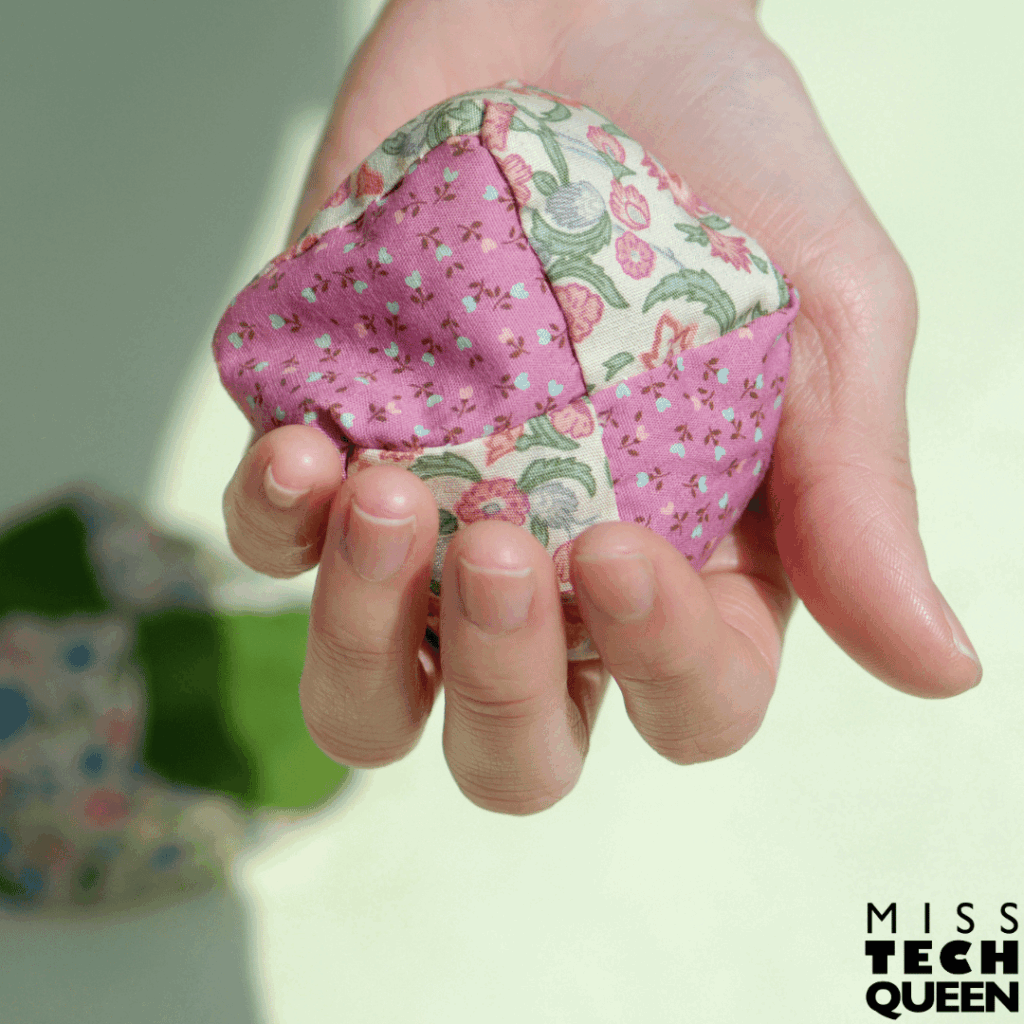
In my classroom, I gather a few everyday objects, such as cardboard tubes, plastic forks, or beanbags. I use them to model how to look at something and think: “What else could this be used for?” Then, I break my students into small groups and give each group one of the objects. Their challenge is to come up with as many creative uses as possible. The key is that there’s no judging or narrowing down ideas during this time. They just need to share and build on each other’s thoughts.
About halfway through, we pause to reflect on how the brainstorming is going. I usually ask a group to share a few of their ideas and talk about how their thinking has evolved. It’s always fun to see how one person’s silly suggestion can lead to a surprisingly clever solution! At the end, groups present their lists. We wrap up by talking about how brainstorming helped them generate more possibilities. This team-building activity always gets my students thinking outside the box while reminding them that every voice matters in the problem-solving process.
Boost Communication Skills With This Laugh-Inducing Activity
If there’s one thing I’ve learned teaching STEM and technology, it’s that even the best ideas can fall flat without clear communication. This Communication lesson gives my students the chance to practice both giving and following directions. Something that’s essential in any collaborative STEM challenge.
To get started, I pair up my students. I give each person a small tray or piece of paper to build on. I make sure there’s a divider between the partners so they can’t see each other’s work. Then, I hand out a mix of building materials, such as bricks, blocks, or sticks, which work great. One partner picks a piece, places it on their tray, and then gives their teammate specific instructions to recreate it. Once they’ve shared their direction, the other partner does the same with a new piece.
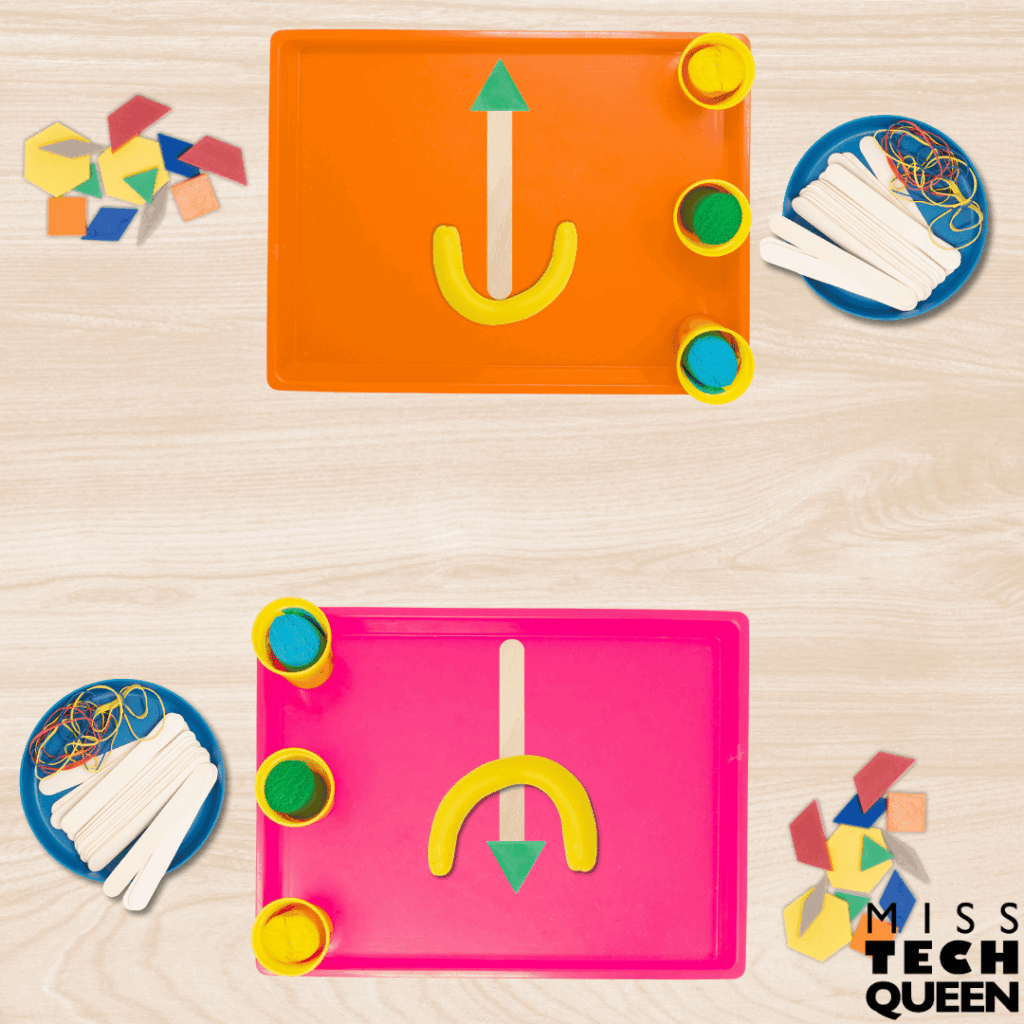
After a few rounds, we remove the divider and compare what they built. This part is always filled with laughter and lightbulb moments. We talk about what was said clearly, where directions got lost in translation, and how their communication could be even better the next time. Then we try it again. That second round is where the magic happens. You can see how much more careful and thoughtful they are with their words.
This team-building activity teaches our students that being a good communicator means thinking about your audience, choosing your words carefully, and listening with intention. These are skills they’ll use in every future STEM project, and in life!
Team-Building Activities That Encourage a Growth Mindset
STEM challenges can be unpredictable. That’s the perfect setup for teaching our students how to embrace a growth mindset. This hands-on challenge is both fun and frustrating in the best possible way. Our students must build a tower that keeps the most bears safe from the lava below!
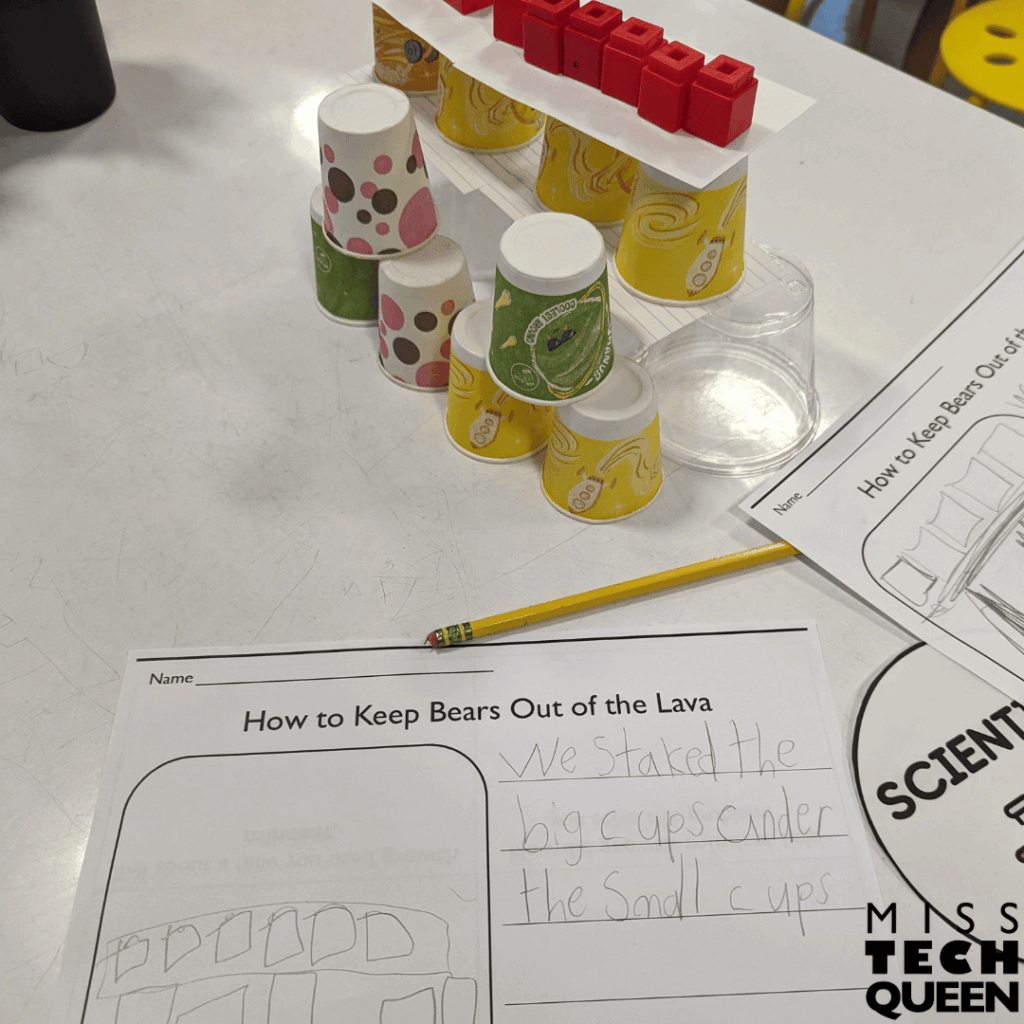
We kick off the lesson with a class discussion about what it means to have a growth mindset. I explain that it’s not just about trying hard. It’s also about learning from our mistakes, being open to feedback, and not giving up when something doesn’t go as planned. Then we jump into the challenge. My students are tasked with designing and building a structure that keeps as many bears (or small toy figures) out of the “lava” as possible. It’s silly and imaginative but also sneakily rigorous.
As they begin building, the first attempt rarely works. Bears tumble, towers collapse, and lava wins. That’s the whole point! After the first try, we pause and reflect. What worked? What didn’t? Can we change anything? Then they revise and rebuild, applying their new thinking and their grit.
By the end of the activity, my students are proud of what they’ve accomplished. Not just because their tower might have worked, but because they kept at it. This is one of those team-building activities that helps our kids see failure as feedback. It sets the tone for how we’ll approach every STEM challenge moving forward.
Strengthen Teamwork
Teamwork is at the heart of every successful STEM project. It only makes sense to spend time explicitly teaching it. I make sure to teach this lesson early on to help my students understand what true collaboration looks and feels like.
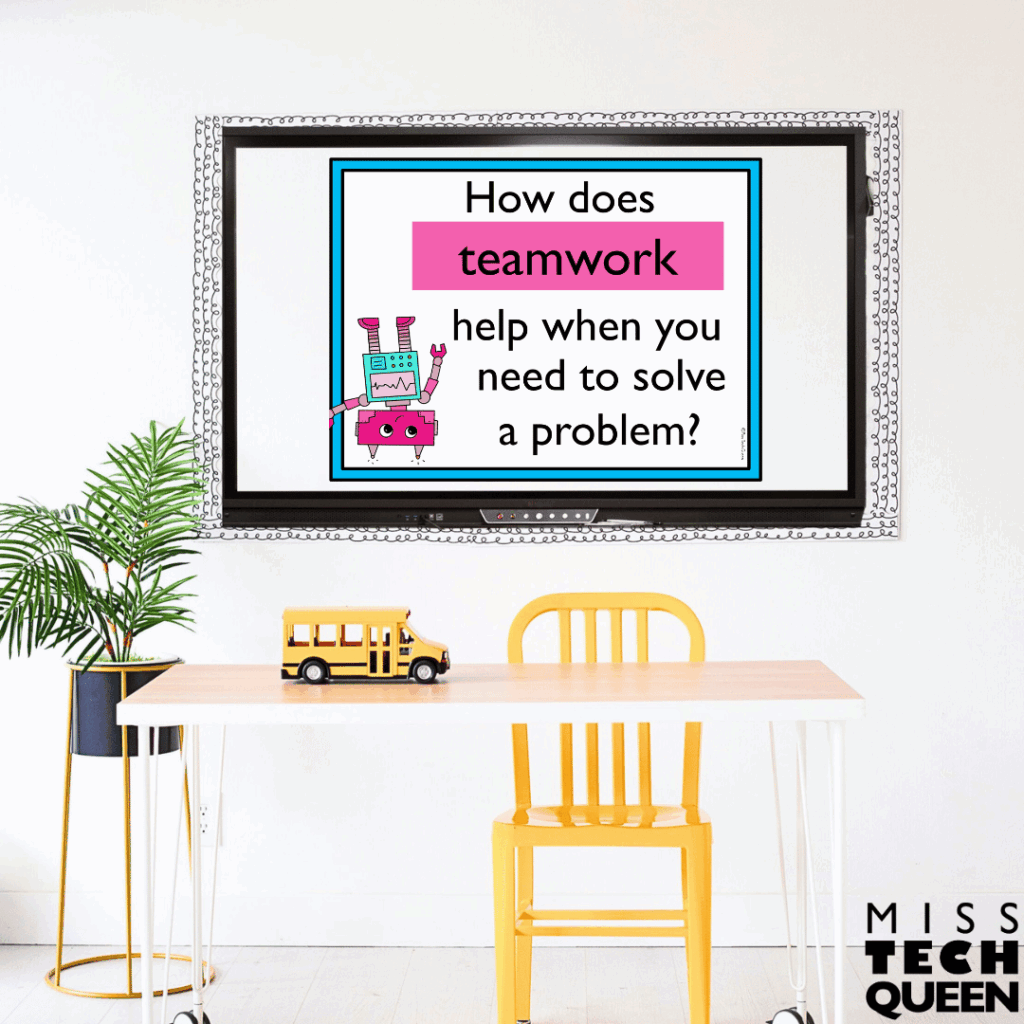
We begin with a class discussion about what teamwork means. I ask students to describe times they’ve worked well with others and what made those experiences successful. Then, I introduce the STEM challenge. They are tasked to build the tallest tower possible using only cups. I give each group the same number of cups. The only rule is that everyone has to participate in the design and build.
Before we start stacking, I give groups a few minutes to plan and discuss. This time is crucial because it pushes them to think about roles, strategies, and how they’ll listen to each other. Once they begin building, I walk around and listen to how students share ideas, solve problems together, and adjust when something doesn’t go as planned.
About halfway through the challenge, I pause the activity and gather the class to reflect. We talk about what’s going well and where teamwork is breaking down. Then, I send them back to finish their towers with a fresh focus. At the end, we compare the finished structures and circle back to our original discussion. My students do a great job of making the connection between strong teamwork and successful outcomes.
Celebrate Interests and Talents
One of the most important lessons I want my students to take away from my class is that everyone brings something unique to the table. This activity is a great way to help our students recognize their strengths and understand how those strengths can support team success.
We start the lesson by talking about what a “talent” really is. I help my students see that talents aren’t just about being great at sports or art. They can be things like being a good listener, staying organized, or asking thoughtful questions. We also talk about interests and how doing things we love helps us stay curious and motivated.
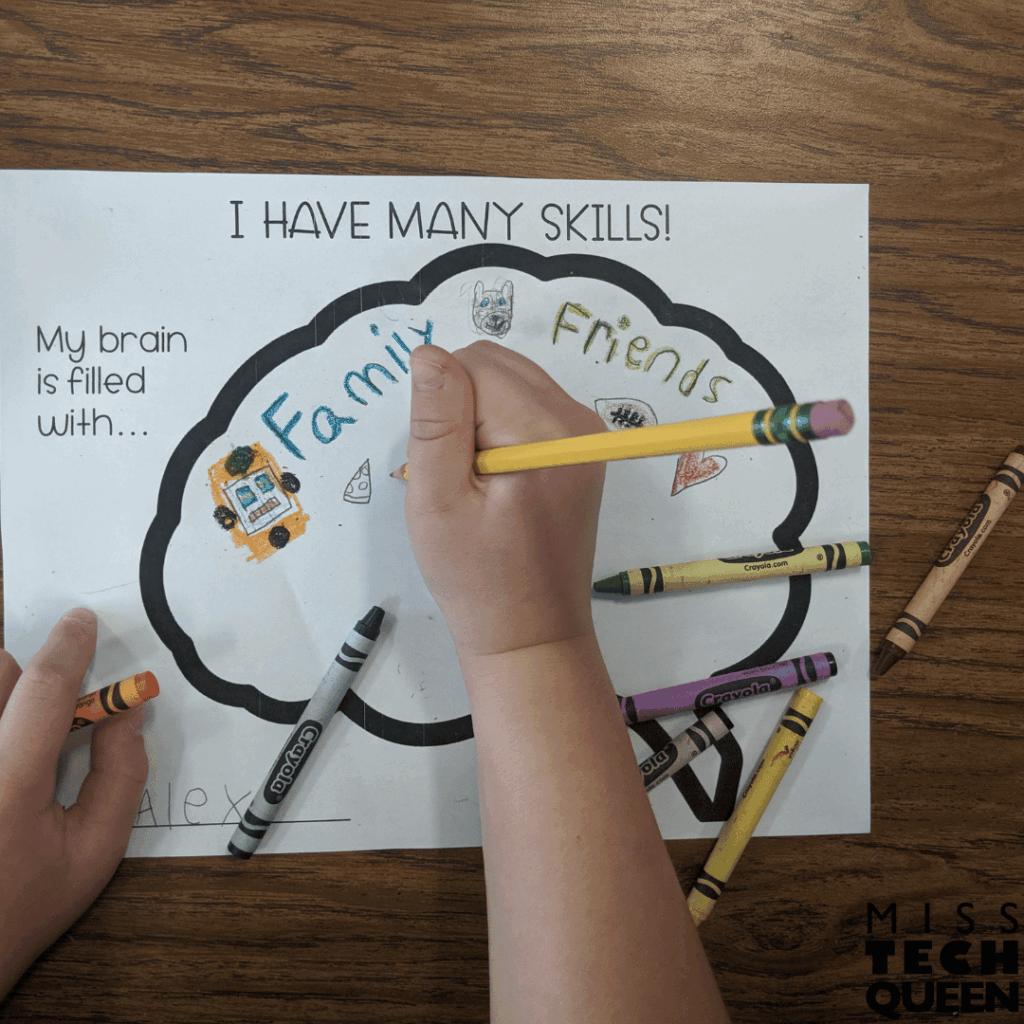
Then, I pass out a brain-shaped graphic organizer and invite my students to “fill their brains” with drawings and words that represent their hobbies, skills, and personal strengths. They can be as creative as they want. Some add pictures of coding, baking, playing an instrument, or helping others. This simple activity gives them space to reflect on who they are and what they enjoy.
After I give them some time, we share as a group. It’s so much fun to watch them light up as they talk about their favorite things. It opens up conversations about how those skills can be useful during STEM challenges. A student who loves puzzles might be great at design. A student who enjoys writing could shine when it’s time to present their team’s plan.
By the end, our students begin to see that being part of a team means bringing your whole self-including your passions, quirks, and talents, to the work. It’s a beautiful way to build confidence and remind everyone that STEM is for all kinds of thinkers.
Team-Building Activities All Year Long with “STEM for a Year”
Planning meaningful STEM lessons across multiple grade levels can be overwhelming, especially when time and prep are limited. That’s exactly why I created STEM for a Year. It’s a collection of over 70 low-prep challenges designed to keep your students engaged and learning all year long. Each activity is aligned to the seasons and holidays, making it easy to grab what you need when you need it.
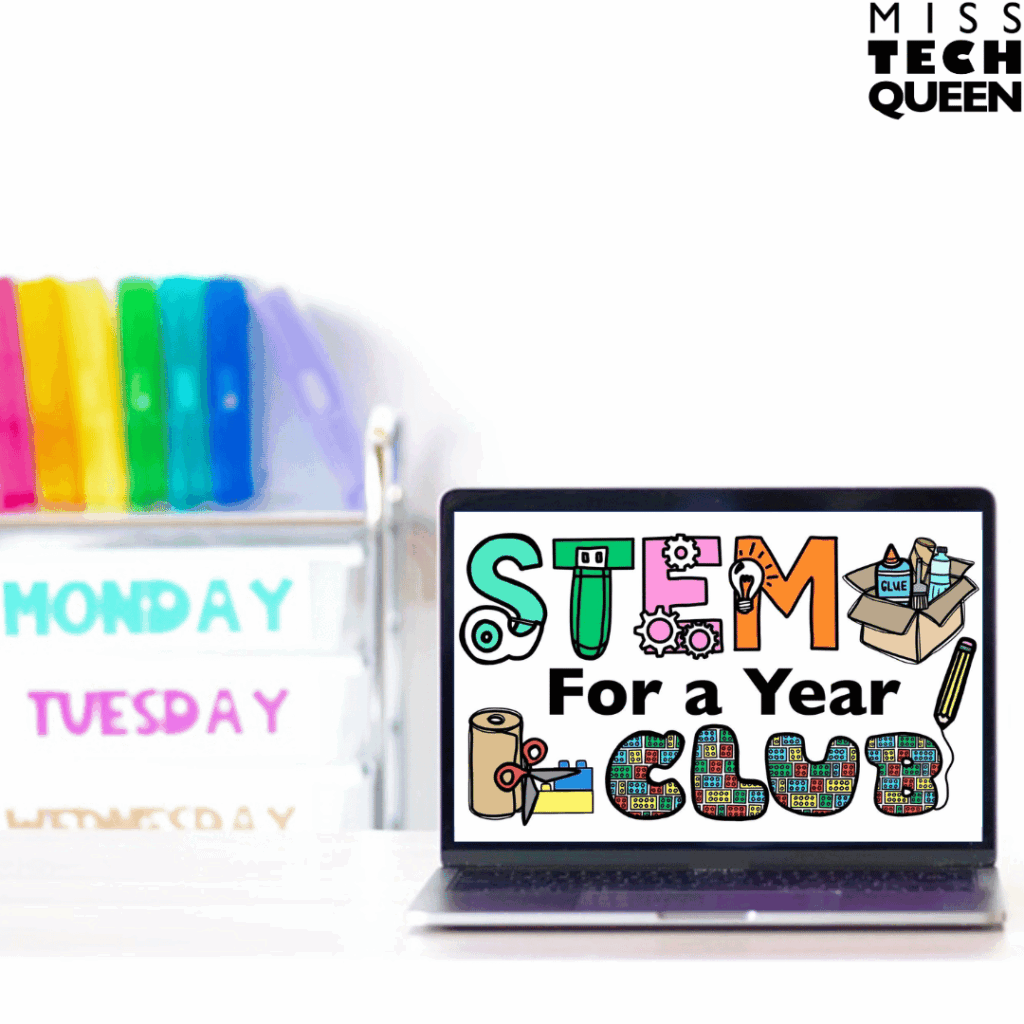
These challenges naturally reinforce team-building activities for the classroom. Your students work together, solve problems, and think creatively as they build, test, and reflect. I included printable and digital options, student response sheets, and even fun certificates and stickers to celebrate their efforts. STEM for a Year helps take the planning off your plate while giving your students the hands-on collaboration they crave.
Make Time for Team-Building Activities That Have a Lasting Impact
Whether we’re brainstorming ideas, learning to give clear directions, or discovering hidden talents, these team challenges have become a meaningful part of my STEM classroom routine. They help my students connect, collaborate, and grow into thoughtful teammates who aren’t afraid to take risks or support one another.
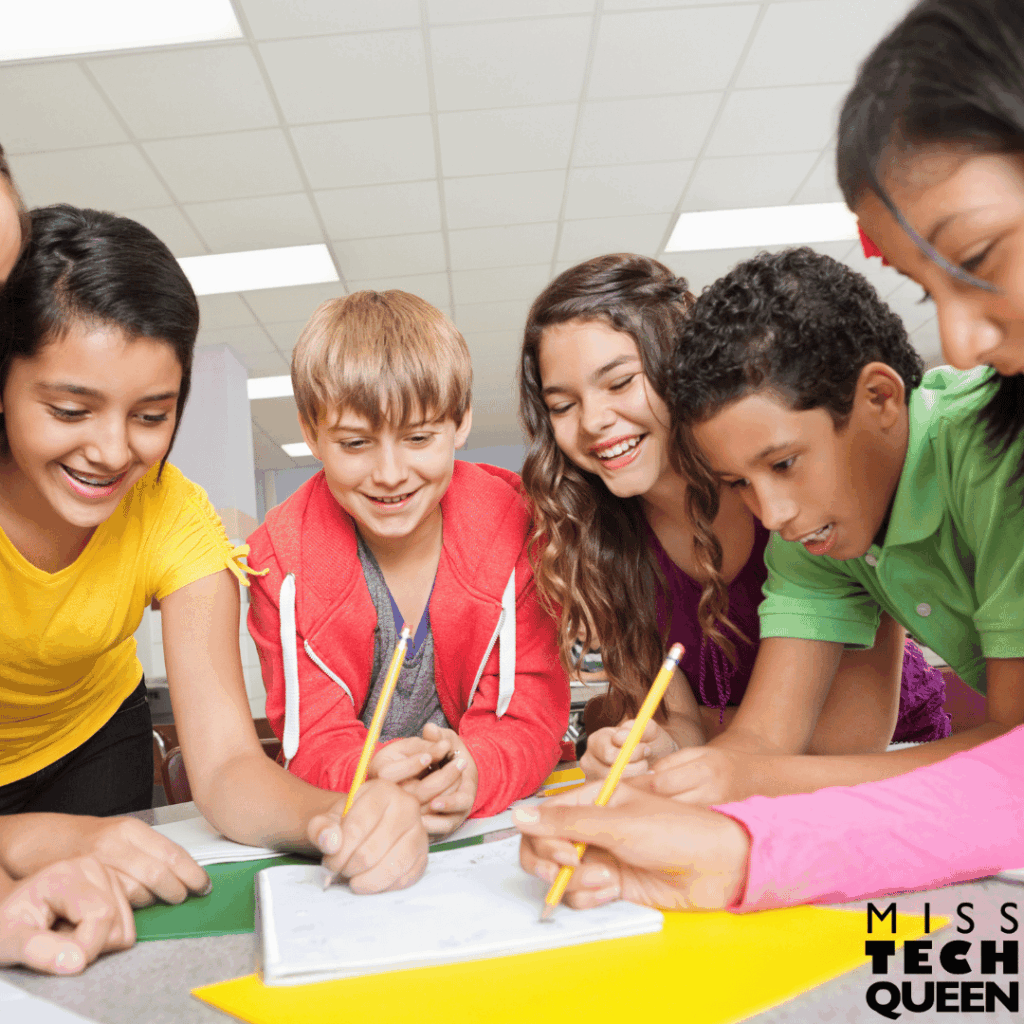
These activities are easy to implement, flexible enough for different grade levels, and powerful enough to make a lasting impact. You don’t need a ton of materials or extra prep time. You just need a willingness to pause the project and build the people behind it.
If you’re looking to strengthen your classroom community while reinforcing essential STEM skills, I highly recommend giving these team-building activities for the classroom a try. Your students will walk away with more than just a finished project. They’ll carry confidence, communication tools, and a stronger sense of who they are and how they can contribute.
Save for Later
Remember to save this post to your favorite STEM Pinterest board for quick access to these team-building activities!