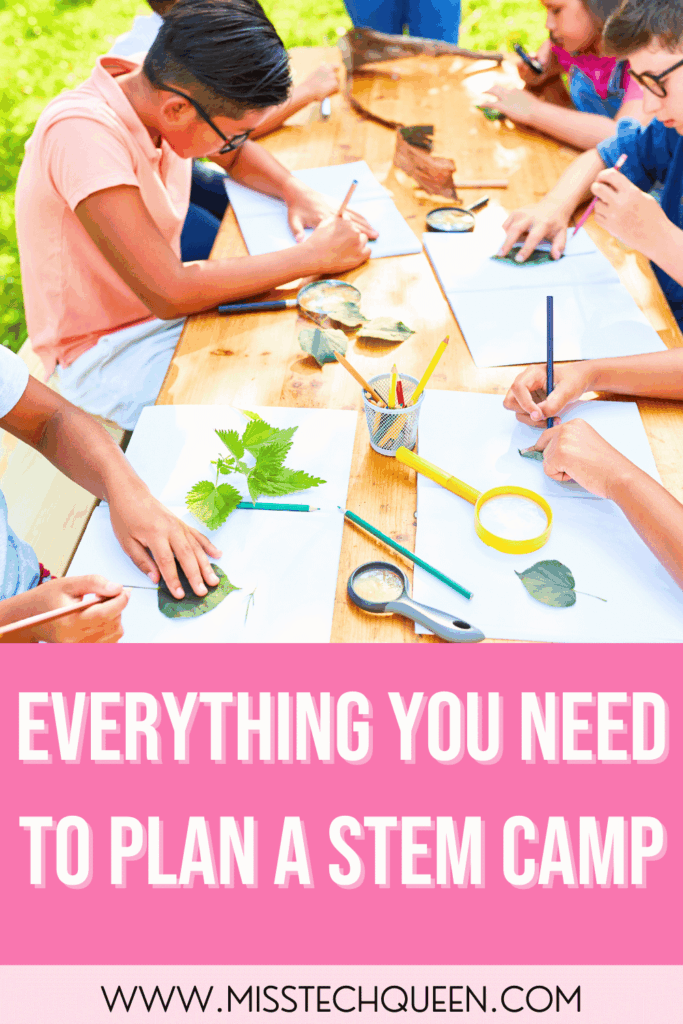

Planning a STEM camp can feel exciting at first. That is, until you sit down to actually plan it. Suddenly, you are trying to figure out the right number of activities to fill a week, how long each one should take, and how to keep your students engaged throughout. We want to offer hands-on STEM experiences during summer programs, but it can be hard to put it all together. That’s exactly why I started building STEM challenges that were simple to run but still packed with learning. Today, I’m going to walk you through how I recommend structuring a STEM camp, the types of activities you can use, and where to find challenges that keep your students engaged all week long.

How I Structure a STEM Camp
When I plan a STEM camp, I like to keep the structure simple and predictable. Having a clear routine helps your learners stay focused while still allowing plenty of room for creativity and exploration. Many of the challenges I use come from my STEM for a Year club, which includes a wide range of ready-to-use activities that work perfectly for camps, classroom STEM days, or enrichment programs.
Half-Day STEM Camp
If you are running a half-day STEM camp, the key is keeping the pacing simple and focused. In most cases, you can comfortably plan two to three STEM activities within that time frame. Many engineering challenges take about 30–45 minutes, especially when you include time for brainstorming, building, testing, and improving designs.

I usually begin with a short introduction to the challenge, where I explain the problem my students will solve and any science ideas connected to the activity. I usually have my kiddos work in small groups of two to four students. This makes it easy for them to collaborate, share ideas, and divide tasks during the building and testing process. Then my learners spend a few minutes brainstorming and sketching possible solutions before they begin building.
After that, I have my students move into the building and testing phase. This is where the fun really happens because they begin experimenting and adjusting their ideas. If time allows, I like to include a second activity that is a little shorter. I tend to plan a digital STEM challenge, robot activity, or quick science exploration connected to the theme.
A half-day camp works best when the activities stay focused and manageable. This way, it gives your kiddos enough time to create and test their ideas without feeling rushed.
Full Day STEM Camp
A full day STEM camp gives you the opportunity to slow down and explore challenges more deeply. Instead of moving quickly from one activity to the next, you can have your learners spend more time improving their designs, testing different solutions, and collaborating with their peers.

One way I recommend structuring a full day camp is by planning activities around each part of STEM or STEAM. This way, your learners experience a variety of skills throughout the day. For example, the day might begin with a science exploration where your kiddos learn about a concept connected to the week’s theme. Next, they might move into a technology activity, such as a digital challenge or virtual exploration. Later in the day, you’ll have your kiddos work on an engineering build challenge, which can be followed by a creative design activity that incorporates art or drawing.
Timing
Most STEM challenges work best when you give your kiddos around 20 to 40 minutes to design, build, and test. Some larger projects can take closer to an hour, especially if your kiddos are improving their designs after testing them. I always try to build in extra time because my kiddos often want to continue experimenting with their creations.
One thing I have learned from using STEM challenges with my own students is that they love the chance to redesign their projects. Giving them time to test, adjust, and improve their designs helps them understand the engineering design process. At the end of each activity, I also plan time for my kiddos to reflect and share their work. They can explain what worked, what challenges they faced, and how they improved their designs. These conversations often lead to new ideas and inspire others to try different approaches.
STEM Camp Supplies You Will Likely Need
One question you might be asking yourself about running a STEM camp may revolve around what materials are needed. The good news is that most STEM challenges can be completed with simple supplies that you probably already have. Many of the STEM challenges I create are designed to work with basic materials. This is to help you avoid spending time searching for specialty supplies. When activities rely on simple materials, it becomes much easier to focus on the learning instead of the preparation.
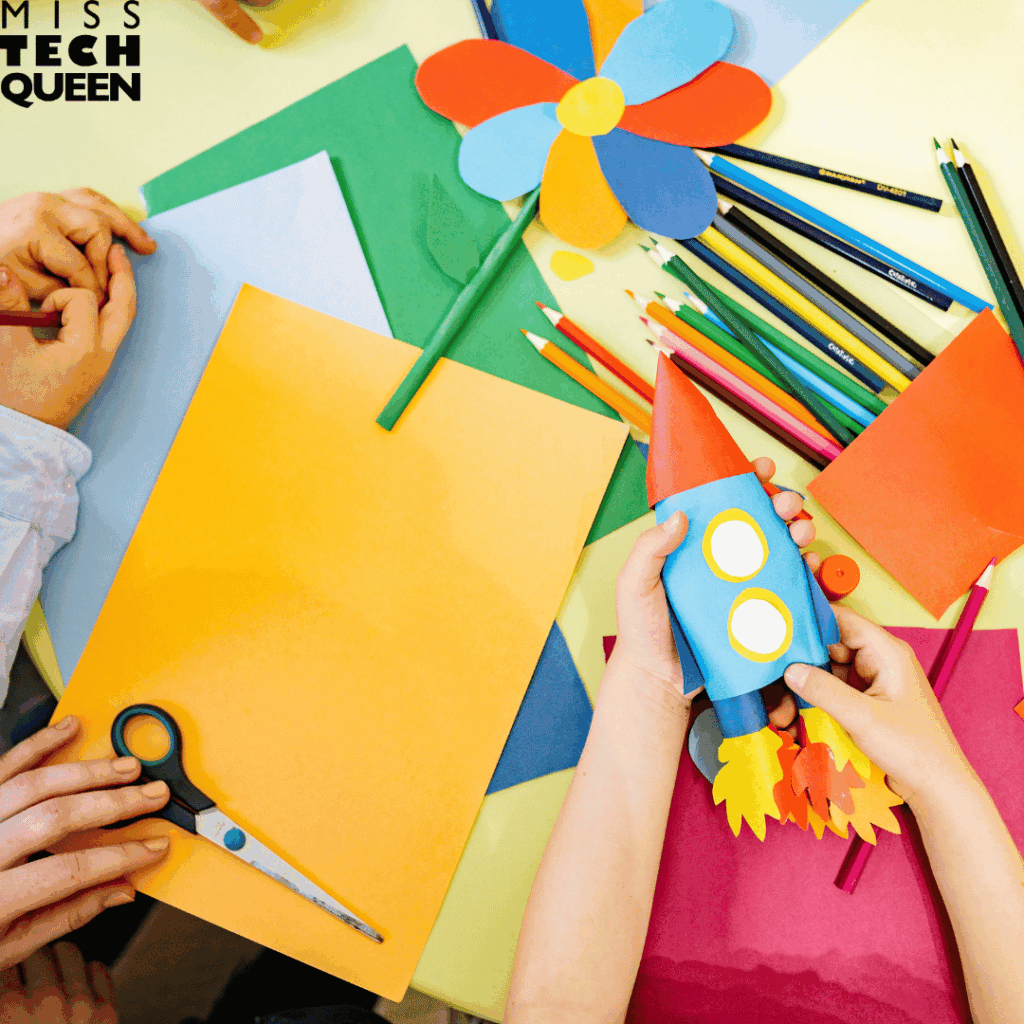
For many STEM camp activities, everyday classroom or household items work perfectly. Materials like cardboard, paper cups, craft sticks, tape, rubber bands, and string are incredibly versatile for challenges. Recycled materials also work well for STEM activities. Paper towel tubes, cardboard boxes, plastic containers, and bottle caps can be quickly useful during a building challenge. I love seeing how my kiddos transform ordinary items into creative builds.
For digital STEM activities, you may also want access to devices like laptops, Chromebooks, or tablets. Some of my activities use Google Slides or other digital tools so your students can practice coding, animation, and technology skills while still participating in STEM projects.
I recommend gathering a simple collection of materials in advance so you can reuse them throughout the week. This makes planning your STEM camp much easier while giving your explorers plenty of opportunities to experiment and improve their designs.
Where to Find Activities for a STEM Camp
When planning a STEM camp, I like to start with activities that give my students a clear challenge but still leave room for creativity. STEM challenges work well because our students can approach the problem in different ways and test multiple solutions. Many of the STEM activities I create focus on the engineering design process. Each one has your learners begin by thinking about the problem. Then, they imagine possible solutions, create a design, test it, and improve it. This process helps them build critical thinking skills while having fun.
There are so many websites that provide amazing videos, images, and information that can help our students understand the science behind the activities they are completing. Here are several kid-friendly websites that you can use to support STEM learning.
NASA’s NASA Kids’ Club is a fantastic starting place for your learners to explore space, weather, and Earth science through games, videos, and interactive activities. The Smithsonian Science Education Center also offers excellent science resources and activities designed for younger learners.
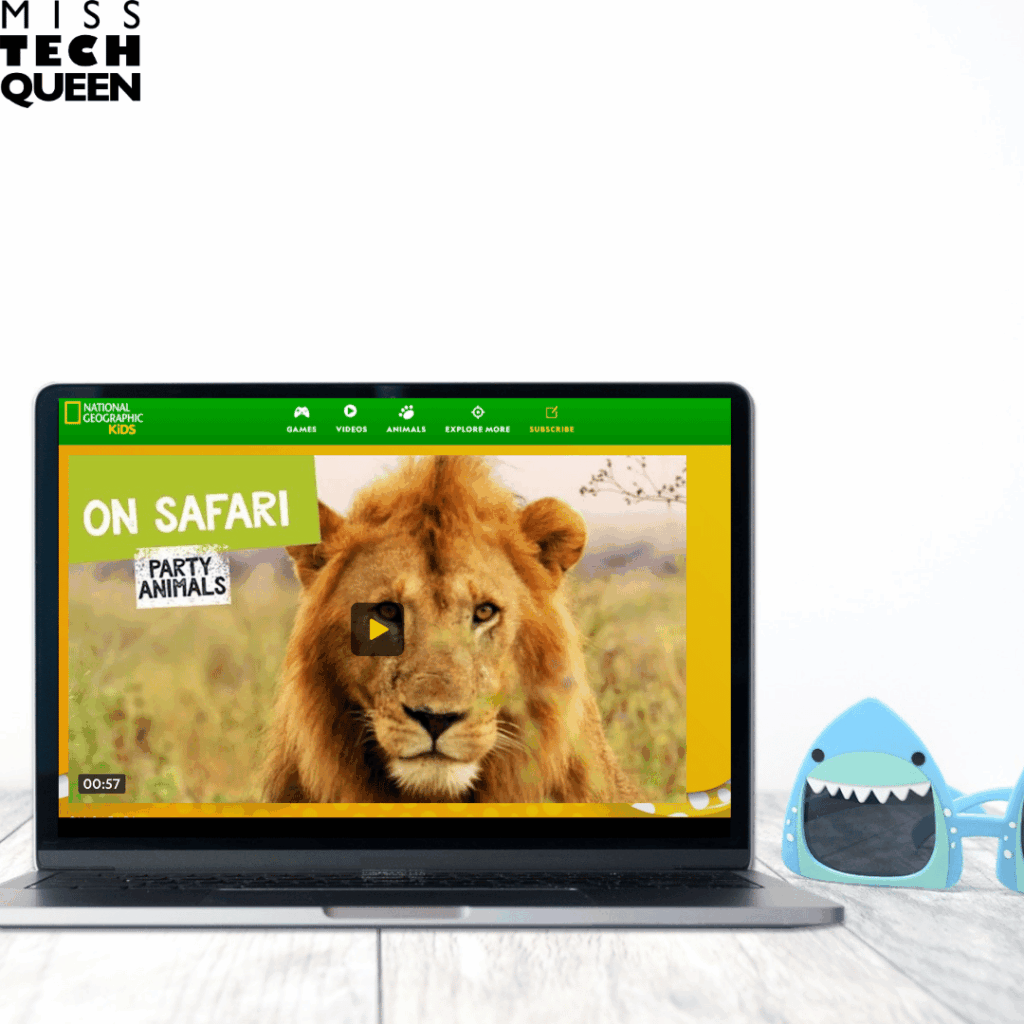
For engineering inspiration, I like exploring PBS Kids Design Squad Global. Your kiddos can watch short videos and try engineering challenges that real kids have completed. Another great option is National Geographic Kids. This site provides a wealth of engaging articles, videos, and photos that help your students learn about animals, ecosystems, and our planet.
When you combine hands-on STEM challenges with these types of resources, it creates a richer learning experience. Students are not just building and experimenting. They are also discovering how scientists, engineers, and innovators use these same skills in the real world.
STEM Camp Example Week: Summer Fun Theme
One of my favorite ways to set up a STEM camp is by organizing everything around a theme. A summer-themed STEM camp is always a hit because it connects activities to things our kiddos already enjoy, like amusement parks, outdoor fun, and creative building challenges.
4 STEM Activities that are Perfect for Summer
A great activity to start with is the Marble Roller Coaster Challenge. In this challenge, your students design and build their own roller coaster so a marble can travel from the top of the structure to the bottom. This is a great activity to talk about amusement parks and how engineers design rides that are both exciting and safe. You can grab the Marble Roller Coaster Challenge for free!
I also love incorporating creative STEAM activities. The Finish the Drawing STEAM challenge encourages your students to take a simple shape or partial drawing and transform it into something completely new. It blends creativity with problem-solving and encourages your learners to think outside the box.
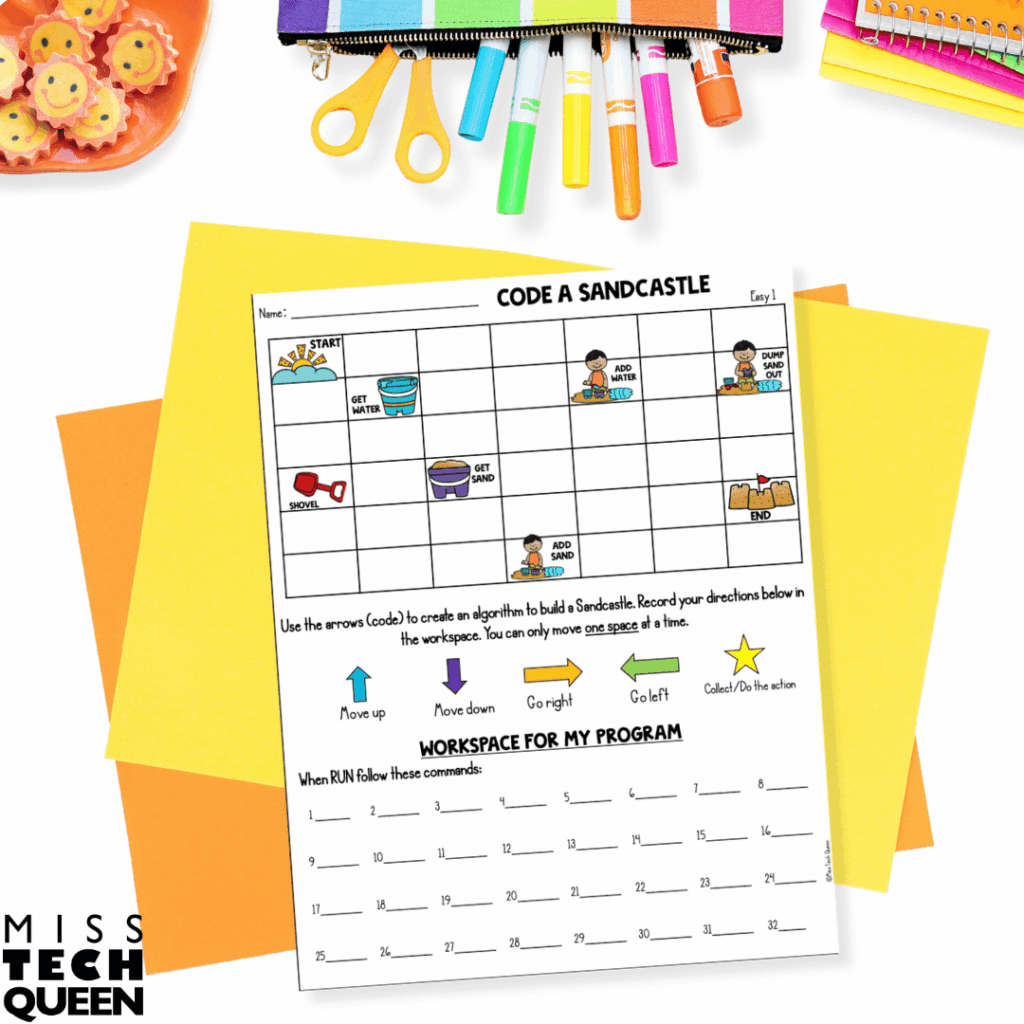
Coding activities can also be part of a summer STEM camp. The How to Code a Sandcastle unplugged coding activity introduces your kiddos to basic computer science concepts like sequencing and algorithms. But. . . no tech is needed to dive into these coding skills (that’s why it is called ‘unplugged’).
In this activity, the kids will arrange steps in the correct order to create instructions for building a sandcastle. This helps them understand how computers follow commands. This resource includes multiple versions to help target different levels of coding. If you have limited access to devices, you can try out the unplugged How to Code a Sandcastle or one of my other unplugged coding activities.
Another activity that works well is my Summer Stop Motion Animation digital project. Your students create their own animated summer scenes using Google Slides by making small changes to images across multiple slides.
STEM Camp Example Week: Space Theme
A space-themed STEM camp is another exciting theme that your kiddos will always enjoy. Space exploration naturally connects science, technology, and engineering, which makes it a perfect theme for STEM learning.
Coding Activities
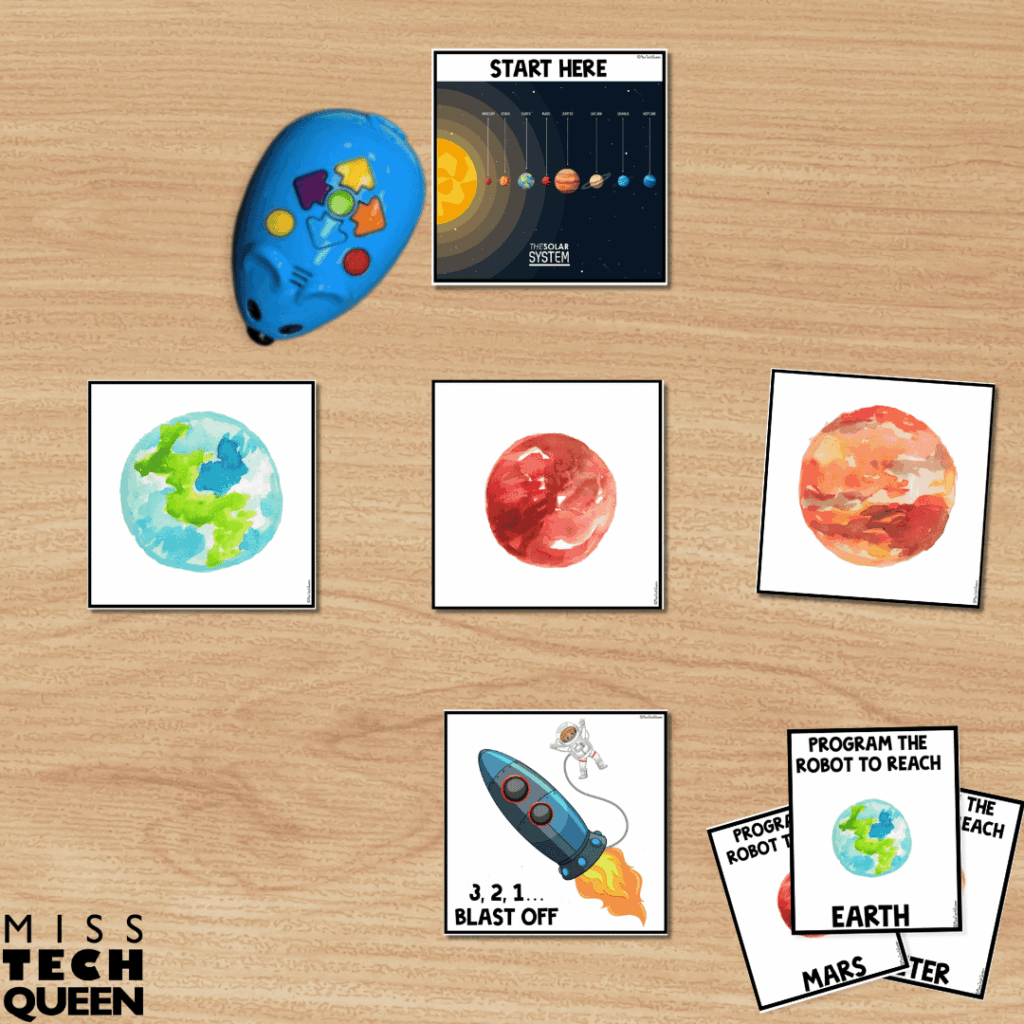
If you have access to coding robots, robotics activities can be a fantastic addition to a space-themed STEM camp. Planet coding mats can be used with robots like Robot Mouse, Bee-Bot, Dash, or other programmable robots to guide them through space-themed paths. These activities help your kiddos practice sequencing and problem-solving as they program their robots to travel between planets.
Another engaging activity is the Phases of the Moon coding mat. Your students work to program robots to move through different moon phases. This reinforces science concepts while introducing coding skills.
Digital Activities
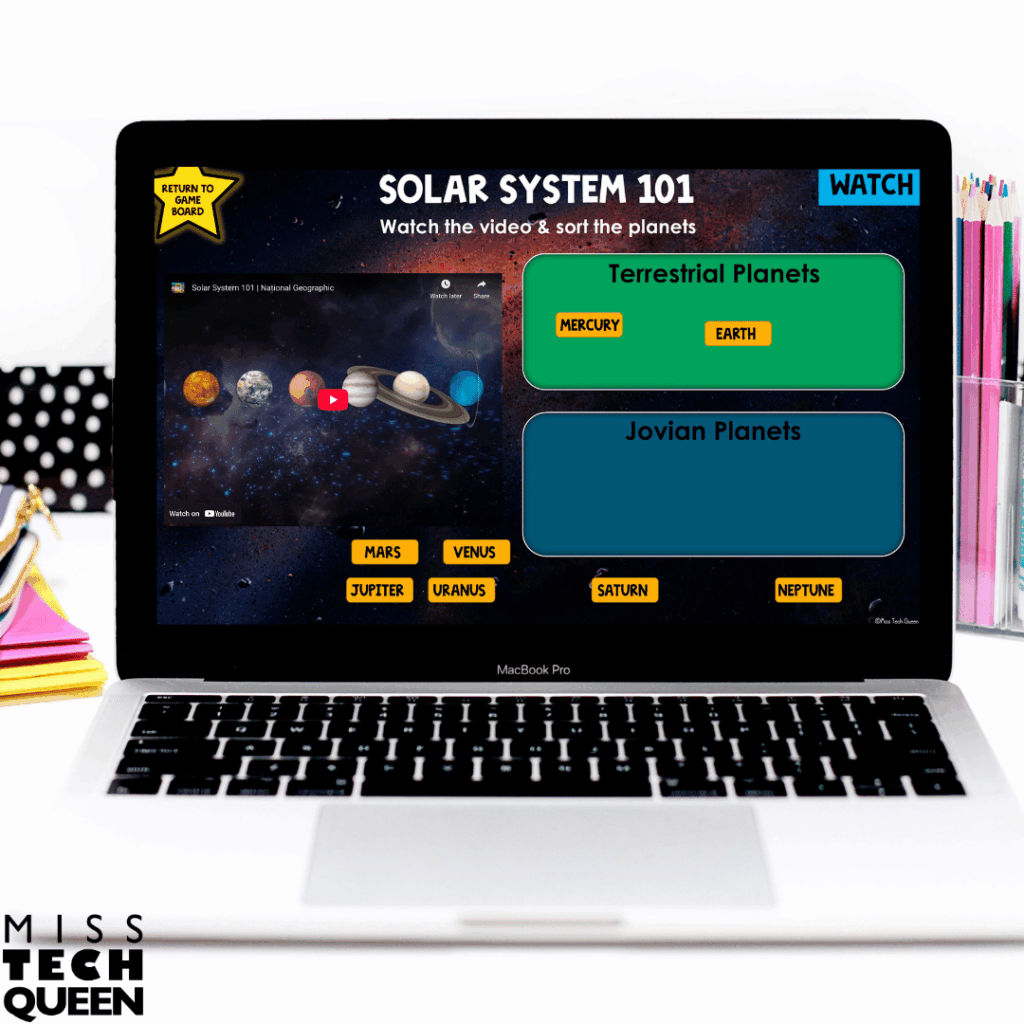
Technology-based activities can also add variety to the week. The Space WebQuest is the perfect place to start your week. Students will combine technology skills with research to learn about the week’s topic. Activities like this allow them to explore planets and other space topics while answering questions and completing challenges.
Later in the week, this Space Digital Bingo game allows your kiddos to review planets and space vocabulary while practicing technology skills like drag and drop on digital boards.
Building Challenges

A challenge that fits perfectly into a space STEM camp is the Rocket Girl Build a Rocket challenge. In this activity, your learners will design and build their own rockets while exploring the ideas behind rocket launches and space travel.
You can also include space-inspired STEM challenges, such as designing bridges, launching catapults, or creating themed masks, in the Space War STEM bundle. Try the free Space War STEM challenge by building a hide-out. These types of activities encourage your learners to use engineering skills while working within a creative theme.
Simplify Your STEM Camp Planning with A Year of STEM
If you are planning a STEM camp, you probably know how quickly the planning can add up. Coming up with new activities every day, gathering materials, and keeping everything engaging for your learners can take a lot of time.

That is exactly why I created the STEM for a Year club. This collection includes 80 hands-on STEM challenges. They can easily be used for your classroom lessons, summer learning, or a full STEM camp experience. Each challenge is designed to be low prep and flexible, using materials you likely already have on hand. Since the challenges can be adapted for multiple grade levels, they work well whether you are teaching a group of students in a classroom, running a camp program, or planning activities at home.
Whether you are planning a summer STEM Camp, a space-themed camp, or want themed activities for multiple camps, you can’t go wrong with the STEM for a Year club. If you want to make planning your STEM camp easier while still giving your learners engaging hands-on challenges, STEM for a Year gives you an entire library of activities all in one place.
Make Your STEM Camp a Memorable Learning Experience
One of the things I love most about STEM activities is how naturally they spark curiosity and creativity in our learners. When our kiddos are given the chance to design, experiment, and test their ideas, they become deeply engaged in the learning process.
A STEM camp gives our kiddos the opportunity to explore in a way that feels exciting and meaningful. Through building challenges, coding activities, and creative design projects, your learners begin to see how STEM concepts connect to the real world around them.
With a simple structure, a few flexible materials, and engaging challenges, you can create a STEM camp that inspires creativity, problem-solving, and discovery. Who knows? You might just spark a lifelong interest in STEM along the way.
Save for Later
If you are planning a STEM camp, be sure to save this post so you can easily come back to these ideas. Inside, you will find simple ways to structure a STEM camp, themed activity ideas, and hands-on challenges that keep your learners engaged.
Pin this post to your favorite STEM or teaching board on Pinterest. Then come back when you need STEM camp ideas.